
Returning to Piano as an Adult: What to Relearn After a Long Break
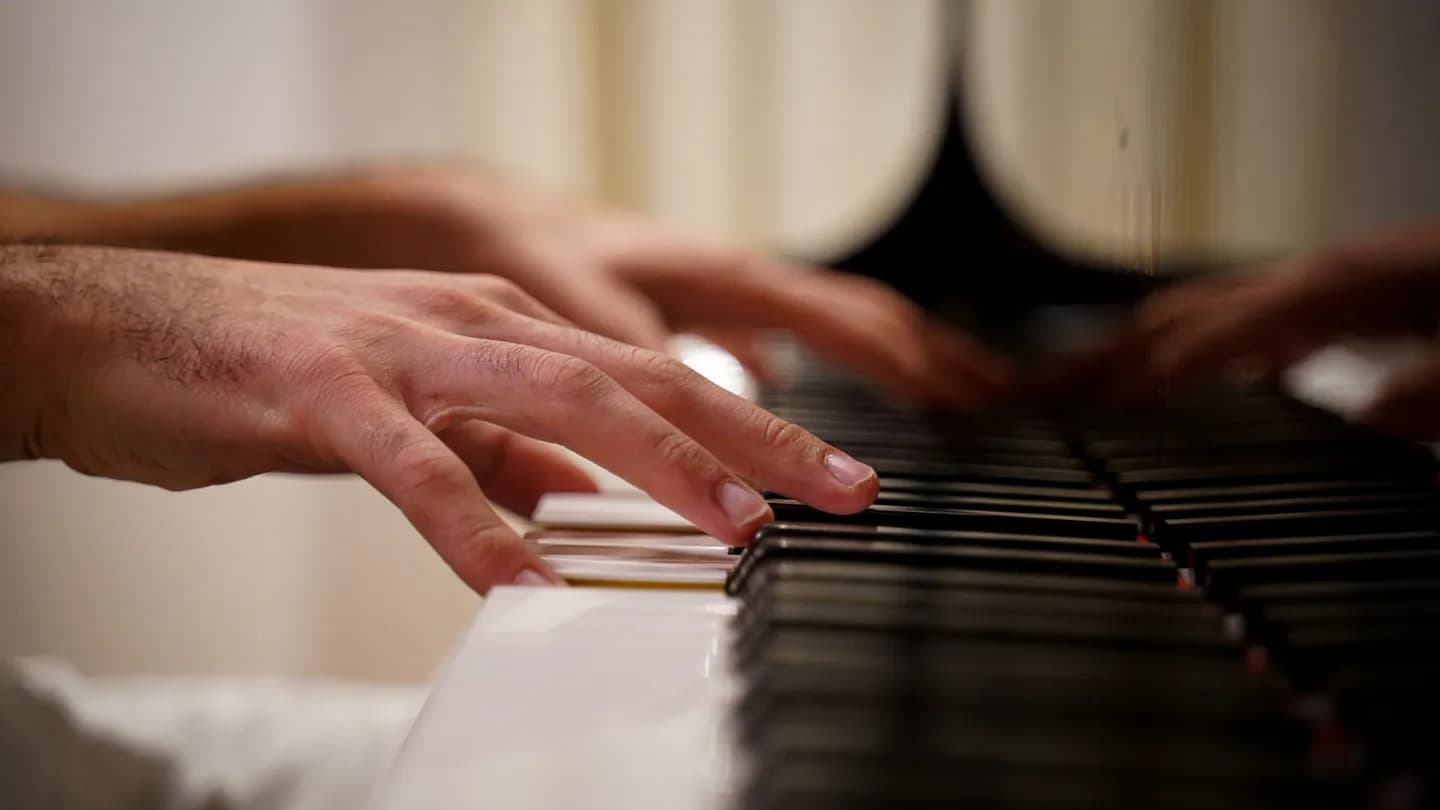
Returning to piano after a long break starts with finding out what your playing can do now. Choose a short piece you remember and a manageable passage you have never learned. The familiar music reveals what remains in your ear and hands; the new page shows how you currently read, count and coordinate. Together, they give you a better starting point than your old exam grade alone.
I am interested in the difference between those two attempts. A returning pianist may remember a beautiful phrase but lose the bass notes when starting halfway through. Another reads accurately and has simply lost the ease of moving between hand positions. Those are different lessons, even if both people last played twenty years ago.
| What you notice | What to keep | What to explore |
|---|---|---|
| A familiar piece flows, but a new page is slow | What to keepThe remembered sound and movement | What to exploreRead a short, easier passage and identify its rhythm before joining the hands. |
| Each hand works alone; together they stop | What to keepThe notes in each part | What to exploreFind where the hands meet, separate or release. Practise that connection. |
| The notes return, but the melody disappears | What to keepThe route through the score | What to exploreListen to the melody alone, then keep it audible as the accompaniment returns. |
What comes back first
A piece you played for years can feel surprisingly close. Your hands find the opening, you hear the next phrase before it arrives, and a particular fingering seems inevitable. Keep that familiarity: it gives you music to work with immediately. Then turn to the score and check what the remembered version contains.
Perhaps the bass note lasts longer than you used to hold it. Perhaps a quiet ending has become a sudden stop. You may also hear something more interesting in the music now than you did as a child. Returning is an opportunity to make new musical decisions, as well as recover earlier skills.
Test a second starting place. Begin at the next phrase rather than always at bar one. If the music only runs when the opening sets your fingers in motion, work out the notes and fingering at that new starting point. Read the bass first, find the opening interval in the melody, and hear the rhythm before joining the hands. You are giving the passage another way to begin.
The unfamiliar page should be substantially easier than your old showpiece. Notice whether the obstacle is recognising the notes, locating them on the keyboard, keeping time, or combining parts. A slow reading speed alongside a well-remembered sonatina is useful information. It suggests including fresh, simple music in your return, alongside the piece you already love.
A four-bar return to Clementi
If you previously played sonatinas, the opening of Clementi's Sonatina in C major, Op.36 No.1, offers a compact example. It contains a melody, bass notes separated by rests, and a small change of roles between the hands. A player returning from earlier beginner study can apply the same listening questions to a shorter, simpler piece.
Sonatina in C major, Op.36 No.1. First movement, bars 1–4.
Scroll sideways to follow the score.

Bar 1 · Read
One quarter note, two eighth notes, then two quarter notes in the right hand.
Bars 1–3 · Release
The bass notes stop for their rests while the melody continues.
Bar 4 · Listen below
The left hand carries the moving line through the right-hand rest.
Read the note and rhythm description
The meter is 2/2. In bar one, the right hand plays C5 as a quarter note, E5 and C5 as eighth notes, then G4 twice as quarter notes. The left hand plays C3 as a quarter note, followed by a quarter rest and a half rest. In bar three the right-hand eighth notes are F5, E5, D5, C5, B4, C5, B4, C5; the left hand alternates C3 quarter notes with quarter rests. In bar four the right hand plays D5, C5, B4 and A4 as eighth notes, G4 as a quarter note, then a quarter rest. The left hand plays G2 as a quarter note, a quarter rest, then G3, F3, E3 and D3 as eighth notes. Middle C is C4.
Reading the melody
Play the right hand alone at a pace that lets you follow the printed rhythm. The first bar has a C quarter note, two quicker notes, E and C, then two G quarter notes. The quicker pair fits inside the same span as either neighbouring quarter note. If the familiar shape tempts you to rush through that pair, speak or tap the rhythm before playing again.
This music is in cut time, with two main beats to each bar. At a slow working tempo you can count the four quarter-note subdivisions, while still understanding how they fit inside those two larger beats. As the passage becomes comfortable, hear its broader movement again; avoid giving every small subdivision an equally heavy accent.
There is also a reading question in bar three. The line descends from F through E, D and C, then alternates B and C. Following those steps on the page tells you more than guessing a finger pattern from the shape of your hand. If this bar is unfamiliar, settle its pitches before trying to recover an old performance speed.
Hearing the bass rests
In bar one, the left hand plays a low C for a quarter note and then rests. The right hand continues. Try the two parts without pedal and listen for the moment the bass stops sounding. Holding that C through the whole bar changes the texture, even when every note attack is correct.
When one hand follows the other automatically, slow practice can still reproduce the same coupling. Give the left hand a clear task: play, release, and remain quiet while the melody continues. The hand that rests is still participating in the rhythm. Our guide to piano hand coordination develops this distinction in other patterns.
Following the change in bar four
Near the end of bar four, the right hand has a quarter-note G followed by a quarter rest. Underneath, the left hand plays descending eighth notes, G, F, E and D. The final E and D therefore continue while the right hand is silent.
Listen to that lower line as part of the music. First play it alone, then add the right hand and preserve its movement through the rest. If your attention follows only the upper melody, this is a useful place to practise listening downwards. If the notes are secure already, shape the left-hand descent and the arrival into the next bar when you open the full score.
These few bars can lead to quite different work: reading the melody afresh, coordinating a release, or hearing the lower line as a phrase. I would choose the one that changes the sound most clearly, then return to the whole opening. Repeating all four bars ten more times may leave the original difficulty untouched.

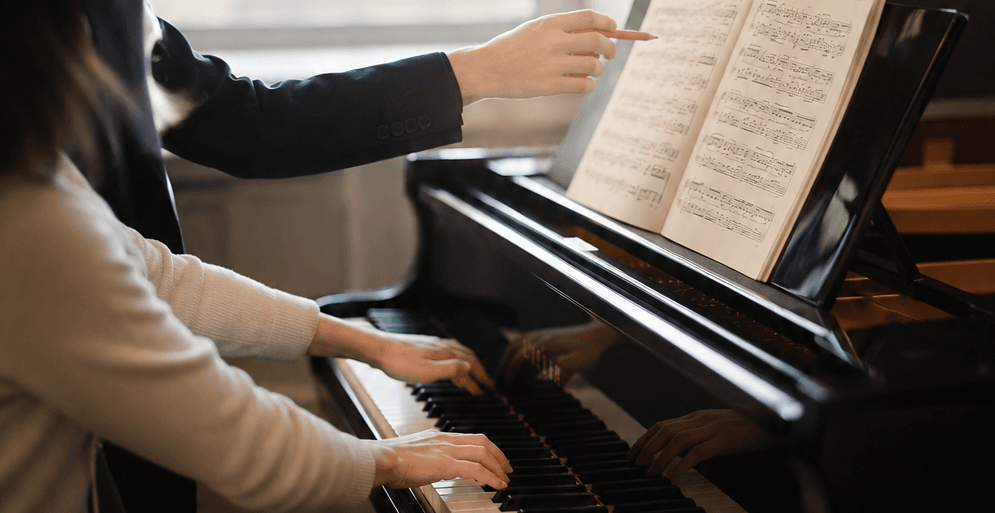
One-to-one classical piano
In person in Ikebukuro or Shinjuku, Tokyo. Online worldwide.
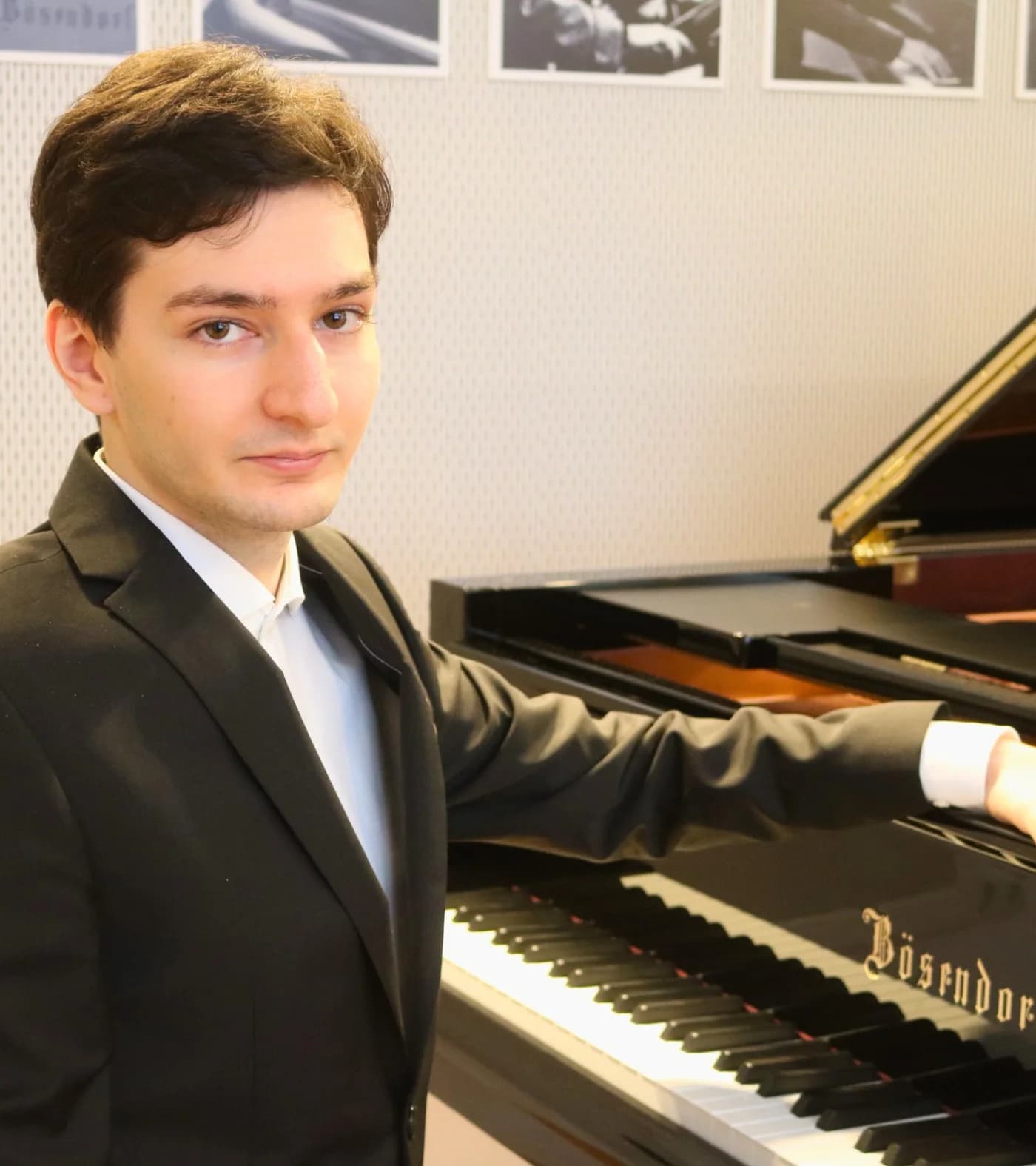
Enea
Concert pianist from Vienna
Pre-launch · Applications open
Choosing your first pieces
Choose a piece whose sound interests you and whose main texture you can understand. Look beyond its opening. A quiet first page may lead to larger chords, unfamiliar keys or a much denser middle section. Read those passages before deciding that the complete work belongs in your first weeks back.
For a former beginner, a short melody with a simple accompaniment can restore several things at once: reading both staves, preparing a hand-position change, and listening to a phrase ending. A former intermediate player might return to a sonatina movement, but begin with a section where the two hands have clear roles. The useful question is what you can work on attentively today.
I would usually give a returning player two kinds of music: one piece to develop over several lessons and some easier material to read freshly. In the main piece, you can explore fingering, phrasing and sound in depth. The easier music prevents every practice session from relying on an increasingly familiar sequence of movements.
Keep a more demanding favourite as a longer-term aim. If Brahms's Intermezzo Op.118 No.2 is the piece drawing you back, listen to its melody and look at the layers beneath it. Its quiet character conceals demanding balance, sustained voices and harmonic changes. Those musical demands deserve preparation; the soft dynamic is a poor guide to difficulty.
Our article on choosing a classical piano piece at the right level explores how to judge these demands. For the first return piece, ask whether you can read a short section, choose workable fingering, and still have attention left for how it sounds.
Touch, movement and pedal
The piano you have now may feel different from the instrument you learned on. Spend a little time listening to a few comfortable notes at a moderate volume, then more quietly. Notice whether the quiet version still speaks clearly and whether the hand can move on without a last-minute adjustment. Work with the response of this keyboard.
An old fingering can also deserve another look. If a turn repeatedly leaves you stretched across the keys, examine where the hand could travel and where a different finger could prepare the next notes. Practise the connection between two positions. Trying to make one uncomfortable position permanent rarely serves the phrase.
Build playing time and demanding repertoire gradually after a long break. BAPAM's return-to-playing guidance considers duration, intensity and technical difficulty separately. Pause when fatigue or discomfort appears; seek advice from a qualified health professional for pain, weakness, swelling or tingling. A teacher can help with the musical and movement choices within practice.
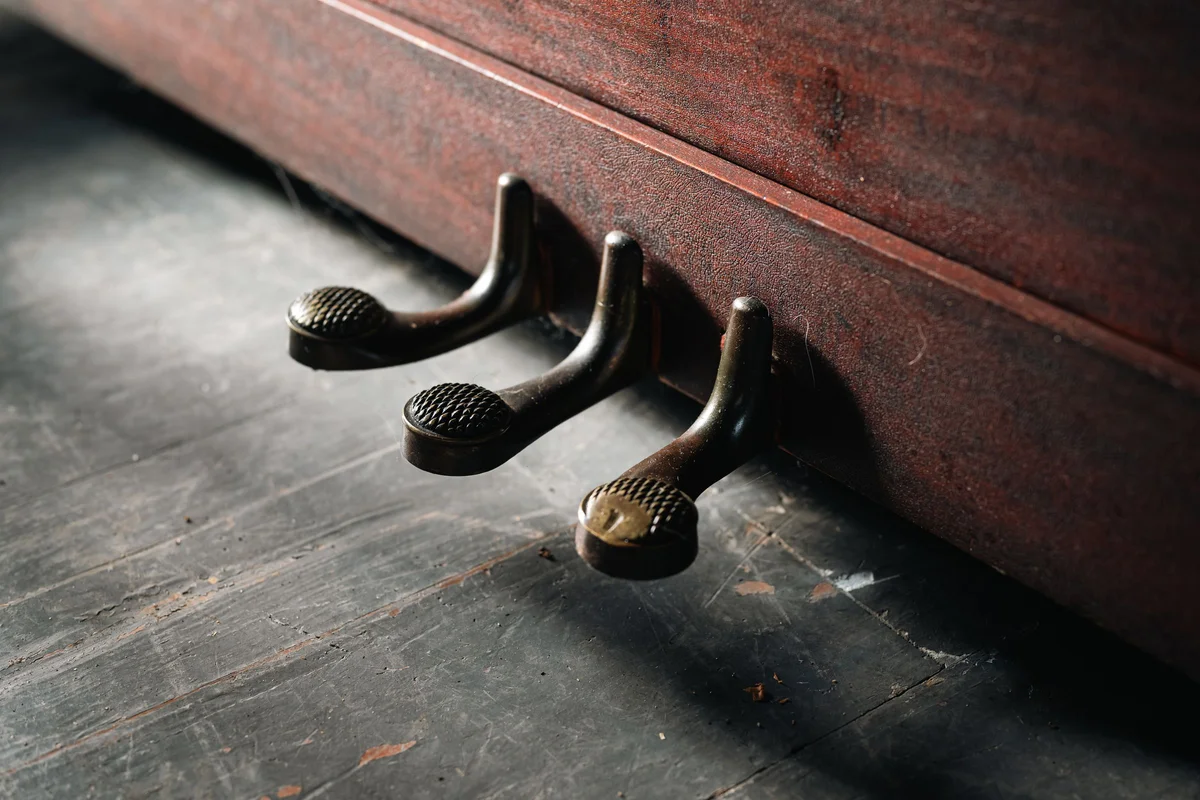
Pedal often returns as a remembered foot movement. Listen to what that movement actually retains. In a lyrical piece, choose one change of harmony and play it slowly with your usual pedalling. Do the earlier bass and chord clear as the new harmony arrives, or do both harmonies remain in the sound?
Compare the passage briefly without pedal, then restore it and listen to the change. The unpedalled version reveals what the fingers sustain; the pedalled version lets you work on resonance and continuity. Neither comparison requires turning the entire piece into a dry finger exercise. For more detailed examples, see sustain pedal and clear harmony.
Practice in an adult week
Give each practice session a musical centre. For example, you might spend one session finding the right hand's release in Clementi's fourth bar, and another keeping the bass quiet while the upper line continues. Start by hearing the problem in context, spend a short period on the relevant connection, then play the phrase again. Listen for the change you intended.
On a busy day, that may be the whole session. On a day with more time, add a little fresh reading and some playing for enjoyment. An adult routine needs room for both: attentive work on a small detail and the experience of making music without interrupting every bar.
Avoid turning a missed day into a long catch-up session. Resume with the passage you were developing and find out what remains. A brief note such as “left hand continues while the right hand rests” is more useful on returning than a record that simply says “Clementi, twenty minutes.”
If instrument access is the obstacle, settle where you will actually practise. A regular studio booking or a suitable home keyboard changes what you can sustain between lessons. The guide to starting lessons without a piano at home covers that practical choice in more detail.
Recognising progress
The return of speed is only one sign. You may find that you can start at a different phrase, read a similar pattern in a new piece, hear a bass note that used to disappear, or stop after a passage without carrying its tension into the next one. These changes are worth noticing before you can play your former repertoire from beginning to end.
A short recording can help with a specific comparison. Record the same phrase on two different days, then listen for one feature: the length of the final note, the steadiness of the accompaniment, or whether the melody remains audible. Keep the comparison close to the question you were practising. The whole performance need not become a weekly verdict on your ability.
There is no single timetable for recovering a former level. The length of the break, earlier learning, current repertoire and practice opportunities differ. Once an easier piece becomes comfortable, try a small step beyond it and see which demand changes. Progress through new material tells you something that polishing an old favourite cannot reveal on its own.
Returning with a teacher
Bring a familiar score and tell the teacher what you hope to play now. Your old grade or repertoire provides background; a short current attempt gives the lesson its direction. I want to hear where the phrase works, where it becomes effortful, and what happens when we change one detail together. That can lead to a repertoire choice, a reading task or a different way of coordinating the hands.
This work suits both online classical piano lessons and lessons in English in Tokyo. Online, a view of the keyboard and hands supports discussion of fingering and movement, while the teacher can demonstrate and listen to the same passage again. In person, we can hear the instrument together and compare its response directly.
Vienna Piano School is preparing to open and accepting applications for online lessons worldwide and in-person lessons at piano studios in Ikebukuro and Shinjuku, Tokyo. The first trial is free and lasts 55 minutes. Regular online lessons are US$40 for 60 minutes or US$60 for 90 minutes; in-person lessons are ¥4,800 for 55 minutes plus an ¥800 room fee, ¥5,600 total. Use the lesson application to describe your previous playing and what you would like to return to. Start dates and trial arrangements are confirmed by email.