
How to Use the Sustain Pedal Without Blurring the Harmony
To use the sustain pedal without blurring the harmony, listen for which sounds should remain when the next notes arrive. For a connected change, play the new notes, clear the previous resonance promptly, then renew the pedal while the new keys are still held. Adjust that movement until the harmony changes clearly and the phrase continues.
That is one useful kind of pedalling. A rest, a detached gesture or a deliberately blended colour may need a different choice. The aim is to hear the difference and choose it, rather than give the foot the same instruction throughout a piece.
Hear what the pedal is keeping
The right pedal, also called the damper pedal, allows notes to continue after their keys are released. On an acoustic piano it lifts the dampers from the strings. That gives the hands freedom to move, but it also lets sounds accumulate.
Begin with a quiet middle-register C. Hold the pedal down, release the key and listen. Now release the pedal. Compare that ending with another attempt in which the key stays down as the pedal rises. The held key keeps its own damper raised: moving the foot alone does not end every sound.
This distinction matters in a real passage. An old note might remain because the pedal has not cleared, because a finger is still holding it, or because the room is returning the sound. Those are different things to investigate.
Before adding pedal to a phrase, play it without and listen to the bass, melody and endings. Keep that sound as a reference. Then ask what the pedal should add at each point: a connection, a sustained bass, a little resonance, or a longer release.
Practise a connection, then an intentional break
Use two comfortable right-hand chords: C–E–G, followed by D–F-sharp–A, both near middle C. These are an isolated listening exercise, not a suggested harmonisation of the Bach excerpt below.
Play the first chord and catch it with the pedal while its keys are held. Release the hand, move to the second chord and play it. Immediately clear and renew the pedal while holding those new keys. Listen particularly for C and E lingering against the new D-major chord.
Work slowly enough to notice the sequence, but keep the change itself prompt. A slow practice tempo does not mean leaving both harmonies mixed for a long time. If the new chord sounds thin, check whether the fingers released it before the pedal caught it.
Now make a deliberate break between the chords. Let both the keys and pedal release the first sound before the second chord begins. This is a different musical result, not a failed attempt at legato.
Read downward within each sequence. The steps show order, not fixed timing or pedal depth.
New harmony, continuous sound
Keep the phrase connected
1. Approach
The pedal carries the old sound as the hand moves.
2. New attack → clear
Play and hold the new keys. Promptly release the pedal to clear the old resonance.
3. Catch the new sound
Renew the pedal while the new keys are still held, then continue.
Listen for: Hear a clear new harmony without a hole in the phrase.
If it blurs or breaks
Blur: check how soon and how far the pedal releases, and whether an old key is still held. Gap: check whether the old sound ended early or the new keys were released before the pedal caught them.
An ending, then a new gesture
Let a break be heard
1. Finish
Complete the first sound with the intended length and shape.
2. Release → space
Release the keys and pedal. Listen to the sound end.
3. Begin again
Play the next gesture after the intended space. Add pedal if its sound needs it.
Listen for: Hear the intended separation instead of a continuous wash.
If the sound keeps going
Check both the finger release and the pedal release. The room or a digital reverb setting can leave an audible tail after the instrument’s dampers have acted.
Keep the heel supported and use a comfortable ankle movement. A large stamp gives little information about whether the sound actually cleared. The amount of movement needed will become clearer as you listen to this particular pedal.


One-to-one classical piano
Beginner to advanced. Online, worldwide.

Enea
Concert pianist from Vienna
30 minutes · Tokyo studio from October 2026
Notice a harmony change even when the bass stays put
Bach’s Prelude in C major, BWV 846, provides a useful reading test. In the opening bar, the pattern begins C–E–G–C–E. In the second, it becomes C–D–A–D–F. The lowest note remains C, but the notes above it change.
Bar 1 · C major
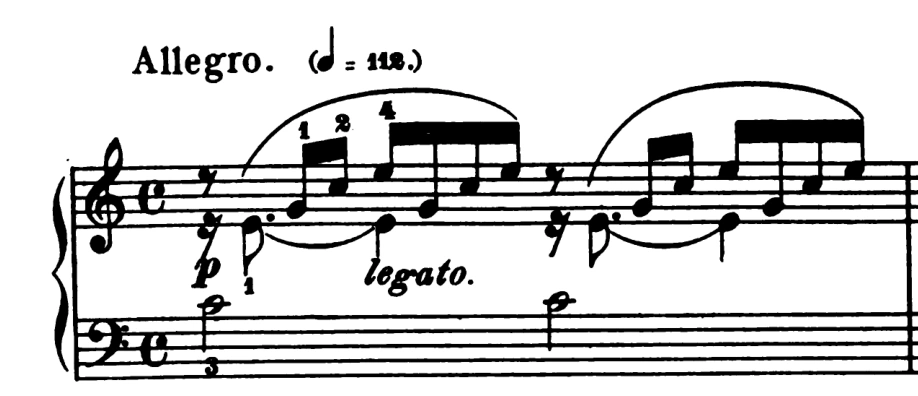
Pitch sequence: C4–E4–G4–C5–E5–G4–C5–E5, repeated.
Bar 2 · D minor seventh over C
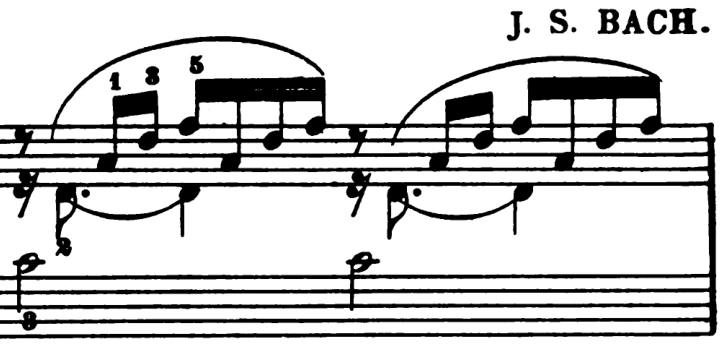
Pitch sequence: C4–D4–A4–D5–F5–A4–D5–F5, repeated.
Listen across the bar line: C remains in the bass. The E and G from bar 1 need attention when the new pattern arrives.
See the complete opening and read the notation
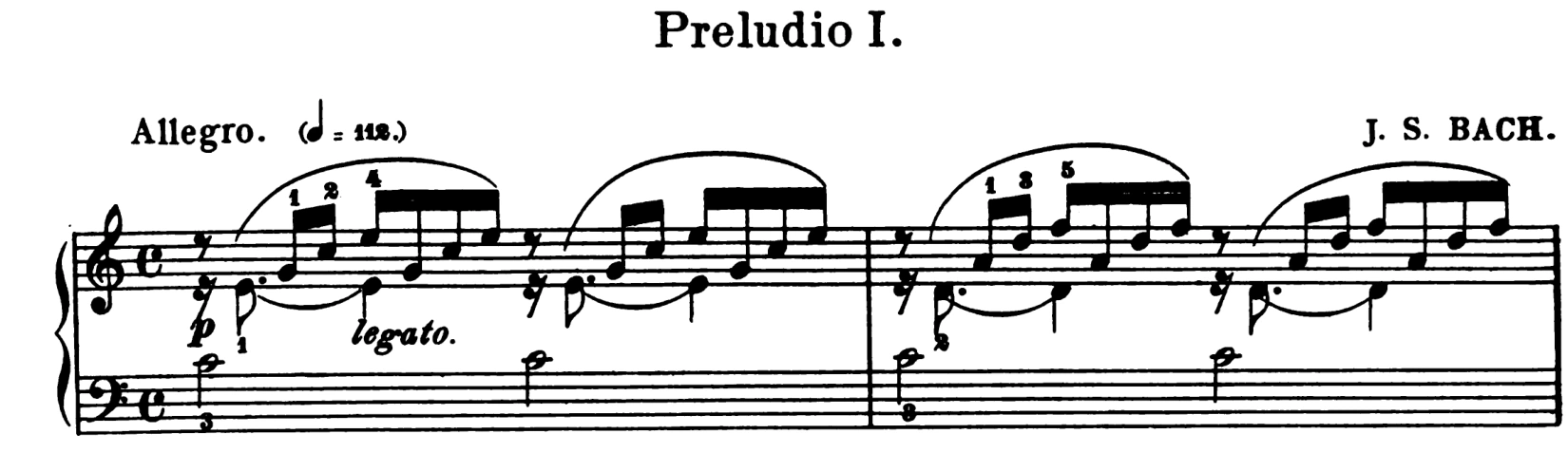
Reading the pattern: C4 is middle C. Both bars use treble and bass clefs, no sharps or flats in the key signature, and common time (4/4). Each eight-note onset pattern occupies two quarter-note beats and repeats in the second half of the bar. The bass C is written as a half note in each half-bar. The next lower-voice note, E4 in bar 1 or D4 in bar 2, enters a sixteenth later and is held across the following notes as shown by the tie. The upper part begins after an eighth rest and plays six sixteenth notes.
The score retains this historical edition’s fingering, slurs, dynamics and tempo indication. No pedal marks have been added. The comparison in the article is a listening experiment on a modern piano.
Try the two bars without pedal first. Hear the repeated pattern within each bar, then the change at the bar line. You do not need to name the chords to hear that the second bar has different ingredients. If harmony labels help, the opening moves from C major to D minor seventh over C.
Next, as a comparison on a modern piano, allow the first bar’s notes to collect under the pedal. Renew at the second bar and listen for the old E and G to clear as the new pattern unfolds. A bass-only pedal plan would miss this change because C is still present.
For another comparison, keep the pedal down across both bars. Hear how the first bar’s notes remain behind the second. Then return to a clear change. The useful observation is the audible difference, rather than a rule that every bar must receive exactly one pedal.
This excerpt also shows why every new note is not automatically a pedal-change point. Within a bar, the broken pattern repeats notes belonging to the same harmony. Clearing on every sixteenth note would create a very different texture. Choose what should accumulate, then listen for when that collection needs refreshing.
Pedal here is an experiment in modern-piano resonance, not an instruction attributed to Bach. The historical edition shown includes editorial fingering and expressive markings. It does not establish one compulsory interpretation or a rule for the rest of the prelude.
Locate the cause of a muddy change or a gap
Choose one troublesome change in your own piece, including a little music on either side. If it remains unclear without pedal, first check the notes and finger releases. Adding more foot movement will not correct a wrong pitch or an unintentionally held key.
If only the pedalled version blurs, repeat the change while listening for one particular old note. Try clearing sooner after the new attack. If that makes little difference, test whether the release rises far enough to damp the old sound. Change one variable at a time so you can hear which comparison mattered.
A gap asks a different question. Did the old sound stop before the new notes arrived? Did the new notes end before the renewed pedal caught them? A short recording can help distinguish a break between harmonies from a weak new attack, although the recording setup also affects what you hear.
After a useful adjustment, restore the approach and continuation. A change that works between two held chords may still need attention when the accompaniment moves. The diagnostic practice loop explains how to test one possibility and carry the result back into the phrase.
Explore pedal depth after the timing is clear
Pedal depth and pedal timing answer different questions. Timing concerns when the old resonance changes. Depth concerns how much sustain the instrument allows at a particular position.
On an acoustic piano, explore a quiet chord by catching it with the pedal, releasing the keys, then gradually allowing the pedal to rise. Listen for the region where the sound begins to damp. Repeat with a comfortable lower chord and compare. Treat this as finding the response of the instrument, not measuring an exact halfway point with the foot.
Partial pedalling can offer finer control than an all-or-nothing movement. It does not remove the need to hear harmonic changes. A shallow pedal held too long can still retain sounds you meant to clear.
On a digital piano, variable sustain depends on the instrument and a compatible pedal. Check the manual before expecting partial movement to change the sound. An on/off switch gives a different response. You can still practise timing and deliberate releases with it; its limitations should inform the exercise.
Let articulation and musical character guide the choice
A singing line may benefit from a connection across a hand change. A detached accompaniment may need audible spaces. Both can occur in the same piece, so “pedal once per bar” is a starting guess at most.
Take a passage with written rests. First play the intended rhythm without pedal. Add pedal and listen again: can the rests still be heard, or has resonance filled them? A rest in one voice does not necessarily require silence from the whole piano, so follow the surrounding parts as well.
In a sustained, spacious texture, some overlap may be part of the intended colour. Compare a cleaner change with a more blended one and listen to what happens to the melodic line and harmonic direction. Richness and clarity are musical choices you can assess together.
Read pedal markings alongside the notes, articulation and edition information. A long pedal indication deserves attention to its effect; it should not become a mechanical instruction that ignores the piano in front of you. When a texture is beyond your present control, a piece matched to the skill you are developing may make the listening task easier to manage.
Check the room and instrument before changing the plan
Try the same short passage when moving between headphones, speakers and an acoustic piano. Keep the notes and intended phrasing familiar so that the listening conditions are the main new variable.
If a digital piano’s reverb setting produces a long tail, temporarily reduce it while checking a release. Restore the musical setting afterwards and listen again. For a wider check of touch, balance and sound settings, see getting a better tone from a digital piano.
On an acoustic piano, listen from the bench and, where possible, from a little farther away through a recording. The room can continue resonating after the strings are damped. That does not mean the foot failed to move, but it may affect how much pedal and overlap suits the passage.
Recheck the actual result at performance tempo. A movement that sounded clear in a slowly blocked version is a useful preparation, not the finished pedal plan.
Leave practice with one decision you can hear
For the next session, choose one harmonic change and make three comparisons: without pedal, with the current pedalling, and with one adjustment. Keep the tempo and dynamic similar. Record a short observation such as “the old E cleared, but the new bass ended early.” That identifies the next test more usefully than “use less pedal.”
Then play the surrounding phrase. Keep the adjustment only if it serves the music there. End by deciding what to listen for next time, rather than trying to solve every pedal change at once.
If a passage keeps alternating between blur and gaps, a lesson can help separate the harmony, finger releases and foot timing. Vienna Piano School offers online classical piano lessons worldwide, with a free 30-minute trial lesson. Bring a short passage whose resonance you want to understand more clearly.