
Piano Lessons in English in Tokyo: Language, Goals and Lesson Fit

Finding piano lessons in English in Tokyo is partly about language, but the most useful question comes a little later: can you and the teacher talk about the sound you are trying to make? You might understand every word of “play more expressively” and still be unsure what to change. A good lesson gives that expression a musical meaning, then lets you try it at the keyboard.
I teach classical piano in English, Japanese and German. For an English-speaking resident of Tokyo, an English lesson offers room to ask detailed questions without translating them first. For a Japanese-speaking pianist, it can also be a place to practise discussing music in English. The choice of language should serve the playing and the person learning it.
At Vienna Piano School, online lessons are available now, and in-person lessons in Tokyo’s Shinjuku area begin in October 2026. Here is what to consider when choosing the language, musical focus and format of your lessons.
Your musical background and goals
Tell a prospective teacher about the music you play now, including the parts that still feel uncertain. “I studied piano as a child” can mean many things. Perhaps you read fluently but have lost confidence in your hands, or perhaps you remember several pieces by ear but find a new page slow to learn. A recent piece and a description of how you practise reveal more than the number of years alone.
If you have taken graded examinations, name the board, grade and approximate date. An ABRSM result, for example, gives useful background, but the conversation should continue into your current repertoire. A qualification earned some years ago does not show how comfortably you read an unfamiliar score today, or whether you have since developed interests beyond the examination programme.
A musical goal can be modest and precise. You might want the melody in a Chopin prelude to carry over the accompaniment, a Mozart sonata to sound less heavy, or a complete piece to remain steady when someone listens. These are different projects. Naming one gives the teacher something to hear and respond to in the first meeting.
I also like to hear what has made you stay with a particular piece. Sometimes the attraction is a recording, sometimes a memory, and sometimes simply one beautiful change of harmony. That interest can guide the lesson even when the piece itself needs adapting to your present stage. We can work towards the music you care about while choosing material that develops the missing skills.
The conversation at the piano
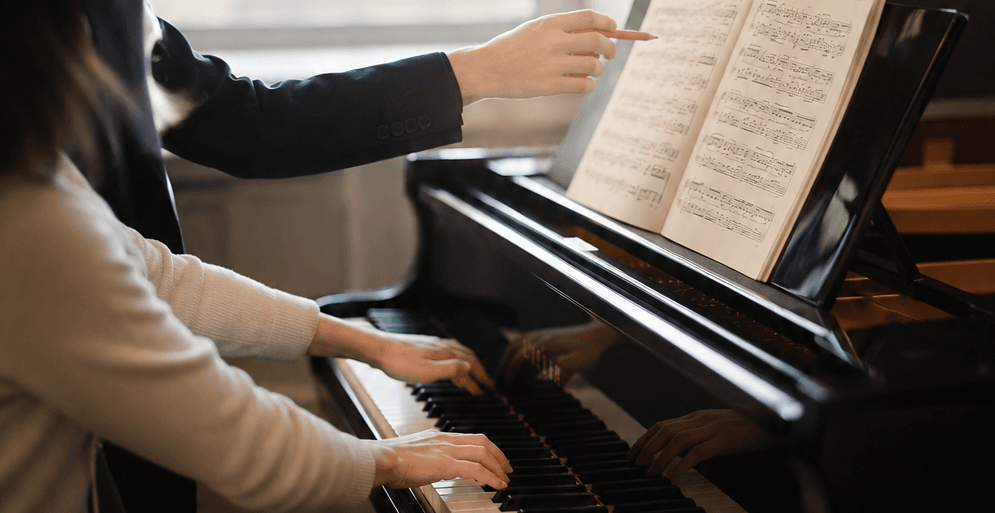
A shared language earns its place when it helps two people hear the same problem. Consider a melody in the right hand over repeated left-hand chords. The melody disappears whenever the accompaniment changes. “Bring out the right hand” describes the aim, but it leaves several possible solutions unexplored.
I would first ask you to play the melody alone and decide where it is going. Then we would add the accompaniment and listen for the first moment when the line loses its shape. Perhaps the left-hand chord is too prominent; perhaps the melody itself has become shorter because your attention has moved to the other hand. Those problems can sound similar, yet ask for different practice.
A melody over left-hand chords: each reply tells the teacher what the student is hearing.
| The conversation | What happens at the piano |
|---|---|
| Student“The melody disappears when I change the left-hand chord.” | At the pianoPlay the phrase and locate the chord change where the line becomes hard to follow. |
| Teacher“Keep the melody as you sang it. Let the new chord enter underneath.” | At the pianoHear the upper line continue while the accompaniment changes. Compare the balance with the first attempt. |
| Student“Now I can hear the melody, but the chord sounds late.” | At the pianoListen again to the timing of the hands. A quieter accompaniment still needs to arrive in time. |
Why does the student’s last reply matter?
The balance improved, but the student noticed a new problem: timing. That observation helps the teacher refine the attempt instead of repeating “softer” after its useful work is already done.
The student’s reply matters as much as the teacher’s instruction. “I can hear the melody until the chord changes” identifies a useful moment. “I understand the sound you want, but I lose it when I put the hands together” tells the teacher where to look next. A lesson has more depth when there is space for those observations.
Demonstration also carries part of the explanation. I might play the passage with two different balances, then ask which version lets you follow the melody. If you prefer one, describe what you heard before trying it yourself. Words such as “warm”, “light” or “singing” become useful when they refer to an audible difference, rather than a vague quality you are expected to imitate.
A good question can be very short: “Do you mean softer, or shorter?” The answer matters. Reducing the volume of an accompaniment and releasing its notes earlier change the texture in different ways. When a teacher says “lighter”, the lesson should make clear which of those changes belongs in that passage.

One-to-one classical piano
Beginner to advanced. Online, worldwide.
Enea
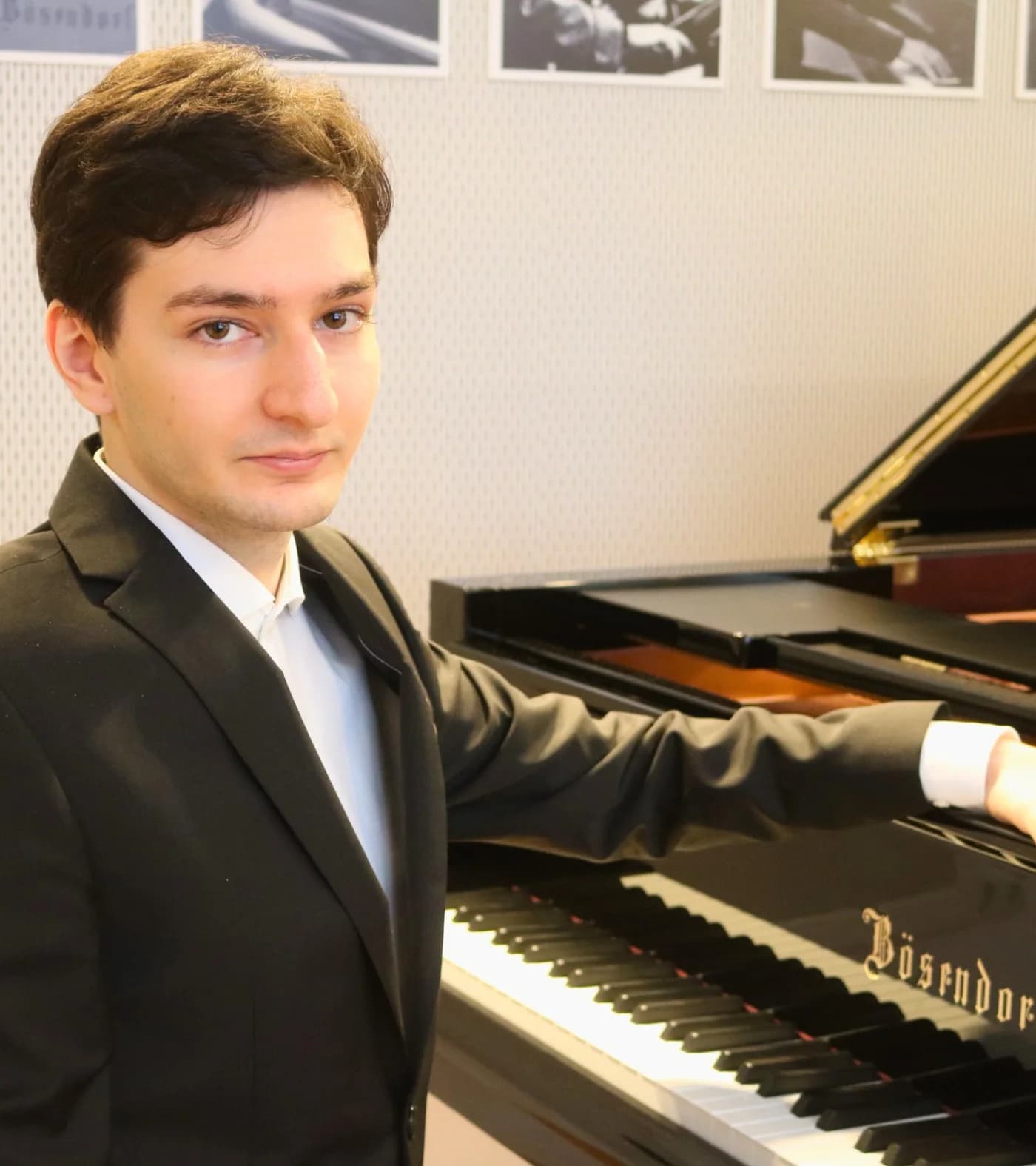
Concert pianist from Vienna
30 minutes · Tokyo studio from October 2026
English terms you will hear
Piano teaching uses ordinary English alongside Italian markings, note names and specialist terms. A teacher may talk about a phrase’s “direction”, ask you to “voice the top note” or say that the pedal is “blurring the harmony”. Learning the term and hearing its effect together is more useful than memorising a long vocabulary list before the first lesson.
Some differences are simply regional. A bar is also called a measure. British note-value names include minim, crotchet and quaver; American usage calls them half note, quarter note and eighth note. If you learnt one set, tell the teacher. In a lesson, “the second beat of bar eight” should locate the same place for both of you.
Other words describe musical relationships. Voicing means shaping the relative prominence of notes or lines within a texture. In a chord, that might mean letting the upper note sing while the other notes support it. Articulation concerns how notes begin, end and connect. Phrasing concerns the shape and direction of a musical idea over time. A passage can have clean articulation and still sound like a string of unrelated notes if its phrase has no destination.
Point to the score whenever the location is unclear. “Start again” might mean the beginning of the phrase, the beginning of the page or the beginning of the piece. “Could we start one bar before the repeat sign?” removes that uncertainty immediately. This is especially useful when teacher and student use different editions, since page and line breaks may differ.
For someone who previously studied in Japanese, a familiar term may arrive with a different range of meanings in English. “Touch”, for instance, can refer broadly to how the keys are played; a teacher still needs to show which movement and sound they mean. Translate the musical intention as well as the word. If the explanation remains abstract, ask for two contrasting demonstrations and listen to what changes.
Beginners, returning players and advanced pianists
The musical depth of an English lesson should suit the player. A beginner needs clear language, a sensible starting point and time to become familiar with the instrument. An advanced pianist may want a detailed discussion of sound, structure or interpretation. Fluency in English tells the teacher little about either person’s piano experience.
Beginning with a clear sound
For a beginner, I would connect a few new words to something played immediately. We might find a group of two black keys, locate the nearby C and play a short pattern with a steady pulse. “Higher”, “lower”, “hold” and “release” then refer to actions and sounds already within reach. Introduce notation at the pace the student can use it, while keeping listening part of the lesson from the start.
Early musical work is more interesting than naming notes alone. Play a short pattern twice, once with a clear ending and once with every note equally heavy. Ask what changed. Even a small amount of music gives a beginner something to hear, choose and shape. The language follows an experience rather than replacing it.
Returning to familiar music
A returning player often brings a piece that still feels close, alongside gaps that have appeared during a break. The useful question is where the old familiarity holds and where it stops. Perhaps your hands remember the opening, but a later section depends on reading you have rarely practised recently. Or the notes return quickly while the pedal conceals details you once controlled.
I would use that familiar music as a starting point, then introduce a shorter unfamiliar piece to hear how you learn now. This can reveal a different side of your playing from polishing a remembered work. Describe both experiences to the teacher: what you can play comfortably and what takes repeated trial and error.
Developing an interpretation
For an experienced pianist, an English lesson can explore decisions rather than only corrections. In a Classical sonata, you might compare two ways of pacing a transition into a new key. Does easing the tempo reveal an important arrival, or interrupt the motion before the phrase reaches it? Play both versions and explain what you wanted each one to do.
I enjoy this part of teaching because the student’s musical argument becomes audible. The teacher can challenge a choice, demonstrate another possibility and ask you to listen again. Technical work remains involved: a change in phrase direction may require a different fingering, balance or distribution of movement. The conversation connects the idea to the means of playing it.
Piano lessons as musical English practice
If Japanese is your main language and you want to use more English, agree how that will work within the piano lesson. One approach is to conduct the musical conversation in English and use a brief Japanese explanation when a particular point needs it. Another is to use English for a focused part of the lesson, such as describing the next practice task. The right choice depends on how comfortably you can stay involved in the music.
Start with observations you genuinely want to communicate. “The left hand rushes here.” “I hear a break between these notes.” “Could you play the ending once more?” These sentences have an immediate purpose. As your vocabulary grows, you can add a reason or comparison: “I changed the fingering because I want the top voice to continue through the chord.”
During playing, it is usually unhelpful to monitor every English sentence you might say afterwards. Finish the phrase, listen, then speak. In my teaching, I would give a useful musical observation priority over correcting every small language error. If a word changes the meaning, we can clarify it at the keyboard and use it again in the next attempt.
Students preparing to study abroad can also practise introducing repertoire, asking about a lesson suggestion and explaining their own interpretation. That work belongs alongside the playing. Vienna Piano School offers music-focused English and German support; the relevant language, subject and balance with piano study can be discussed when enquiring. Formal university language requirements remain a separate matter.
Shinjuku and the shape of your week
A lesson in Tokyo needs a place in your actual week. Think about the journey from the place you will leave, whether that is home, work or university, and the practice time available before the next lesson. A convenient station is useful, but the route from the station to the particular lesson venue still matters.
For Shinjuku, use the confirmed meeting location and exit when planning the journey. JR East provides a station map in English, linked at the end. Check the full route once the venue is agreed, rather than treating every address described as “Shinjuku” as the same destination. Allow time to arrive, settle at the instrument and begin listening after a busy commute.
Our in-person Shinjuku lessons begin in October 2026. Online lessons are already available, so students can begin before that date or discuss continuing online when travel changes their routine. The musical aim can remain consistent across formats, even though an in-person meeting offers a shared instrument and room while an online lesson lets the teacher hear the piano you normally practise on.
For example, a phrase may feel well balanced on a studio grand but sound crowded on your home instrument. That difference is worth bringing back to the lesson. Describe which sound is missing or becoming too strong. Adjusting to your own piano is part of learning to listen; the lesson’s interpretation should survive beyond the room where you first tried it.
If you are comparing formats, my account of what happens in an online classical piano lesson explains how demonstration and feedback work at a distance. Choose a format you can attend consistently and support with access to an instrument between meetings.
A trial lesson with something to discover
Bring a piece or passage that shows what you want help with. For an experienced player, that might be music you can already play but cannot quite shape as you wish. A returning pianist might bring an old favourite. A beginner can describe the music they hope to learn and start at the instrument with the teacher.
During the trial, notice whether the explanation changes what you hear. If the teacher asks for a clearer melody, can you identify the point where it becomes clearer? If a movement is suggested, does it solve the difficulty in that passage? The value lies in the relationship between the explanation, your attempt and the next response.
You should also have room to ask a question or disagree musically. “I prefer the quieter version because the ending feels more distant” is a useful contribution. The teacher may help you refine that version or show why it loses something important in the score. A shared lesson language supports that exchange, especially once the work goes beyond finding the correct notes.
Before finishing, put the next practice task into your own words. A useful note might be: “In bars five to eight, keep listening to the upper line when the left-hand chord changes.” That is something you can test the next day. If all you can write is “more expression”, return to the passage and ask which sound or moment the teacher has in mind.
English piano lessons at Vienna Piano School
I work with adults and students of junior-high-school age and above, from beginners and returning players to advanced pianists and audition candidates. My background includes piano study at MUK in Vienna and at Mozarteum in Salzburg. You can read more about my training and approach to teaching.
Lessons are available in English, Japanese or German. Regular lessons last 55 minutes and are booked individually after the initial free 30-minute trial. The lesson and admissions page gives the current fees and arrangements, including studio rental for in-person lessons. Online study is available now; in-person teaching in Tokyo’s Shinjuku area starts in October 2026.
When you request a trial lesson, mention your preferred language, current repertoire or starting point, and whether you are interested in Shinjuku or online study. If you want to use piano lessons to develop your musical English, include that too. We can begin with a passage, listen to it together and find the question that deserves attention first.