
What a Classical Piano Teacher Hears in the First Eight Bars
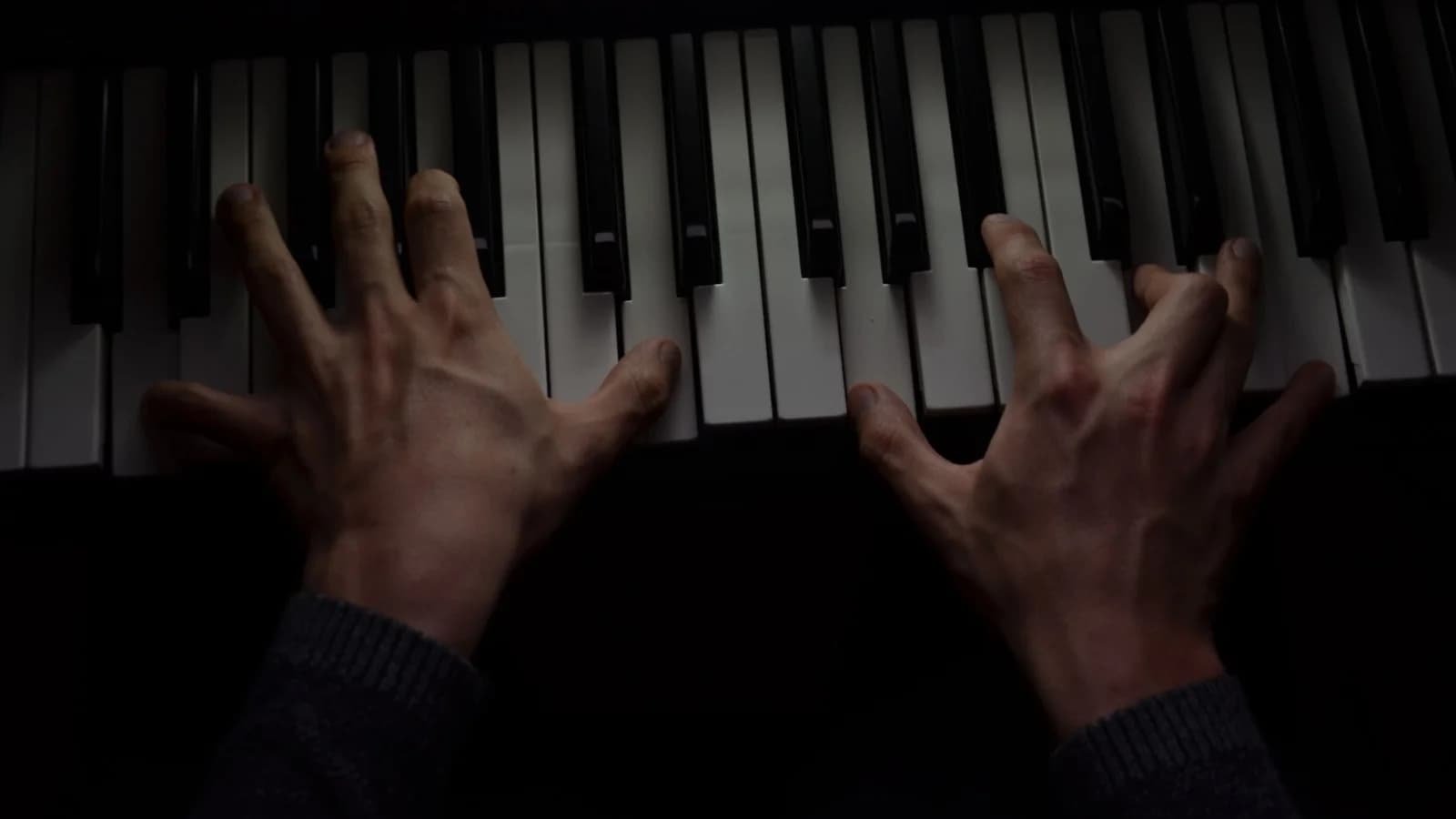
In the first eight bars of a piano piece, I listen for how the playing moves: whether the pulse carries through, whether the melody remains clear above its accompaniment, and whether the sounds join and release with purpose. Those relationships help me choose a useful starting point for the lesson. A wrong note matters, but it may tell me less than a perfectly correct passage that keeps losing its direction.
This can feel mysterious from the other side of the piano. You have worked through several pages, and your teacher asks to return to the opening. Why spend so much time on music you can already play? Often, that short passage contains the same musical question that appears throughout the piece, in a form we can hear and explore together.
Here is how I would approach the opening of Burgmüller’s La Candeur, Op. 100 No. 1. Its moving melody, sustained chords and clearly written releases give us plenty to listen to. You can follow the discussion with another piece in mind, even if you have never played this one.
Start by hearing the music the player wants to make
My first question is what the performance seems to be saying. Does the opening sound gentle, eager, cautious, hurried? Can I follow a line through it? I want to hear the player’s musical intention before deciding which detail deserves attention.
In La Candeur, the opening right hand has flowing eighth notes above long left-hand chords. The marking is Allegro moderato, with a quiet opening and dolce, or sweetly. There is room for movement and warmth here. A careful performance can still sound surprisingly effortful if every small group has to restart, or if each accompanying chord draws attention away from the tune.
Burgmüller, La Candeur, Op. 100 No. 1 · Bars 1–4
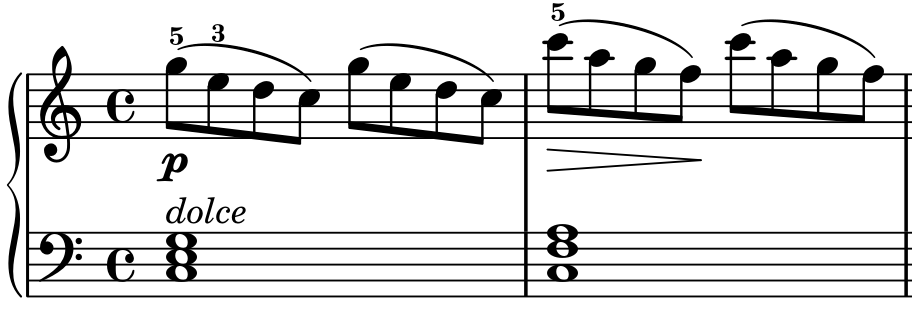
Bars 1–2
Bars 3–4
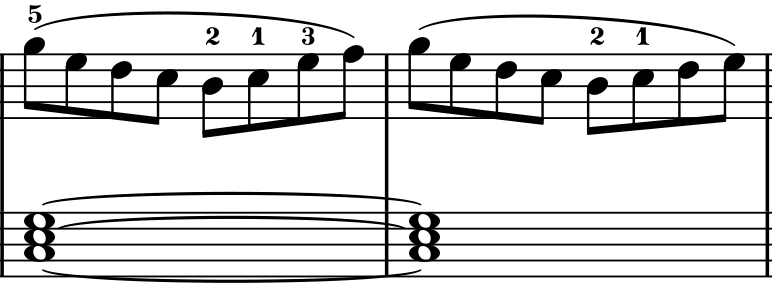
The tie in the lower staff asks for one sustained chord across two bars. The changing melody above it carries the movement forward.
Tap a score excerpt to enlarge it. Open the complete score (PDF).
Read the notes in bars 1–4
Middle C is C4. The metre is 4/4, shown as common time. Right-hand notes are eighth notes throughout bars 1–7. The groups below divide each bar into its two halves; bar 8 is specified separately.
- Bar 1Right: G5 E5 D5 C5, G5 E5 D5 C5.Left: C3–E3–G3, whole-note chord.
- Bar 2Right: C6 A5 G5 F5, C6 A5 G5 F5.Left: C3–F3–A3, whole-note chord.
- Bar 3Right: G5 E5 D5 C5, B4 C5 E5 F5.Left: C3–E3–G3, whole-note chord tied into bar 4.
- Bar 4Right: G5 E5 D5 C5, B4 C5 D5 E5.Left: Continue holding the chord from bar 3, without a new attack.
The score excerpts show the first four bars. Notice the right hand’s small slurred groups and the tie connecting the left-hand chord in bars 3–4. Later, the melody stretches into a longer slur across bars 7–8. These markings offer musical questions we can hear, rather than a list of instructions to tick off. The complete score is available with the excerpts if you want to follow all eight bars.
I would usually let the opening reach its resting point before speaking. A small hesitation may resolve as the player settles, while another may recur in exactly the same place. Hearing a complete thought helps distinguish a momentary disturbance from something worth working on. Eight bars are a useful window into the playing; understanding the player takes conversation and further listening.
Does the pulse continue when the hands do different jobs?
The opening melody moves in eighth notes, two to each quarter-note beat. I listen for a pulse underneath them that continues through the changes of hand position. The little downward figures should belong to that pulse, with enough freedom to sound like a melody.
One revealing place is the return to the upper note within a bar. In bar 1, the right hand plays G–E–D–C and then repeats the figure. If the second G arrives early, the four-note groups begin to tumble into one another. If there is a small wait before every return, the music acquires a stop-start quality. Neither problem necessarily means the pianist cannot count. The distance back to G, the chosen movement, or the desire to accent the beginning of a group may be affecting the timing.
I might ask to hear just that bar, at a pace where the return feels comfortable. Then I would ask for the same shape with a little more forward motion. What interests me is whether the player can preserve the relationship between the notes as the pace changes. Simply setting a slower metronome number would leave that question unanswered.
Bars 3–4 reveal a different relationship. The left hand sounds its chord at the beginning of bar 3 and holds it across the barline. The right hand continues moving throughout both bars. There is no fresh left-hand attack to announce the beginning of bar 4, so the pianist has to carry the pulse through without that extra reminder.
Bars 3–4 · Each numbered column is one quarter-note beat.
Right hand: two new notes on every beat
Left hand: sound the chord once, then hold
The barline changes the count, but it does not ask the left hand to play again. Listen for the melody to cross it without waiting for a fresh bass attack.
If the melody hesitates at this barline, I might ask the player to count quietly through the held chord while playing the right hand. If that restores the movement, we have found a useful way of hearing the passage. The next attempt should bring back its shape and expression, so that counting supports the music rather than becoming the performance.

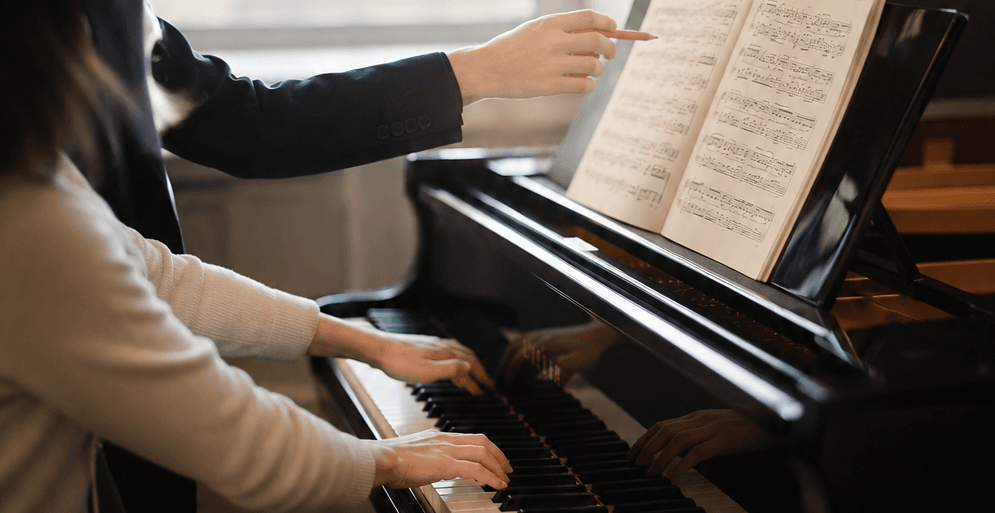
One-to-one classical piano
Beginner to advanced. Online, worldwide.
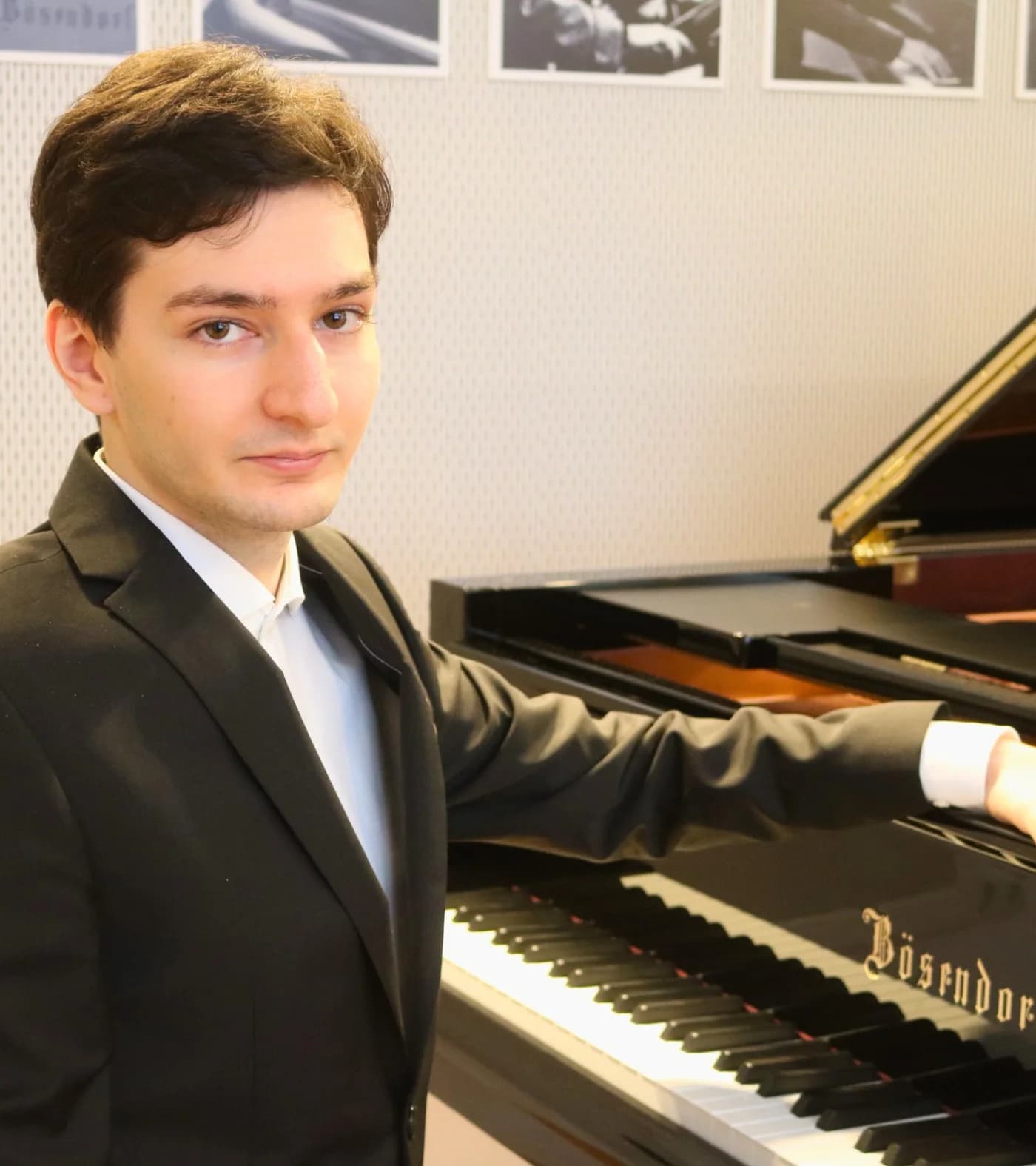
Enea
Concert pianist from Vienna
30 minutes · Tokyo studio from October 2026
Can the melody sing above a chord that is already fading?
A sustained chord is a particularly interesting accompaniment. It has a clear beginning and then naturally decays. The melody continues producing new sounds above it. That changing balance means the pianist is listening to a relationship that develops after the hands first touch the keys.
At the start of bar 1, I want the melody’s G to be easy to follow above the C-major chord. If the chord lands heavily, the first melodic note can disappear inside it. The remaining notes may then seem unexpectedly prominent, even if the right hand is playing evenly. The apparent problem in the melody began in the accompaniment.
I might ask for the left-hand chord on its own, quietly enough to leave space for a voice above it, but with a clear, settled sound. Then we would add the right hand. This is more specific than asking for a softer left hand everywhere. We are finding how much sound that chord needs at its entrance, on this piano, in this room.
The opposite situation is possible too. A very tentative chord may leave the melody feeling unsupported. The task is to hear enough harmonic foundation while keeping the singing line in the foreground. A quiet dynamic still allows that hierarchy.
Across the tied chord in bars 3–4, the accompaniment fades for longer. Pressing harder into an already held key will not renew the struck sound. The right hand has to shape its changing notes in relation to the resonance that remains. I listen for a melody that stays alive without becoming more insistent simply because the chord underneath is quieter.
A useful comparison is to sing or hum the right-hand line while playing only the accompaniment. Where does the sung line want to go? Then play both hands and see whether that direction survives. You need no polished singing voice for this; it is a way of giving your ear a clear idea before asking your fingers to produce it.
Do the small gestures belong to a longer phrase?
The early slurs group the right-hand notes into small shapes. I listen for their beginnings and endings, and for the larger movement that connects them. Four notes can have a gentle rise and release without making the pianist stop between every group.
Imagine speaking a sentence in which every two words receive a separate breath and a fresh emphasis. Each pair may be clear, but the thought becomes difficult to follow. Something similar happens when every slur is treated as a complete musical ending. In this opening, I want to hear how one small gesture gives way to the next.
Bar 2 takes the same descending idea into a higher register. That change invites the ear upwards, but the score shown also includes a diminuendo over its first group. The higher notes need not become a sudden shout. A player can let the colour open and then soften through the descent, keeping the character connected to the first bar.
By bar 5, the written crescendo introduces a different direction. The music can gather energy through the following bars, with the left hand’s F-sharp in bar 7 helping lead towards the G harmony in bar 8. That arrival sounds settled locally, while the piece still has more to say beyond this opening section.
I would ask where the player hears the passage going, then listen to whether the timing and sound make that destination audible. Sometimes the answer is already convincing and only one over-emphasised note interrupts it. Sometimes all the small groups are attractive, but they seem unrelated. Those are different lessons, even though both might be described vaguely as “working on phrasing.”
Our discussion of shaping a classical phrase develops the relationship between local gestures and larger arrivals. Here, the teacher’s task is to hear which part of that relationship would most help this performance.
The end of a sound can change the whole opening
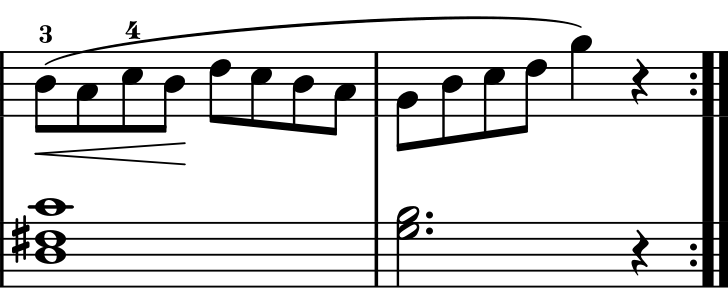
Bar 8 is worth listening to all the way through. In the right hand, four eighth notes lead to a quarter-note G on beat three, followed by a quarter rest. The left hand holds its G harmony for three beats and also rests on beat four. Both parts therefore leave space at the same point.
Burgmüller, La Candeur, Op. 100 No. 1 · Bars 7–8
- Right hand, bar 8
- Four eighth notes, then a quarter-note G on beat 3. Release for the rest on beat 4.
- Left hand, bar 8
- Hold the G harmony through beats 1–3. Its rest begins with the right hand’s rest.
Tap a score excerpt to enlarge it. Open the complete score (PDF).
Read all eight bars in text
Middle C is C4. The metre is 4/4, shown as common time. Right-hand notes are eighth notes throughout bars 1–7. The groups below divide each bar into its two halves; bar 8 is specified separately.
- Bar 1Right: G5 E5 D5 C5, G5 E5 D5 C5.Left: C3–E3–G3, whole-note chord.
- Bar 2Right: C6 A5 G5 F5, C6 A5 G5 F5.Left: C3–F3–A3, whole-note chord.
- Bar 3Right: G5 E5 D5 C5, B4 C5 E5 F5.Left: C3–E3–G3, whole-note chord tied into bar 4.
- Bar 4Right: G5 E5 D5 C5, B4 C5 D5 E5.Left: Continue holding the chord from bar 3, without a new attack.
- Bar 5Right: G5 F5 E5 D5, G5 F5 E5 D5.Left: B2–F3–G3, whole-note chord.
- Bar 6Right: F5 E5 D5 C5, F5 E5 D5 C5.Left: C3–E3–G3, whole-note chord.
- Bar 7Right: B4 A4 C5 B4, D5 C5 B4 A4.Left: D3–F♯3–C4, whole-note chord.
- Bar 8Right: G4 B4 C5 D5 (eighth notes), G5 (quarter note), quarter rest.Left: G3–B3, dotted-half-note chord, then a quarter rest.
That shared release is part of the musical statement. If the final G is clipped before it has settled, the ending can sound impatient. If the keys or pedal keep the harmony sounding across the rest, the pause loses definition. I listen for the arrival, its length, and the space after it as one continuous experience.
This is where a simple request such as “Let me hear the silence” can be useful. The player may have been concentrating on reaching the last note and scarcely noticed what happened after it. We can play the last two bars again, allowing the written rest to have its place before repeating the opening. The silence should feel connected to the pulse that brought us there.
Pedal is part of that listening. The excerpt does not specify a pedal pattern, so I would first want to hear the connections and releases without it. That makes it easier to notice a finger releasing early, a held chord being re-struck, or a new harmony arriving before the previous sound has cleared.
When pedal is added, its timing should serve the sound we have chosen. A resonant acoustic piano and a drier instrument may need different amounts. At the end of bar 8, listen for the harmony to release into the rest rather than carry through it as a wash. There may still be a little resonance in the room, which is different from continuing to hold the notes with the pedal.
Hearing this clearly is also useful online. If the connection cuts off quiet decay, I would ask about the audio settings before deciding that the player has shortened the ending. A teacher needs to recognise when the transmission is obscuring the musical evidence.
What the sound makes me look for in the hands
An uneven note gives me a place to look. Suppose a thumb note suddenly stands out in an otherwise smooth line. I would watch the approach to that note, the fingering, and how the hand moves afterwards. The sound starts the question; watching and trying the passage help answer it.
In bar 3 of the score shown, the descending line turns upwards through B–C–E. The printed fingering gives 2–1–3 for those notes. That brings the thumb into the turn. I listen for whether C becomes an accidental accent or whether a small delay appears as the hand prepares to continue. Trying the turn slowly, with its preceding notes included, can make the connection between movement and sound easier to notice.
The printed fingering is a proposal to understand and try. Hand size, the surrounding movement and a pianist’s existing habits affect how it works in practice. I would compare a possible alternative by listening to the phrase it produces, including the next notes, rather than choosing whichever feels easiest on one isolated key. Choosing useful piano fingerings explores that process in more detail.
I also watch what happens while the left-hand chord is held. Can the hand remain comfortably in contact while the right hand moves, or does the whole arm appear to be working to keep a sound that has already been made? A visual impression gives us a question to try together. I would ask how the passage feels and observe another attempt before making a judgment about the movement.
These details matter because they have a musical consequence: a line that flows more freely, a clearer balance, or a release that feels less abrupt. The purpose of looking at the hands is to help the player make the sound they intend.
Why I might change only one thing on the next attempt
By this point, I may have heard several things worth exploring. Discussing all of them at once would give the player a great deal to remember and very little chance to listen. I prefer a first change whose effect we can recognise.
If the melody is consistently covered, the first request might concern only the opening left-hand chord. We would keep the tempo and the right-hand intention as close as possible to the earlier attempt, then listen to the new balance. If the melody becomes clearer, we can carry that experience into the next chord change.
If the sound is already well balanced but the beginning of every figure arrives early, the first task belongs to timing. If the opening moves beautifully until the thumb interrupts the upward turn, I would begin at that turn. The same score leads to different starting points because the playing presents different musical questions.
The response matters as much as the first attempt. A pianist who can hear a change, try it, and describe what happened has something valuable to work with between lessons. Sometimes the first suggestion has little effect. Then we listen again and choose a better way into the passage. Teaching is a conversation with the sound the player actually produces.
For practice at home, the short-passage practice approach helps carry that conversation forward. A brief recording can also reveal whether the intended change reached the listener; our guide to listening to your own piano recording explains how to make that comparison useful.
Bring the piece you are actually working on
You do not need to polish an entire programme before a first lesson. A familiar opening, a passage you enjoy, and a place where you feel stuck can give us plenty to discuss. It helps to say what you have been trying to improve and what you hear when you play it yourself.
The listening described here applies beyond this modest Burgmüller study. In a Bach invention, the question may concern how two voices answer one another. In a sonata, an accompaniment may hurry just as the melody needs space. In a slow movement, a release may tell us more about the phrase than its loudest note. The score changes; the attention to musical relationships remains.
My aim is for you to leave with a clearer idea of what you are hearing and a practical way to explore it. That is why a few opening bars can occupy a rewarding part of a lesson. They give us enough music to make a change, hear its effect, and connect it to the rest of the piece.
Vienna Piano School offers online lessons now, with in-person lessons in Tokyo’s Shinjuku area beginning in October 2026. You can request a free 30-minute trial lesson with a few words about your current repertoire and what you would like to work on. We can begin with the music already under your fingers.