
How to Shape a Classical Phrase Without Over-Romanticizing It
To shape a Classical piano phrase, first find where the harmony arrives and how the melody gets there. Then decide which notes need connection, which need space, and how the bass supports the journey. Changes of volume and timing become more convincing when they make those relationships audible.
Here, “Classical” means the style associated with composers such as Mozart and Haydn, rather than the whole classical repertoire. It does not mean emotionally restrained playing in every passage. A sudden accent, a tender answer or an unsettled ending can be essential to the character. The difficulty is judging their scale within the phrase.
We will use the opening eight bars of Mozart’s A-major Sonata, K.331, and a short comparison with Chopin’s A-major Prelude, Op.28 No.7. Both examples come from existing public-domain score editions. You can apply the listening exercises to a few bars of music you already know; learning either complete piece is unnecessary.
Find the ending before drawing the shape
A cadence is a harmonic point of punctuation. Some cadences leave the music waiting; others give a stronger sense of arrival. A phrase can sound beautifully even yet remain hard to follow if those different endings receive exactly the same treatment.
Try playing the melody and the lowest moving notes of your passage, leaving out some of the middle texture for this listening exercise. Notice the last change of bass and the note on which the melody settles. Does the ending feel complete, or does it seem to invite something after it? You do not need a Roman-numeral label before you can compare those sensations.
An arrival is not automatically the loudest note. The music may settle softly after a moment of tension, or reach a strong chord that still demands continuation. Similarly, the highest pitch may be an ornament or part of a repeated figure. Making every melodic peak louder can disguise the larger direction.
Once the ending is clear, play towards it from a little earlier. Keep enough sound and rhythmic intention to reach the arrival, rather than fading several notes too soon. Then include the next beginning. A phrase ending has to work as part of that connection, not only as a satisfying place to stop practising.
Mozart’s first eight bars: similar beginnings, different arrivals
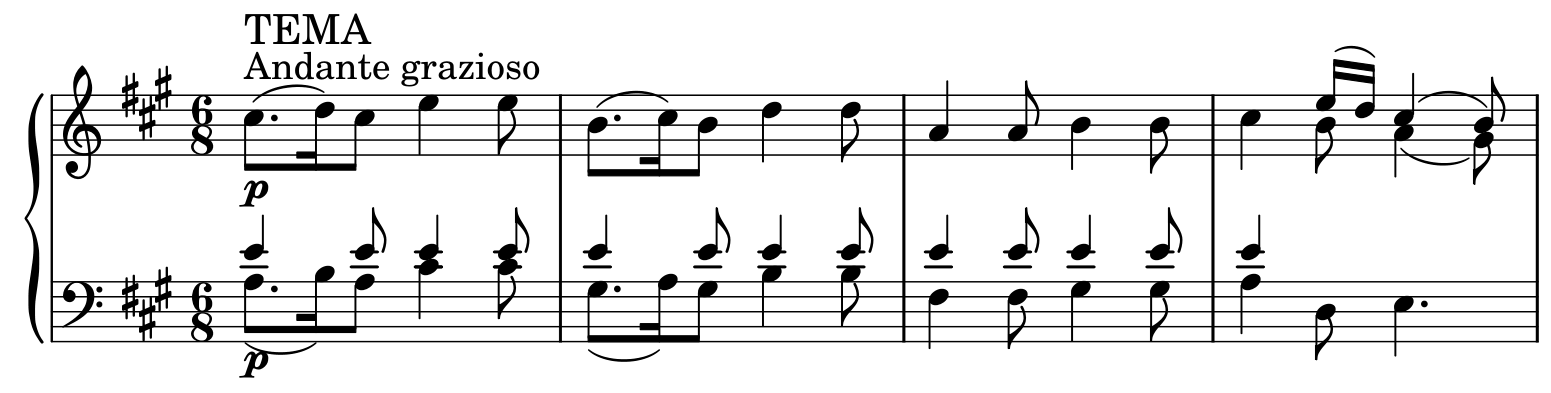
The first eight bars of K.331’s opening theme form a useful question-and-answer pair. Bars 1–4 end on the dominant, the harmony built on E in A major. This is a half cadence, which leaves the passage open. Bars 5–8 start with the familiar idea and eventually settle on A-major harmony, with A in both the melody and bass at the final arrival.
The map below follows those two endings. It shows the opening part of a longer theme, not the entire theme or the later variations. Bar numbers count the first complete 6/8 bar as bar 1; there is no upbeat before it.
Mozart, K.331, first movement, bars 1–8. A major, 6/8. This is a map of the endings, not a graph of volume.
First phrase: bars 1–4
- 1–2Opening idea
- 3–4Dominant arrival: EAn open ending →
Answering phrase: bars 5–8
- 5–6Opening idea returns
- 7–8Tonic arrival: AA firmer close
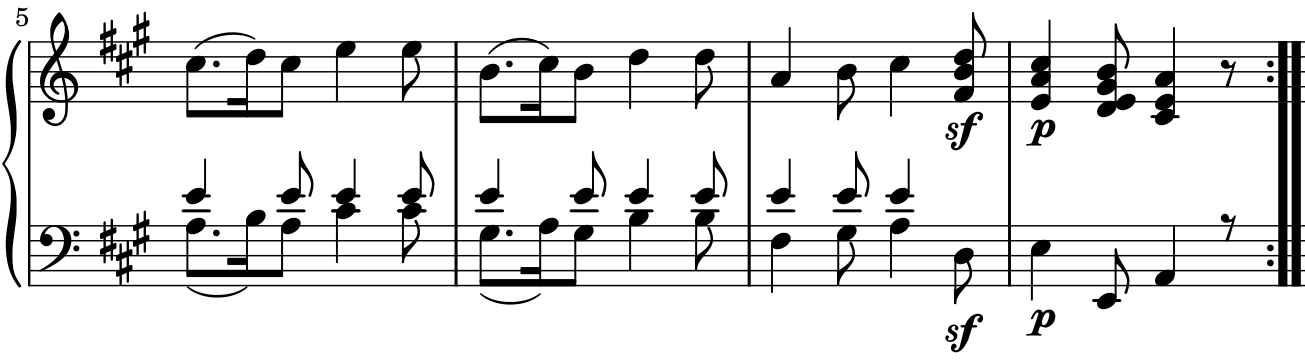
Open either score for a larger view. The close-ups below isolate the two endings; clefs and key are given in the complete lines above.
Compare the two cadence bars more closely
Bar 4: B above E
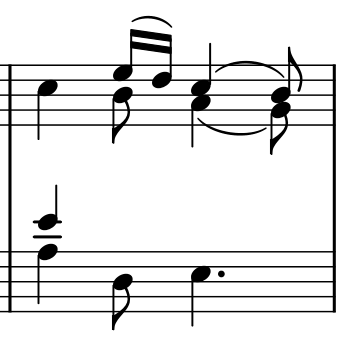
The final B belongs to the dominant harmony. Let the ending retain its sense of continuation.
Bar 8: A above A
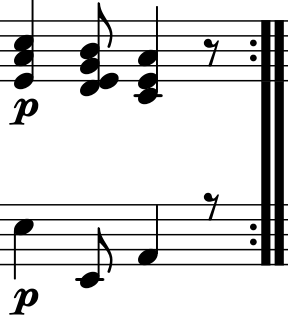
The tonic arrival is on the second larger beat, after the first two chords. The printed p begins earlier in the bar.
Source context: view the complete theme page. Existing public-domain engraving; no markings added.
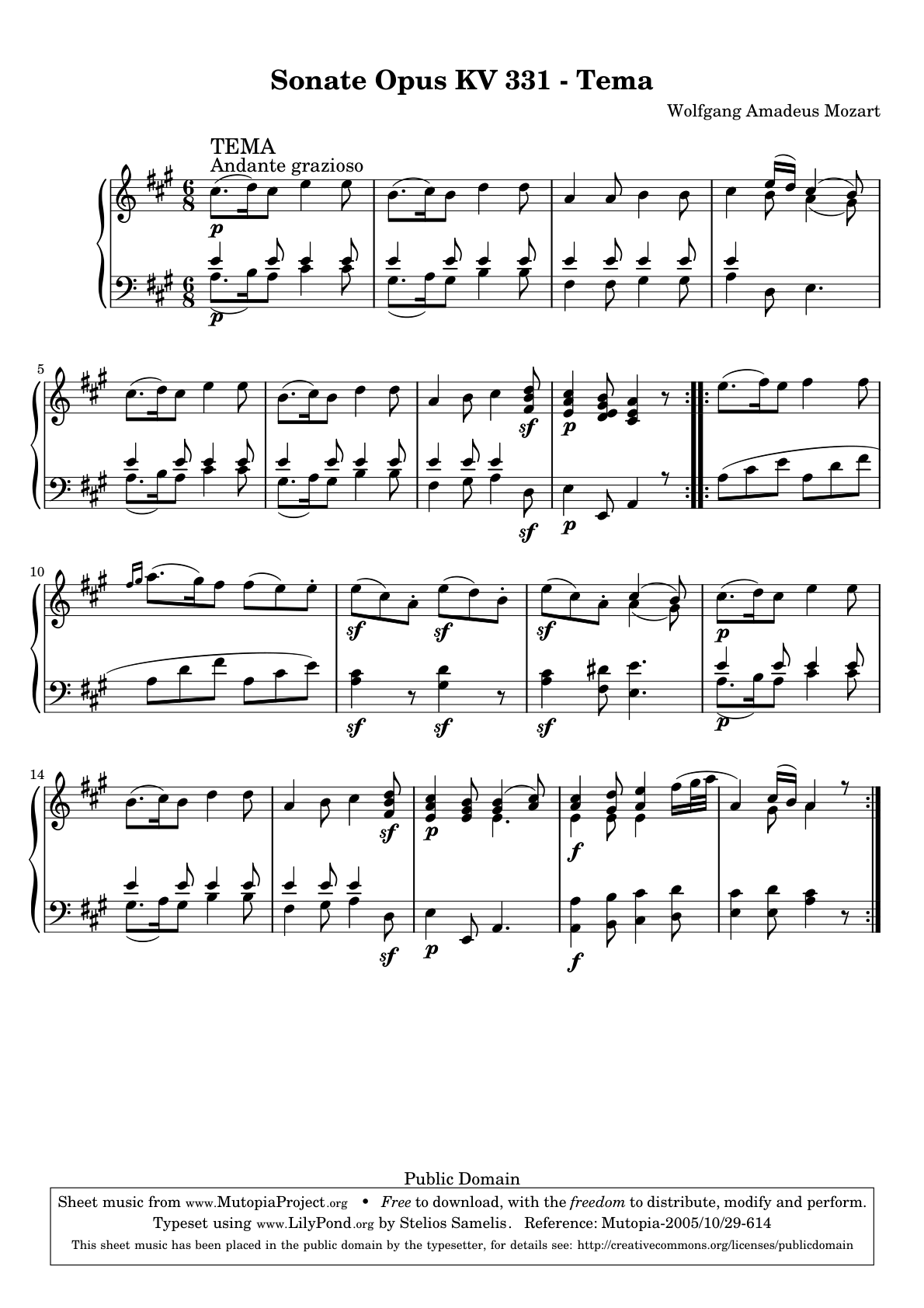
First play bars 3–4, then bars 7–8. Listen for the difference between reaching the dominant and returning home. Now restore bars 1–2 and 5–6. The similar beginnings give you a reason to connect the two phrases, while their different endings give you a reason to distinguish them.
The score also prevents a generic “swell, then fade” solution. It marks sf on the last eighth note of bar 7 and p at the beginning of bar 8. The emphasis belongs to a specific event before the final tonic arrival. Try making that contrast audible within the gentle opening character, without turning the accented chord into a separate outburst.
There is room for different interpretations of the smaller notes along the way. This map identifies the cadential relationship; it does not prescribe one loudest note, an exact dynamic curve or a fixed amount of slowing down.


One-to-one classical piano
Beginner to advanced. Online, worldwide.
Enea
Concert pianist from Vienna
30 minutes · Tokyo studio from October 2026
Keep short slurs inside the longer thought
A short slur and a complete phrase can describe different levels of the music. In the Mozart example, the opening dotted eighth and sixteenth are slurred together. Similar small gestures occur before the four-bar phrase reaches its cadence. Ending the whole musical thought at every slur would break it into fragments.
Try the opening figure slowly enough to hear the two slurred notes as related. Then carry the pulse into the following note, even if the articulation creates a small separation. The distinction is between connecting the musical thought and connecting every sound without a gap. A phrase can remain coherent through detached notes and rests.
The 6/8 metre matters here. Feel two larger beats, each containing three eighth-note subdivisions. Count “ONE-and-a, TWO-and-a” if that helps, while keeping the written dotted rhythm clear. The larger pulse should not require a heavy attack on every first or fourth eighth note.
Also notice what a release does to the next entry. A light ending that is cut too short can sound impatient; an ending held across the next gesture can obscure its start. Test note length before adding a dramatic wrist lift or a pause. If your fingers cannot deliver the connection you hear, revisit the choice of piano fingering in that specific spot.
Let the bass explain the direction
The melody does not carry the phrase alone. In Mozart’s opening, the lower part changes beneath recurring upper notes. Hearing those changes helps distinguish a continuing thought from another identical repetition of the tune.
Play the left hand and listen for its lowest moving line. Then add the melody at a comfortable dynamic, keeping the supporting notes clear enough to reveal the harmony. The aim is not to make every bass note prominent. It is to hear what changes and what stays while the phrase moves towards its cadence.
If the melody sounds forced, try reducing an over-insistent accompaniment before making the right hand louder. If the result becomes thin or directionless, restore some support in the bass. These are comparisons to make by ear, not a permanent rule that one hand must stay at a particular volume.
A quiet dynamic still needs a clear beginning and a sustained musical intention. Listen through a held note towards its successor rather than mentally leaving the phrase as soon as the key has gone down. Singing the line away from the keyboard can help you decide what you want that connection to feel like, even though a piano cannot sustain sound in the same way as a voice.

Listen to the resonance between attacks as well as the attacks themselves. Reference photograph.
Make timing and pedal serve a specific event
Rubato is expressive flexibility in timing. Before deciding how much to use, establish a version in which the rhythm, metre and phrase endings are easy to hear. Then try a small change at one meaningful point and compare it with the surrounding bars.
If every short slur ends with a slowdown, the larger phrase may never gather continuity. If every new gesture begins with a push forward, the passage may sound hurried even when its average tempo is moderate. Listen to the connection across the event you changed. Can you still feel the next beat coming?
A metronome can provide a reference during this comparison. Use it briefly to locate where the pulse starts to wander, then listen again without it. The goal is to hear a chosen inflection rather than an accidental delay caused by an awkward chord or an uncertain next note. There is no useful universal allowance of extra milliseconds for a Mozart cadence.
Pedal can support resonance, but it also changes how clearly releases and harmonic changes are heard. Compare a short passage with less pedal, then add what the sound needs on your instrument. Avoid filling every small space simply because the unpedalled version feels unfamiliar. The separate guide to sustain pedal and clear harmony gives a practical way to listen for a clean change.
A Romantic comparison that still asks for simplicity
Chopin’s Prelude in A major offers a useful check on period labels. Its opening is marked Andantino and dolce e semplice: sweetly and simply. Calling it Romantic does not make every chord a cue for a large swell or delay.
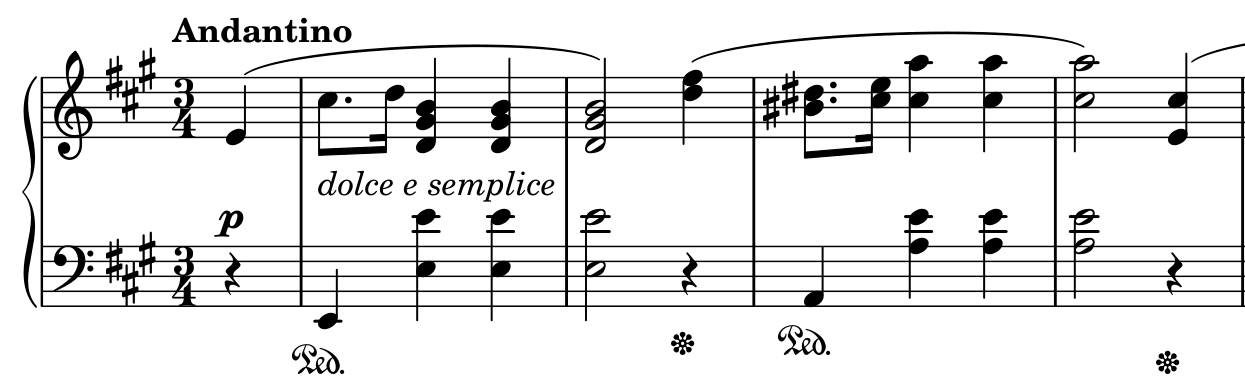
The excerpt includes the quarter-note upbeat and bars 1–4. In 3/4, the first gesture moves from that upbeat through bar 1 to a held chord in bar 2. The next gesture starts on the last beat of bar 2 and reaches another held chord in bar 4. The slurs cross the bar lines, and the left hand leaves a written rest beneath the new upbeat.
Op.28 No.7, quarter-note upbeat and bars 1–4. The unnumbered upbeat precedes bar 1; each full bar has three quarter-note beats.
- Mozart opening
- Two larger beats in each 6/8 bar. Short slurs sit inside a phrase that reaches its cadence after four bars.
- Chopin opening
- Three quarter-note beats. An upbeat starts each gesture; the slur carries it across the next bar line towards a held chord.
Follow the first slur and the next upbeat
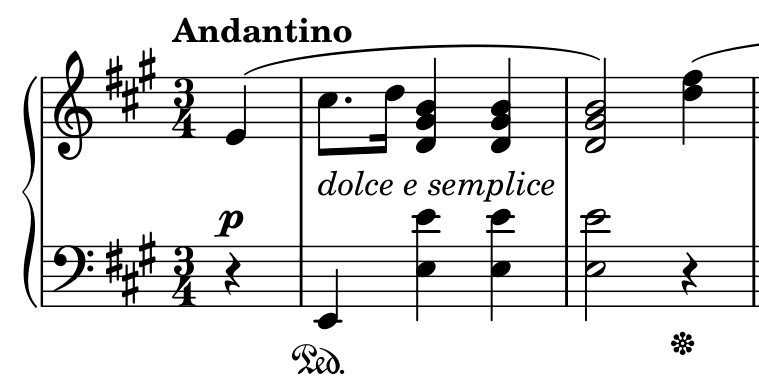
The opening E is an upbeat. The first slur ends over the half-note chord in bar 2. On beat 3, the right hand begins the next gesture while the left hand has a rest. Keep the sustained arrival and the new beginning distinct.
Open an excerpt to enlarge it, or view the complete Prelude page. These two passages illustrate different written gestures, not universal rules for either composer.
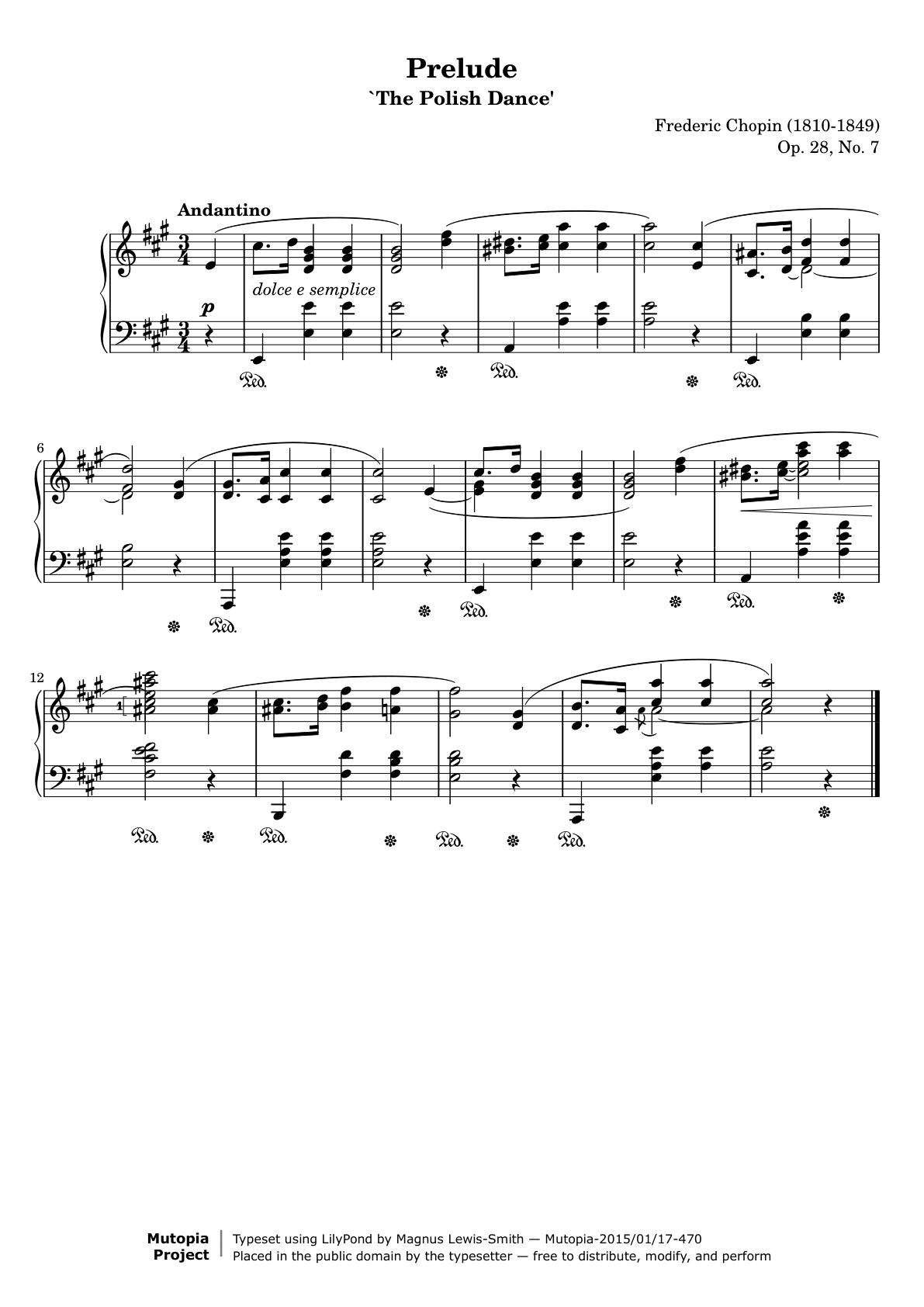
Compare the task with Mozart’s opening. In Mozart, small slurred figures contribute to a four-bar thought. In this Chopin excerpt, the longer printed curves help you follow gestures that begin before the next bar. In both, where a note belongs can matter more than where it sits on the page.
Try singing each Chopin gesture through its held chord, then notice how the following upbeat restarts the movement. Preserve the dotted rhythm instead of making the melody vaguely slow and free. Any flexibility you choose needs to retain the relation between the upbeat, the following beat and the arrival.
These are two passages, not templates for two centuries of music. The useful comparison is in their written metre, articulation, harmony and character. Read those details again whenever a familiar stylistic habit starts making different pieces sound alike.
Test one phrase in three passes
Choose a passage you can play comfortably enough to listen. If most of your attention is still going into finding the notes, shorten it or use a more manageable piece. Our guide to choosing Classical repertoire at the right level can help with that decision.
Use the three passes below on the same passage. Each has one listening task. Record a short comparison if useful, but do not try to solve dynamics, articulation, timing and pedal simultaneously.
One phrase, three listening passes
Use a short passage with familiar notes. The passes are an experiment, not three compulsory performances at a fixed tempo.
Hear the arrival
Melody + lowest moving notes
Play towards the cadence with a simple, steady pulse. Compare it with another ending in the piece. Name what makes one feel more settled.
If the ending still feels vague
Start with the final two harmonies. Listen to the melody and bass together, then begin a little earlier. If you cannot identify what changes, mark that exact place as a question for your lesson.
Restore the articulation
Full texture, same pulse
Add the other notes. Keep the short slurs, detached notes and written rests clear while listening for the same destination.
If the line breaks at every small gesture
Play beyond each release into the next entry. Try a smaller separation without erasing the articulation. Check whether an awkward fingering or an over-strong accompaniment is causing the interruption.
Compare one inflection
One change, then context
Try one change in timing or balance. Compare it with the previous version, including the music before and after the passage.
If the result sounds exaggerated or hesitant
Reduce the change and listen again. Keep it only if the arrival or character becomes clearer and the continuation still makes sense. A technical hesitation is a separate practice problem.
After the comparison: keep one specific change and write down one remaining question.
Afterwards, name one change you want to keep and one detail you still cannot hear clearly. “The second ending now settles, but the pulse disappears before it” is a useful result: it points to the next small adjustment. “More expressive” is harder to practise because it does not tell you what changed.
Finish by playing the passage with the music before and after it. Keep the version in which the arrival, the character and the continuation belong together. A clear phrase may involve a strong accent or considerable tenderness; its shape should remain understandable as part of the piece.
If you would like help hearing those relationships in your own playing, bring one prepared phrase and your current score to a free 30-minute trial lesson. In an online lesson, we can work through the phrase, compare a focused change and choose what to practise next.