
Online Piano Lessons for Intermediate and Returning Adults
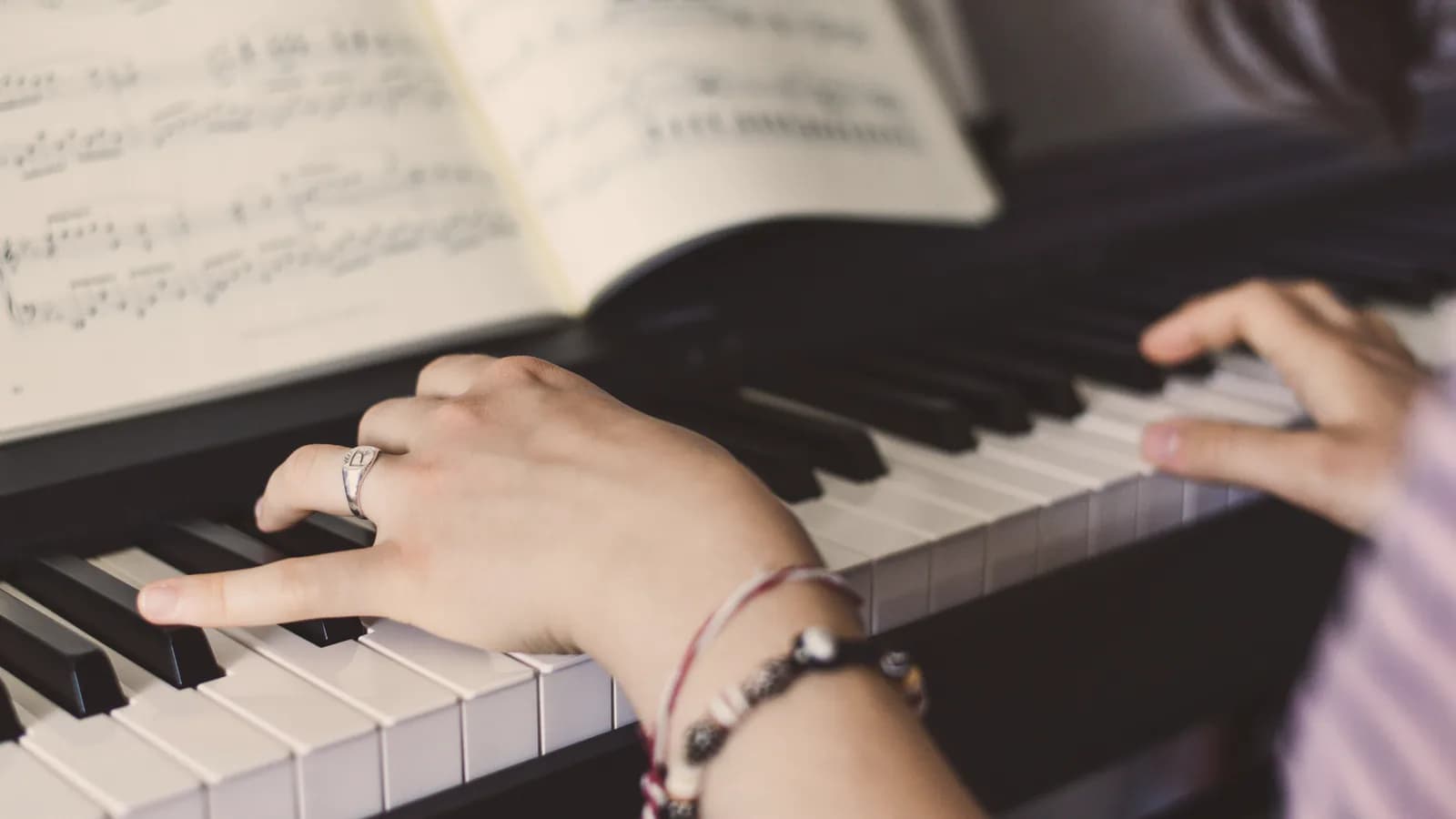
Online piano lessons can support detailed work on technique, interpretation and repertoire for intermediate and returning adults. A teacher can listen to a phrase, hear where the balance changes, watch the movement that accompanies it, and help you try a different approach. The lasting benefit comes when that change becomes part of your playing between lessons.
Perhaps you already read music and can learn the notes of a piece, but the melody disappears inside its chords. Perhaps an old favourite has come back after a long break, yet the faster section still feels unreliable. Those are substantial musical reasons to seek a teacher. Online study offers a way to keep that relationship going wherever you live.
When I listen to a player who feels stuck, I want to hear what their practice has been aiming at. “More expressive” can mean a longer melodic line, more direction through the harmony, or a different balance between the hands. Each calls for a different kind of work.
Three questions help judge whether an online lesson is serving that work:
- Can you hear the musical difference the teacher is asking for?
- Can you produce it again after the demonstration has finished?
- Can you carry it into a longer phrase and your own practice?
Beyond learning the notes
Intermediate playing brings an awkward gap: the fingers may know a piece before the ear has decided how it should sound. You can reach the final bar, yet the performance feels uneven or unconvincing. Learning another piece sometimes changes the scenery while leaving the same problem in place.
A lesson can linger where ordinary run-throughs hurry past. In a sonatina, the left hand may become louder whenever the right hand has a scale. In a slow Romantic piece, the melody may lose direction during a long note. A phrase ending may be technically correct but sound like an abrupt stop. The teacher listens to the relationship between those details and the whole passage.
For a returning adult, the starting point can be uneven. Musical understanding and familiarity with the keyboard may have survived better than reading fluency or control of a quiet accompaniment. Repertoire and exercises should follow the playing you bring now. The separate guide to returning to piano after a long break explores that first reassessment; ongoing lessons develop the sound and habits that emerge from it.
A melody over repeated chords
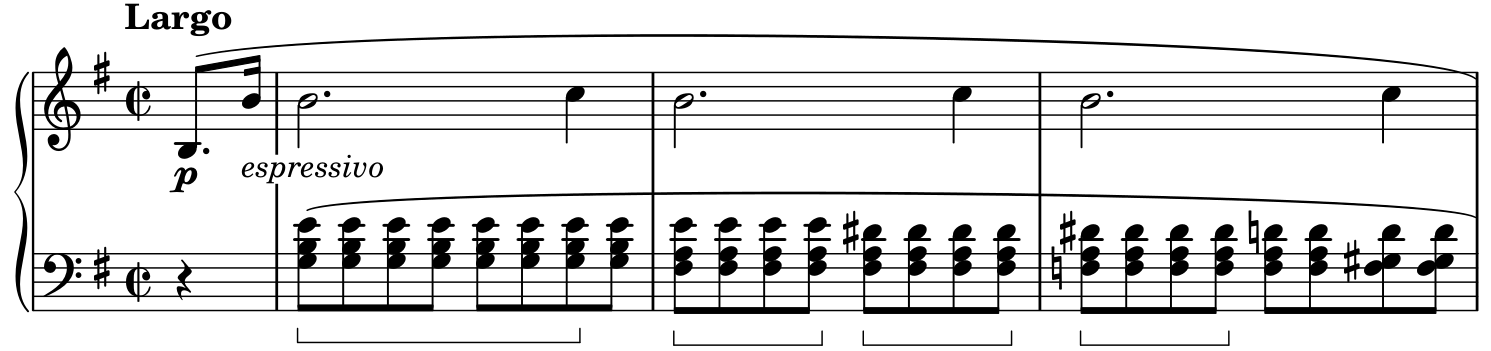
Chopin's Prelude in E minor, Op.28 No.4, gives a clear example of what an online teacher can work on. In its opening, the right hand holds a long B before moving to C, while the left hand repeats chords whose notes gradually change. The texture looks simple. Keeping the melody alive as the harmony moves is a much deeper task.
Chopin, Prelude Op.28 No.4: upbeat and bars 1–3.
Scroll sideways to follow the score.
Follow the long note
Hear the right-hand B continuing towards C while the left hand repeats. The melody needs room in the sound throughout the bar.
Hear inside the chord
In bar 2, the upper left-hand E falls to D♯ over the same F♯ bass. A pedal choice follows that harmonic movement.
Imagine playing these bars in a lesson. The melody starts clearly, but by the middle of the bar the repeated chords occupy most of your attention and sound. I would first ask to hear the right hand on its own. Where is the long note going? Does the C belong to the same sung line, or arrive as a separate event?
We can then return to the left hand. Play its first chord, let the keys rise enough to repeat, and listen to the next attack. A fresh downward push on every repetition can make the accompaniment insistent. Try less movement and a quieter attack, while keeping the notes speaking. Add the melody again and listen through its long note. The question is whether the accompaniment leaves room for that line to continue.
The harmony adds another layer. In bar 2, the upper note of the left-hand chord falls from E to D-sharp while the bass stays F-sharp. Holding the pedal merely because the bass has not changed can blur that movement. Teacher and pianist can compare the passage with a pedal change at the harmonic shift, then listen for both clarity and continuity.
Several lessons might return to this opening for different reasons: first the balance, later the pacing of the harmony, then its place in the complete Prelude. That is how a familiar passage can keep teaching you. The Chopin Prelude practice guide follows the piece further, including the climax and ending.

One-to-one classical piano
In person in Ikebukuro or Shinjuku, Tokyo. Online worldwide.
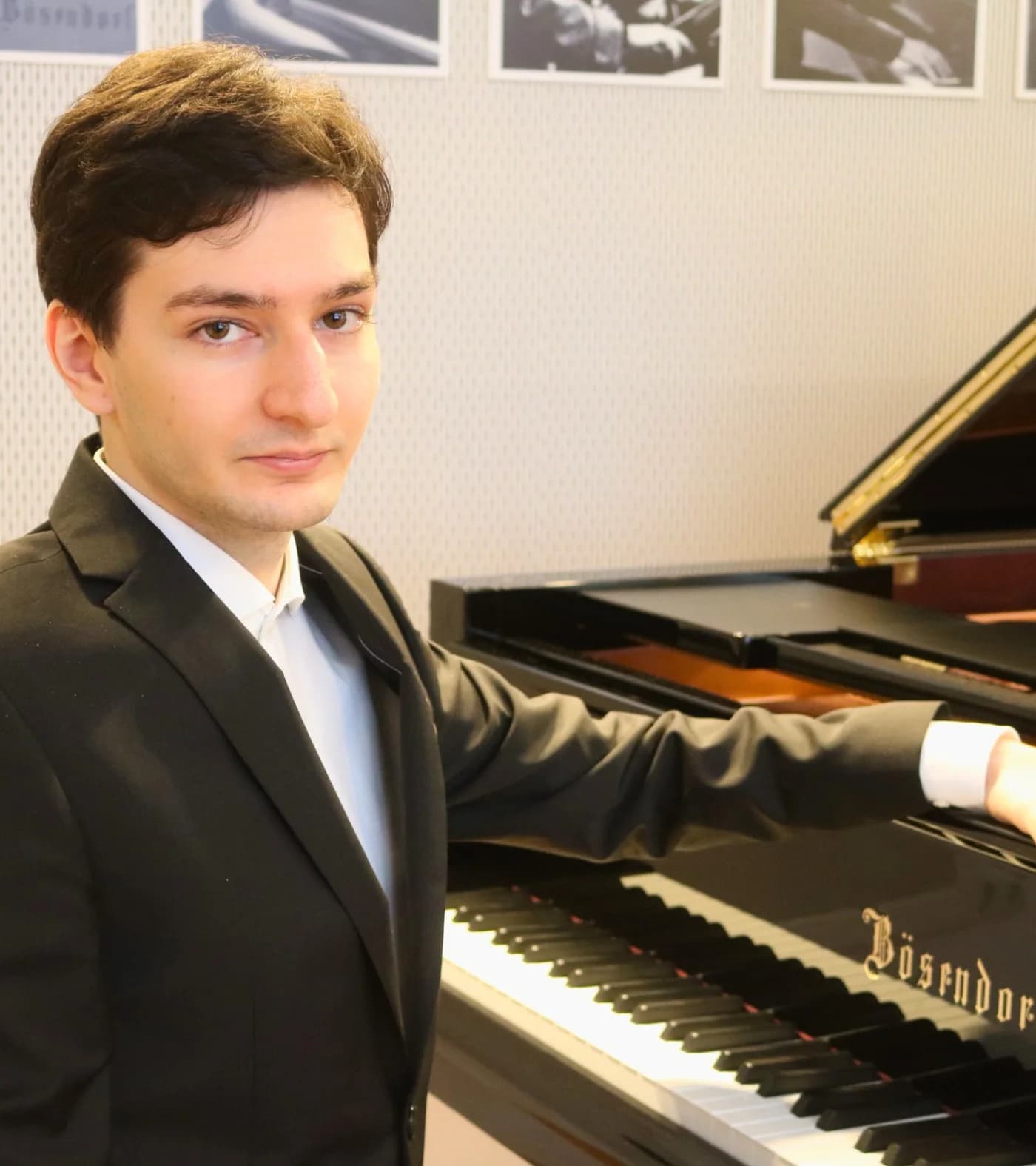
Enea
Concert pianist from Vienna
Pre-launch · Applications open
Tempo through a difficult transition
A recurring stumble often begins before the wrong note. The hand stays in its old position too long; a fingering works slowly but leaves the next group awkward; the easier lead-in quietly accelerates. Online, a teacher can ask to hear the approach as well as the difficult bar and watch where the movement changes.
Suppose a scale passage is secure when started alone, but breaks down after a chord. Practising more scales may miss the relevant movement. Begin with the chord and the first few scale notes. Notice which finger finishes the chord, when the hand can move, and whether the next note arrives on time. Then restore the preceding phrase so the solution belongs to the music.
I also want to hear the passage at the tempo where the problem appears. Very slow playing can reveal the notes and route, but it changes the time available for each movement. A teacher may alternate a short attempt nearer the intended tempo with a slower examination of the same transition. The comparison helps distinguish an uncertain reading from a movement that is too late or too large.
An ordinary video call works best here through alternating demonstrations. I play, then listen to your response. Trying to play together across the connection can confuse the timing because the sound arrives with delay. A metronome, when useful, stays on your side of the call; the aim is to hear your relationship with the beat.
Technique at your own piano
The camera can reveal a hand that remains stretched after a chord, an elbow that stops moving during a leap, or fingers that rise much higher as the tempo increases. A view from the side, including hands and forearms, often supplies more useful information than a close-up of the fingertips alone. For one difficult turn, we might briefly change the angle.
Your own description matters too. A motion can look small while feeling effortful. Tell the teacher when the hand feels held in place or when a passage demands more effort on its second repetition. We can relate that sensation to a particular note, release or movement and try a change you can hear and feel.
Working on your home instrument has a practical advantage: the action, bench position and pedal are the ones you will use tomorrow. If a quiet chord fails to speak, we can explore that response on the actual keyboard. A digital piano's touch and pedal behaviour, however, will not reveal every colour available on a concert grand. Preparation for a particular performance instrument includes time playing that instrument or a suitable acoustic piano.
Sound through the connection
Live audio is usually sufficient for hearing a rushing transition, a broken phrase or an accompaniment that overwhelms the melody. Fine differences in resonance need more care. A microphone's position changes the balance it captures, and call software may suppress sustained piano sound as though it were background noise. Zoom's music-audio settings address that processing; the online lesson setup guide covers the equipment and settings in detail.
When a sound question remains uncertain, make a short local recording of the same phrase. Listen to it alongside your impression at the keyboard. If the melody sounds present in the room but disappears only on the call, investigate the audio path before trying to solve the discrepancy by playing harder. A recording also lets you listen without simultaneously choosing notes and moving your hands.
Keep the microphone position similar when comparing two takes. Otherwise a change in distance may sound like a change in touch. For a pedal question, listen particularly to the old harmony as the new one arrives; for a balance question, follow the melody through its longest note. A full recording contains many things to notice. Choosing a musical question gives that listening a purpose.
Between one lesson and the next
An encouraging lesson can produce a beautiful second attempt. The more revealing moment is tomorrow, when the teacher's demonstration is no longer in your ear. Begin the passage without a preparatory run-through and listen for the feature you worked on. If it has disappeared, return to the small comparison that helped you hear it.
A useful note after the Chopin example might read: “Bars 1–3: keep hearing the long melody while the left hand repeats; check the changing upper note in bar 2.” That preserves the musical intention and the place to examine. A page of general instructions such as “relax, sing, practise slowly” leaves much more for you to reconstruct.
What progress can sound like
Balance
The melody disappears during its long notes.
It stays audible as the accompaniment continues, including when you play beyond the practised bars.
Movement
The scale starts late after the preceding chord.
The hand prepares the next position while the phrase keeps its pulse.
Independence
The passage improves only after the teacher demonstrates it.
You can recall the intended sound, hear when it changes and choose a useful way to practise.
At the next lesson, play the passage in context before explaining every practice attempt. We can hear what has settled into the performance and what still depends on conscious attention. If the balance is good until the next page, the next task may be to extend it through that change of texture. If the fingering is remembered but the transition remains rushed, the timing of the preparation needs another look.
Sometimes the right decision is to reduce the difficulty for a while. A shorter piece with a clear melody and accompaniment gives you more attention to spend on balance. The work has value when it returns to the more demanding piece. Constantly struggling to locate notes leaves little room for listening to the qualities you wanted lessons to develop.
Repertoire and longer goals
Sustained teaching also connects one piece to the next. A programme containing only large, slow Romantic works may offer plenty of voicing and pedal work but little experience of crisp Classical articulation. A sequence of quick pieces may leave lyrical control underdeveloped. Repertoire can include music you love alongside a shorter work that asks for a different kind of attention.
For an intermediate adult, a satisfying goal might be a complete sonatina movement with a stable tempo and distinct characters, a small group of pieces to play for friends, or returning to a favourite work with more convincing phrasing. These goals give individual lessons a direction without turning every meeting into a performance assessment.
Review progress through the playing itself. Can you begin at several points? Does the intended melody remain audible when the texture thickens? Can you explain why a particular fingering or pedal choice works? These changes may be more significant than the number of pages finished. The guide to setting serious piano goals as an adult develops this longer view.
Trying online lessons
Bring a piece you are already studying and a passage that has resisted your practice. An unfinished section can show a teacher how you read, listen and respond to a suggestion. During a trial, pay attention to whether the explanation connects to a difference you can recognise at the keyboard, and whether you leave knowing what to explore next.
Vienna Piano School is accepting applications for online classical piano lessons worldwide, as well as in-person lessons at piano studios in Ikebukuro and Shinjuku, Tokyo. The school is preparing to open; start dates and trial arrangements are confirmed by email. The first trial is 55 minutes and free. Regular online lessons are US$40 for 60 minutes or US$55 for 90 minutes. A 55-minute in-person lesson is ¥4,800 plus an ¥800 room fee, for a total of ¥5,600. A 90-minute in-person lesson is ¥6,600 plus a ¥1,200 room fee (¥7,800 total).
To apply for a free trial lesson, tell me what you are playing and what you would like to change in its sound or feel. That gives us a musical place to begin.