
Chopin's E-minor Prelude: Voicing and Pedal for Adult Pianists
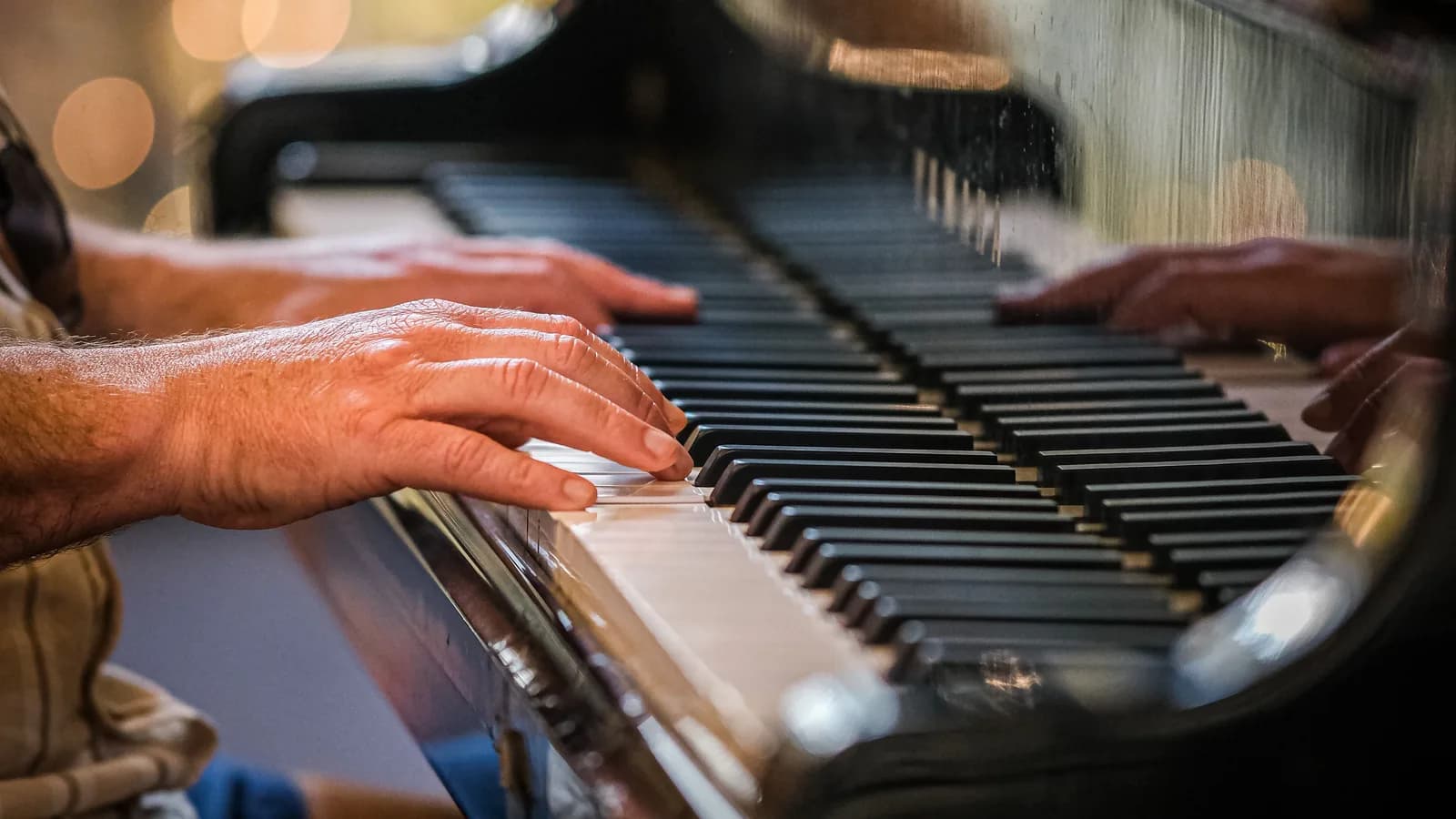
Chopin’s Prelude in E minor, Op.28 No.4, asks a deceptively difficult question: can a melody remain alive while the same left-hand rhythm repeats beneath it? The notes may become familiar quite quickly. Making the harmony move, keeping the accompaniment quiet, and choosing clear pedal changes take more patient listening.
Start by hearing the left hand as three moving voices. Then balance those voices beneath the melody and add only the resonance that helps them speak. The score examples below show where to begin, including a change of harmony that happens while the bass stays on the same note.
Why this short Prelude needs careful listening
The opening offers few distractions. A sustained right-hand note sits above repeated chords, so an uneven accompaniment or a blurred change becomes easy to hear. A page that looks manageable can still demand considerable control of balance and timing.
For an adult pianist, the useful readiness question is practical: can the melody remain audible through several quiet left-hand repetitions? Can the chords change without a scramble, and can the pedal clear old notes without breaking the line? These are better starting points than measuring progress by how soon the last note is learned.
The work contains 25 full bars after its short upbeat. In the examples here, bar 1 means the first full bar with repeated left-hand chords. The score is in 2/2. When we refer to the third or fourth quarter-note position within a bar, we are locating a change, not asking for four heavy beats.
The reproduced score is an existing public-domain engraving based on Peters’s 1879 edition. Read its printed expression and pedal indications as the contents of that edition. They are not a claim that every mark comes directly from Chopin’s autograph.
Follow the notes inside the left-hand chords
Play the opening left hand once without the right hand or pedal. Instead of attending equally to every repetition, notice which notes stay and which move. The bass at the beginning of the first four full bars descends G–F♯–F–E. The other voices do not simply travel down with it in parallel.
Bar 2 is especially useful. Its lowest note remains F♯, but halfway through the bar the highest left-hand note falls from E to D♯. The right hand is still holding B. A listener can therefore hear a new relationship even though neither the bass nor the melody has changed at that moment.
Op.28 No.4, upbeat and bars 1–3. The right hand holds B through the first three quarter-note positions of each full bar, then moves to C.
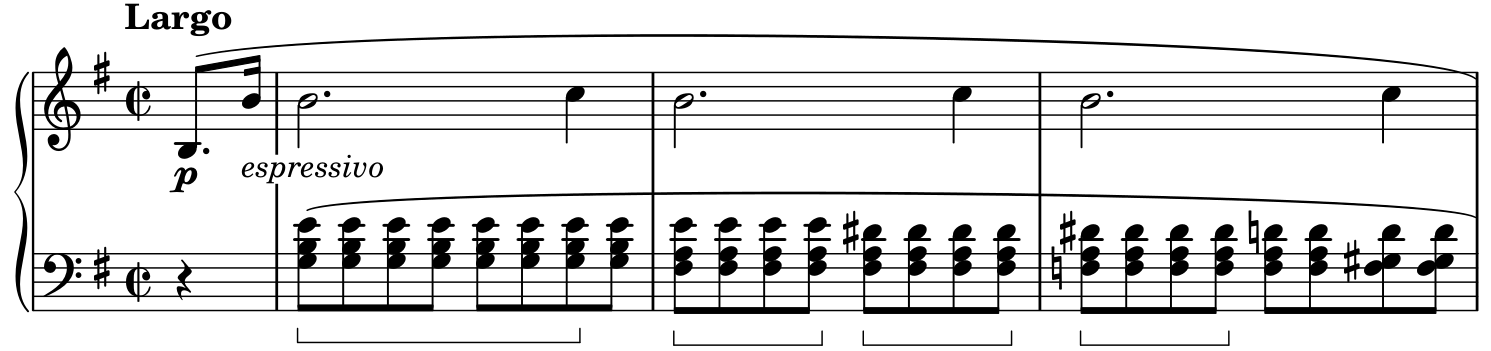
The map lists each new left-hand combination once. Bold, underlined notes change from the row above. Octave numbers use middle C = C4.
| When | Bass | Middle | Upper |
|---|---|---|---|
| Bar 1 | G3 | B3 | E4 |
| Bar 2 · first half | F♯3 | A3 | E4 |
| Bar 2 · second half | F♯3 | A3 | D♯4 |
| Bar 3 · first half | F3 | A3 | D♯4 |
| Bar 3 · third quarter | F3 | A3 | D4 |
| Bar 3 · fourth quarter | F3 | G♯3 | D4 |
Quarter-note positions locate changes within the written 2/2 bar. This is a note map, not an instruction to accent every change.
Enlarge bars 2 and 3
Bar 2: same bass, changing upper voice
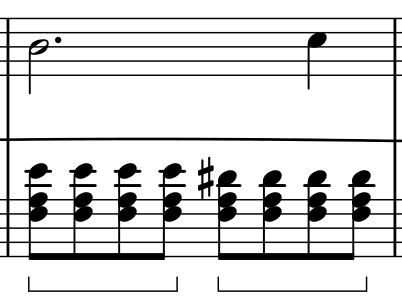
Listen for E → D♯. A pedal change can clear this motion even though the bass has not moved.
Bar 3: two voices move in turn
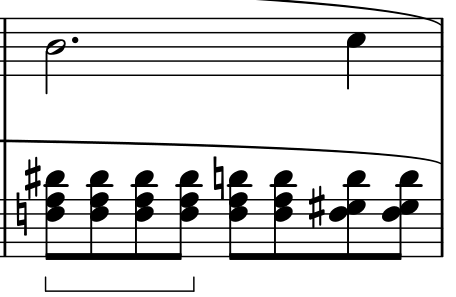
First D♯ → D, then A → G♯. The bass stays F through this bar.
Open any score to enlarge it. Clefs and key for the details appear in the complete line above. View the full source page. Existing public-domain engraving; no marks added.
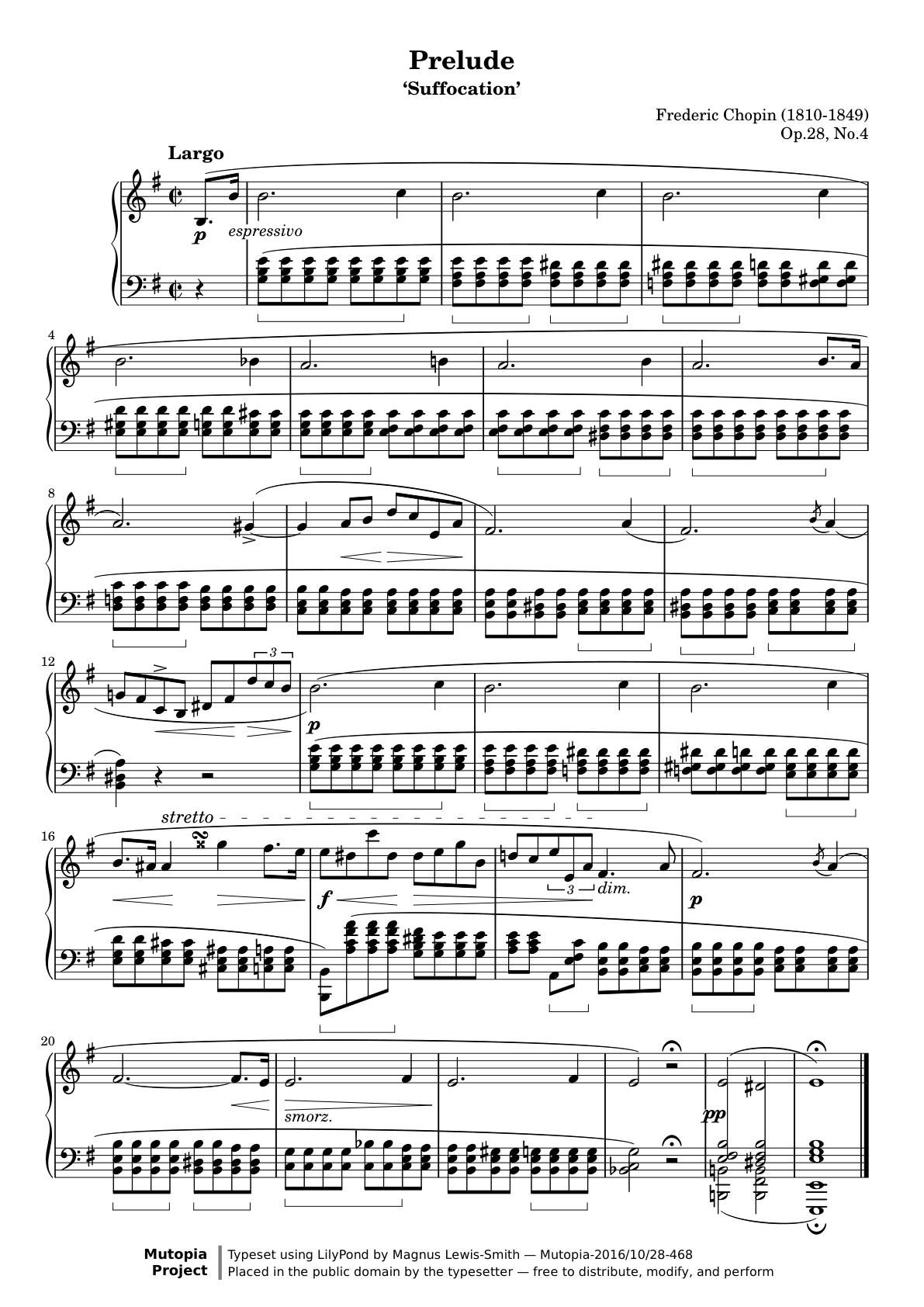
Try following just the highest note of the left hand through bars 1–3. Then follow the middle note. Finally, restore all three notes, retaining the awareness of the moving line. Bringing a voice forward briefly in this exercise helps you find it; it does not mean that voice should dominate the performance.
Piano teacher Janna Williamson recommends blocking through the harmony without repeating every eighth-note chord. For this passage, play each new combination once and listen before moving on. Afterwards restore the written repetitions. The slower rate of harmonic change should still be audible inside the faster surface rhythm.
You do not need to settle every possible chord label before doing this. An exact observation such as “the upper left-hand note falls here while the bass stays” gives a clear instruction to the ear. If you enjoy harmonic analysis, add names after the notes and their movement are secure.


One-to-one classical piano
Beginner to advanced. Online, worldwide.

Enea
Concert pianist from Vienna
30 minutes · Tokyo studio from October 2026
Make repeated chords quiet without losing their shape
Voicing means choosing the relative prominence of simultaneous notes. In this Prelude there are two related tasks: balancing the accompaniment against the melody, and preventing one note inside a left-hand chord from sticking out unintentionally.
Begin with one comfortable chord from the opening. Play it several times at an easy pace without pedal. Listen for a thumb note that repeatedly jumps forward, a missing middle note, or a low note that strikes harder than intended. Change only the imbalance you actually hear. Playing everything softer can conceal the problem for a moment without giving you control of it.
Next play the right-hand melody with only the lowest accompaniment notes. Establish a balance you can hear clearly. Add the inner notes at a quieter level, keeping the same melodic intention. If the tune disappears, first reduce the left hand rather than automatically making the right hand much louder.
The sustained melody naturally fades between attacks. Avoid responding by making every new accompaniment chord a fresh accent. Listen across the whole held note, especially near its end, when the repeated left hand is most likely to take over.
Keep the repetitions coordinated and comfortable. A large new movement for every chord can make the sound lumpy; gripping a fixed hand shape can make changes awkward. Practise moving between two neighbouring shapes slowly enough to prepare the next one without a last-second adjustment. If a particular note continues to protrude, that exact transition is useful material for a lesson.
Give the melody direction through the harmony
A repeated B followed by C need not sound identical every time. Its effect depends partly on the harmony underneath. Play the opening melody alone, then with the left hand, and notice how the same melodic contour acquires a different tension as the accompaniment changes.
Choose a destination beyond the next right-hand attack. Otherwise the long note can become a wait, followed by a hurried short note and another wait. Quietly count the subdivisions during practice, or speak them before playing, to keep track of the written duration. Counting supports continuity; it need not produce a mechanical performance.
Harmonic timing means hearing when the music changes its character or direction and allowing that to inform the pace. It does not require a delay at every accidental. Too many little hesitations can turn the descending voices into disconnected events.
Try an opening with a relatively steady pulse first. Then choose one place to allow a little more space, and listen from the bar before it through the bar after it. Keep the inflection only if the continuation remains convincing. If a hesitation occurs because the next chord is uncertain, practise the change before treating it as expression.
Our guide to shaping a piano phrase develops the broader question of musical destination. Here the useful evidence is close at hand: the changing voices beneath an almost stationary melody.
Change the pedal when the sound needs clearing
A pedal plan based only on bar lines or bass changes will miss some of this Prelude’s movement. Return to bar 2: the bass remains F♯ while E becomes D♯ above it. Holding all the previous resonance through that change can obscure the very motion you have just learned to hear.
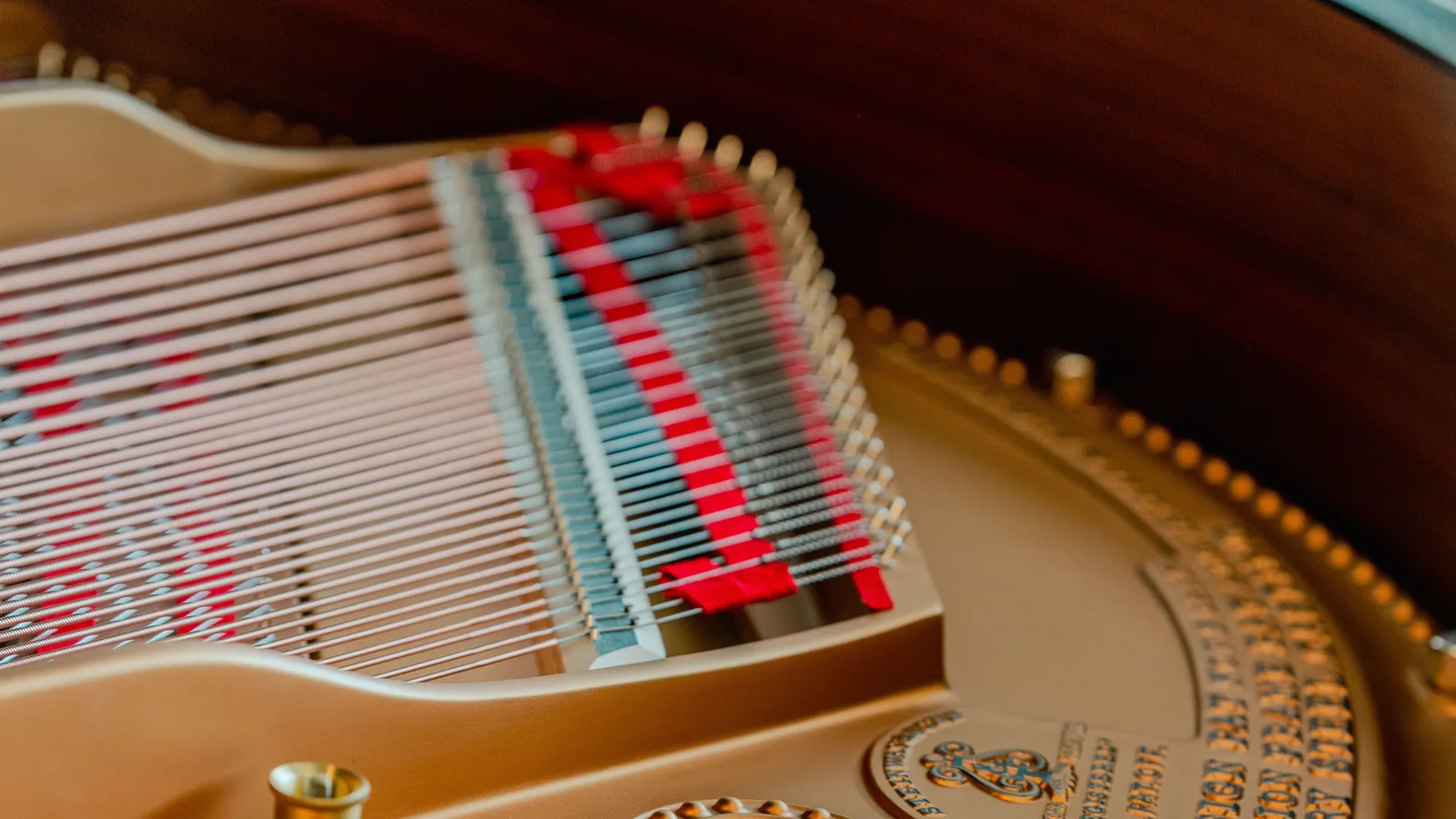
The strings are the sounding material your pedal choices allow to resonate. This is an instrument reference photograph, not a demonstration of a pedal setting.
Try the following small comparison on your piano:
- Play bar 2 without pedal and identify the E-to-D♯ change in the left hand.
- Try one pedal held through the bar, solely as a listening comparison. Notice whether the old E clouds the new chord.
- Repeat with a pedal change at the new harmony. Hold the intended notes with the fingers as you lift enough to clear the previous resonance, then depress the pedal again to support the new sound.
The third version is a starting point to refine, not a prescribed depth or speed for every instrument. If it sounds dry, check whether the fingers release the intended notes too early or the pedal stays up longer than needed. If it still sounds blurred, check whether the pedal actually clears the old sound. Simply moving the foot a little is not proof that the dampers have done their job.
Bar 3 adds another useful listening task: first the upper left-hand note changes, then the middle one. Refer back to the map and check each event. A rule such as “once per bar” cannot describe all of them adequately.
The existing sustain-pedal guide explains the coordination in more detail. For this piece, return repeatedly to the no-pedal sound as a reference, then choose enough resonance for connection and colour. The aim is an audible harmonic line, not the driest possible piano.
Prepare the climax and leave room for the ending
Do not spend the whole dynamic range in the opening. The score’s later change of register and texture needs somewhere to go. In the reproduced edition, the passage around bars 16–17 brings a stretto indication, a forte and a low B octave beneath the more active melody.
Practise the left-hand move from the low octave to the higher chords before adding the full passage. Listen for the bass foundation without allowing the following chords to swallow the right hand. A successful opening balance does not automatically transfer to this denser texture.
Bars 16–19: the low B octave in bar 17 changes the scale of the sound. Keep listening for the melody as the left hand moves upwards.
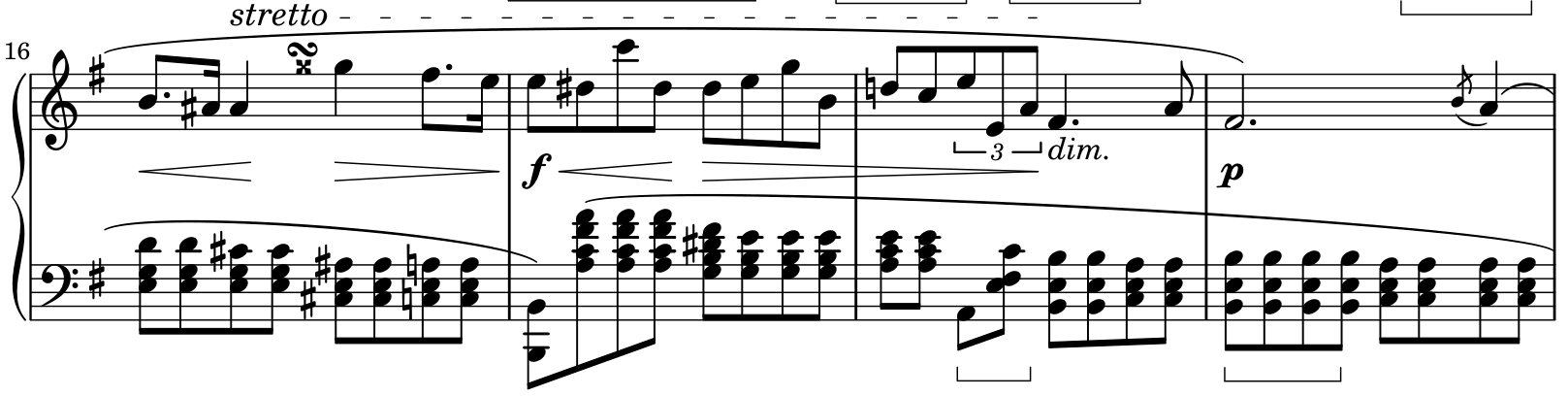
See the left-hand move in bar 17
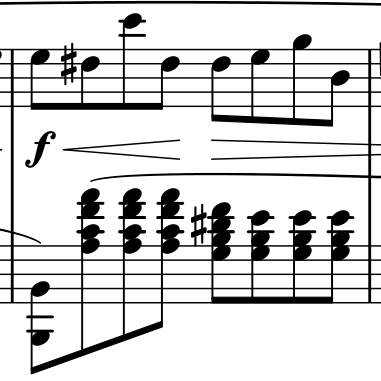
Prepare the move from the low octave to the higher chord without rushing the next attack. The clefs and E-minor key signature are shown in the complete line above.
Bars 23–25: let the rest be heard
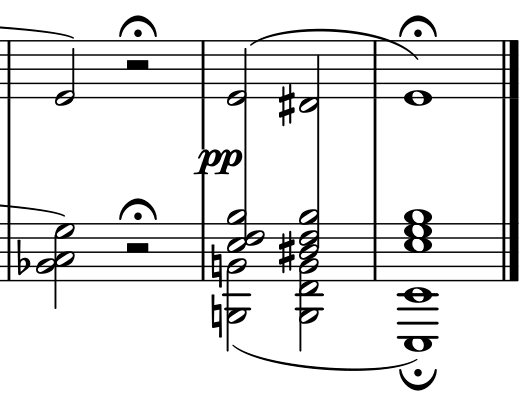
Release into the written rest before the final three chords. This close-up continues the same treble and bass clefs and E-minor key signature.
These are details of the same source edition. See the complete Prelude for the surrounding music and printed indications.
Stretto gives a sense of tightening here, but an uncontrolled rush can make the difficult movement determine the phrase. First establish the notes and coordination at a pace you can manage. Then test the forward impulse in context, including the music leading into it and the quieter continuation afterwards.
The final silence also needs preparation. In bar 23 a rest with a fermata separates the preceding sound from the last three chords. Listen to how that sound ends before beginning the close. Do not keep the pedal down simply because the piece has been legato up to that point.
There is no useful universal number of seconds for this pause. Its proportion depends on the pace and the sound that precedes it. Try the final passage as a whole, including the release, rather than treating the last chord as the only important destination.
A focused practice session for this Prelude
Choose the opening three bars for one session. A useful result is not necessarily a finished interpretation. It might be one clearer inner-voice change, a quieter repeated chord, or a pedal release that preserves the melody while cleaning the harmony.
Three passes through the same opening
Keep one listening question per pass. These are practice comparisons, not extra markings to add to the score.
Find the moving note
Left hand · no pedal
Play each new combination in bars 1–3 once. Follow one voice through the map, then restore the repeated eighth notes.
If the chord changes still sound indistinct
Play the single moving voice alone, then add one of the notes that stays. Hear that relationship before restoring the third note. Check the accidentals rather than relying on the remembered hand shape.
Keep the melody audible
Both hands · same passage
Add the right hand. Listen through the end of each sustained B, when the left-hand repetitions can become too prominent.
If the melody disappears before the next note
Reduce the accompaniment and check for an individual chord tone that jumps out. Keep the intended right-hand note held. Avoid trying to fix every imbalance by striking the melody harder.
Test one pedal change
Bar 2 · compare the resonance
Compare a held pedal with a change at E → D♯ in the upper left-hand voice. Keep the hand balance and pace as similar as possible.
If one version is muddy and the other too dry
Check how far the pedal lifts, when the fingers release, and how soon resonance returns. Adjust one of these at a time. Choose the version that lets the new harmony speak while the melody continues.
Finish in context: play beyond the three bars and keep one change that improves the line.
Record a short comparison from the same position if you find it hard to judge while playing. Listen once for the melody, once for the changing left-hand note, and once for the resonance after the change. Our guide to listening to your piano recording explains how to turn those observations into a specific next practice task.
Finish by playing a longer passage so the improvement serves the music. A beautifully balanced isolated chord is only the beginning; its value is in how it leads to the next harmony without interrupting the line.
For individual guidance, bring the opening and one difficult transition to a free 30-minute trial lesson. Online lessons are available now, with in-person lessons in Tokyo from October 2026. Tell us which passage you are working on and whether the main difficulty is balance, continuity or pedal clarity, so there is a concrete musical question to begin with.