
Playing Pianissimo Without Losing Notes: Soft Sound at an Acoustic Piano
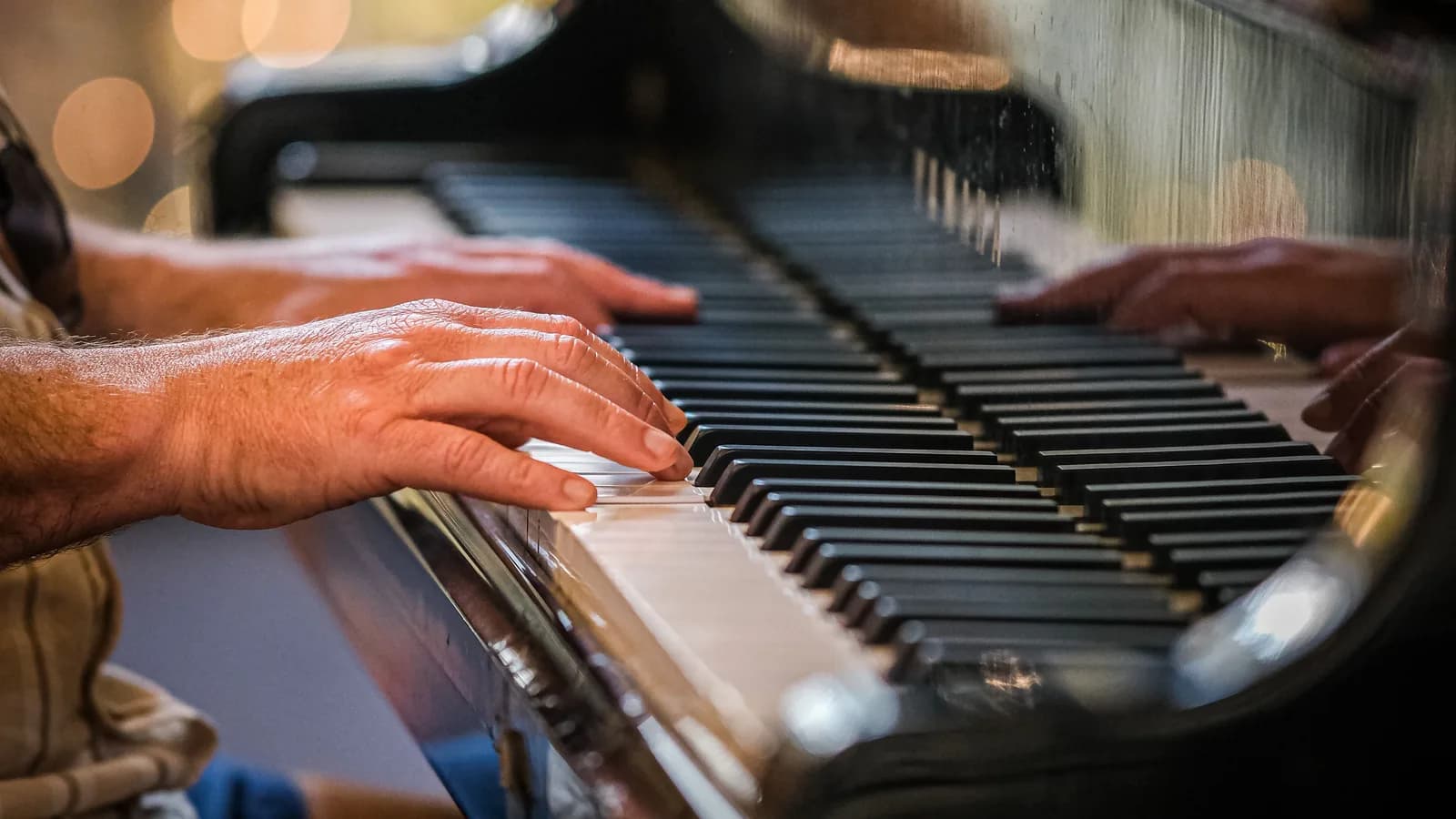
To play pianissimo without losing notes, begin with a quiet sound that speaks reliably, then reduce it while keeping the start of the note clear. Prepare the key before you play, listen to the attack, and allow the mechanism to reset before repeating. In a chord or phrase, judge the balance and continuity as well as the volume of each note.
The difficult part is often the moment just before the sound. You want something delicate, so the movement becomes hesitant. One note arrives late, another disappears, and the next comes out louder because you are trying to make sure it speaks. Quiet playing then starts to feel like a series of risks.
In a lesson, I often ask for a slightly fuller sound first. We find an attack the student can repeat comfortably, then bring it down towards the colour the phrase needs. That gives us a sound to refine, instead of a missing note to fear.
Quiet sound and a missing note
Pianissimo, usually written pp, means very softly. Its sound depends on the phrase, the instrument and the room. A soft melody may still need a clear presence above its accompaniment; a quiet closing chord needs enough tone for its harmony to be heard.
When a note fails, listen for what actually happened. Did the key move without a string sounding? Did the note speak after the beat? Or did it begin clearly but disappear under a louder neighbouring voice? These sound different and ask for different work.
A note is absent
The key moves, but you hear no new tone.
Return to a slightly fuller attack and compare the movement.
A note arrives late
The pitch sounds after the point you intended.
Prepare the key earlier and listen for the beginning inside the pulse.
A note is covered
It speaks alone, then disappears in the chord or accompaniment.
Listen to the balance before making the whole passage louder.
A recording can help you notice an uneven attack or a melody that gets covered. For fine judgments of volume, also listen directly at the piano. Automatic recording levels can alter the apparent difference between quiet and louder playing, especially when a phone tries to make a very soft sound more audible.
What the key does
An acoustic piano key operates a mechanism that sends a hammer towards the strings. The hammer escapes from its driver before contact and travels the last part of the way freely. A sufficiently slow key movement can therefore reach the bottom without producing a note: the hammer has not travelled far enough to strike.
For a sounding note, the hammer's speed at the strings is central to the attack. Continuing to press hard at the bottom of the key cannot make that already-struck note grow louder. The sound is now decaying, and your listening moves to its duration and to whatever comes next.
That distinction changes the practice. A soft note still needs a definite beginning. Hovering anxiously over the key, or slowing the movement until it stalls, can make the result less predictable. Start in contact with the key and explore a smaller, continuous movement that produces the sound you intend.

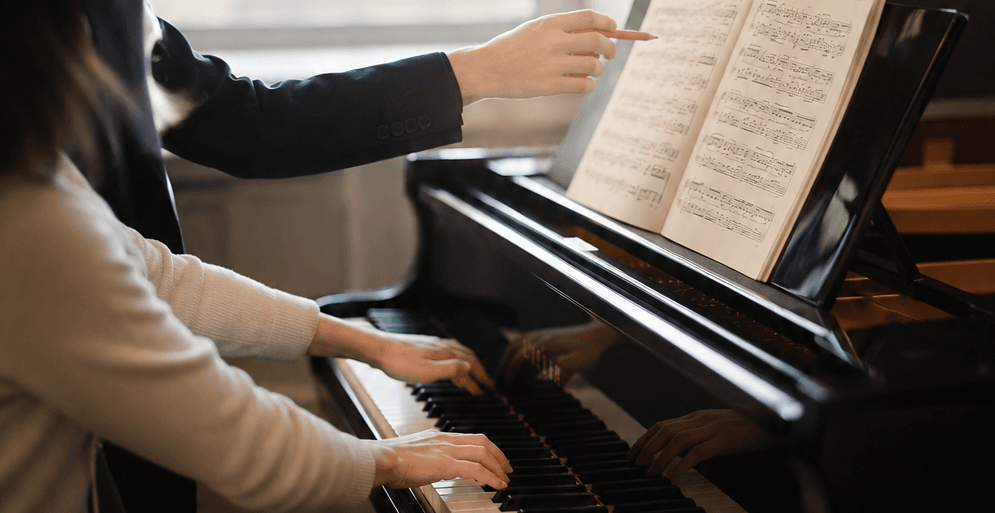
One-to-one classical piano
In person in Ikebukuro or Shinjuku, Tokyo. Online worldwide.
Enea
Concert pianist from Vienna
Pre-launch · Applications open
Finding a reliable soft attack
Choose a comfortable note near the middle of the keyboard and leave both pedals up. Rest a finger on the key before playing. Make a clear, moderately quiet sound, listen to its beginning, then release the key fully before the next attempt.
Repeat a little more softly. Keep the contact with the key and the timing of the beginning familiar. If the note disappears, return to the last sound that spoke reliably. Compare the two movements: did you stop just before the sound, change your hand position, or begin from a key that had not returned?
Try a neighbouring note once you have found a useful range. The surface, leverage and response feel different as your hand moves between white and black keys or further into the keyboard. Let your hand move with the phrase instead of preserving one rigid shape for every note.
The aim is a soft sound you can choose again. A single almost inaudible note may be interesting to explore, but it offers little security if the next attempt vanishes. Keep a little room inside your available range so that the phrase can breathe, become warmer or settle without running out of sound.
Avoid turning this into a long test of how still you can hold the hand. After a few comparisons, play a small musical figure with the same sound. The movement needs to carry you into the next note.
Joining notes without losing the line
Take three nearby notes, such as E–F–G, and play them slowly in one direction. Listen for the second note before you release the first. A soft phrase can sound broken even when every pitch speaks, because each attack arrives after a tiny hesitation.
First keep a gentle, steady pulse. Then give the three notes a direction: perhaps the line moves towards G, or the middle note is the most expressive. Quiet playing has room for those differences. Making every note equally faint can remove the very shape you are trying to express.
If the third note fails, begin with the movement from the second into the third. Starting repeatedly on the missing note may produce a reliable isolated attack while leaving the transition unchanged. Add the first note again when the join feels and sounds familiar.
Returning adults sometimes find that an old phrase comes back at a comfortable volume before its former quiet colour returns. Keep the phrase at that reliable level while exploring softer attacks in a shorter span. The broader guide to returning after a long break considers how to choose music while rebuilding that control.
Soft chords and voicing
A chord introduces several attacks at once. If one finger barely moves its key while another begins more decisively, the chord may lose a note or gain an unwanted accent. Before playing softly, find the shape, touch all the intended keys, and hear the complete harmony at a comfortable volume.
Use a small chord that fits your hand, such as C–E–G. Play all three notes together, then bring the overall sound down while retaining the chord's identity. If G is the melody, listen for it above the other two notes. The lower notes still contribute colour; they need to sound without covering the line.
When one note repeatedly drops out, try it alone and then with one supporting note. Restore the complete chord after hearing the difference. This tells you whether the difficulty belongs to that key's attack or appears when the hand coordinates several notes together.
At the piano, I listen for a quiet chord with an audible centre. Sometimes the top note needs a little more presence. Sometimes it already sings well, but the accompanying notes are too prominent. Turning down every note by the same amount would miss that distinction.
Chopin's last three chords
The end of Chopin's E-minor Prelude, Op.28 No.4, makes a useful study of a soft entrance after silence. In the excerpt, bar 23 ends with a written rest under a fermata. The following bar is marked pp. Its upper line moves E–D♯, then resolves to E in the final bar, above the supporting chords.
Chopin, Prelude Op.28 No.4, bars 23–25. The pp entrance is in the middle bar.
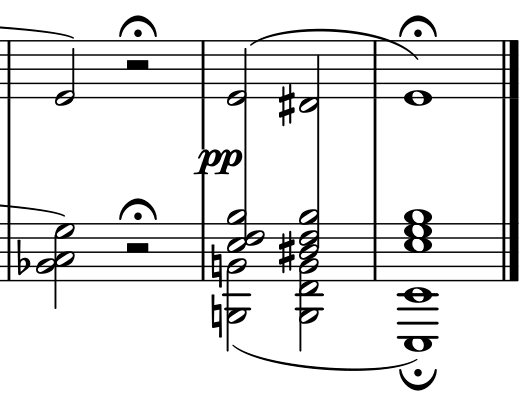
Select the score to enlarge it.
After the rest
Prepare the chord during the silence, then give the quiet attack a clear beginning.
Through the three chords
Hear E–D♯–E above the harmony. Keep the line and bass audible as the phrase settles.
Begin by learning the last three harmonies at a volume where all the notes speak. Hear the upper E moving down to D♯ and back to E. Then practise the first of those chords by itself, allowing time to prepare its position before sounding it softly.
Put the two chords of bar 24 together. They are half notes in this score. Listen to the movement of the upper line while retaining the lower harmony. If the second chord becomes louder simply because the hand is anxious about finding it, practise that change at a slightly fuller level and prepare the new position earlier.
Now add the last chord. A convincing quiet ending has a complete harmony and a sense of arrival. It does not depend on making the last attack the faintest sound the piano can possibly produce. Listen to the bass and upper E together, then to the resonance after the attack.
Finally, begin before the rest in bar 23. Let the written silence belong to the phrase, prepare the new chord during it, and enter with the sound you have already found. If you hesitate only after the silence, practise that entrance rather than repeatedly playing the final chord from a ready position.
For the prelude's larger phrase, changing left-hand harmonies and pedal choices, see the complete Chopin E-minor Prelude guide. Here the excerpt gives us one specific question: can a soft chord enter after silence with its harmony intact?
Release and repeated notes
A quiet note can speak once and fail on the next repetition because the action has not reset. As an initial comparison, release the key fully between slow repetitions. If those sound reliably, notice what changes when you shorten the release in the actual passage.
Grand and upright actions handle repetition differently. A grand's repetition mechanism can prepare another strike before the key has returned all the way. The useful release in your passage still depends on the piano and the movement. Learn it through the sound and response of the instrument you are playing.
Keep the rhythm while testing. Releasing too late and then rushing down can turn a quiet repeated note into an accent. Give the key time to return, prepare the next attack, and bring that movement back into the phrase. A teacher watching from the side can often see a held-down key more clearly than the player looking along the keyboard.
What the pedals change
The left pedal offers another colour. On a grand piano, una corda shifts the action, changing how the hammers meet the strings. On an upright, the left pedal usually brings the hammers closer to the strings. The change in response is something to explore on the particular instrument.
Try the passage with and without the left pedal after establishing a reliable quiet attack. Listen for colour and balance, as well as volume. A passage may welcome the changed tone; another may need the clearer edge you hear without it. The pedal works alongside the touch you have practised.
The sustain pedal makes sound last and allows sympathetic resonance. It can enrich a soft passage, but it can also cover an uncertain release or a missing inner note. Compare a short phrase without it, then return the pedal and listen to the harmony again. The article on sustain-pedal timing develops that separate skill.
A different piano or room
A sound that felt secure on your usual piano may respond differently elsewhere. Begin with a few comfortable notes and a short quiet phrase, listening to how the instrument speaks before asking it for your softest colour. Try the part of the keyboard and the type of chord that the music actually uses.
When possible, ask someone to listen further into the room. The sound under your hands and the sound reaching a listener are different perspectives on the same performance. A musical pianissimo still has to carry its line; the impression of intimacy can survive a little more tone than you expect at the keyboard.
If the same key repeatedly behaves differently from its neighbours, mention the exact behaviour to your teacher or piano technician. Action regulation affects how the instrument responds, and voicing affects its tone. A description such as “this note fails at a soft attack but its neighbours speak” is useful information for an assessment at the instrument.
For home practice on a digital piano, lowering the master volume changes what you hear from the speakers. It does not recreate an acoustic piano's soft-attack response. The guide to digital-piano touch and tone treats those settings separately.
Working on pianissimo in a lesson
Bring a short passage where quiet notes disappear, arrive late or lose their place in the harmony. We can compare a single attack, the movement into it and the complete phrase, then choose a sound that speaks on your instrument. For online work, a view of the keys and hands helps us connect what is heard with the key's movement.
Vienna Piano School is accepting applications for online lessons worldwide and in-person lessons at studios in Ikebukuro and Shinjuku, Tokyo. We are preparing to open, with lesson start dates and trial arrangements confirmed by email. Apply for a free 55-minute trial lesson. Regular online lessons are US$40 for 60 minutes or US$60 for 90 minutes; in-person lessons are 55 minutes, ¥4,800 plus an ¥800 room fee, totalling ¥5,600.