Building a Piano Audition Programme for Several Conservatoires
Applying to several conservatoires often starts with an encouraging discovery: much of the repertoire overlaps. A Bach work, a Classical sonata and a substantial Romantic piece may appear in several plans. Then one school asks for the whole sonata, another allows individual movements, and a third sets a minimum playing time. The list has stayed short, but the preparation has changed.
I look for a programme that gives a clear picture of the pianist across those different settings. The pieces should reveal distinct qualities in your playing, and the complete set should remain convincing when an examiner chooses an unexpected starting point. Reusing repertoire is sensible. Choosing it only because it fills several boxes produces a much less interesting audition.
Four decisions belong near the beginning:
- Compare the exact course and audition round at each institution.
- Separate complete works, permitted movements and additional études.
- Time your own programme and mark which pieces must be memorised.
- Keep enough practice time for the music that appears at only one audition.
Course and audition round
A useful comparison begins with a full course name: undergraduate classical piano, for example. A conservatoire may publish undergraduate and postgraduate requirements on the same page, followed by information for collaborative piano or a different instrument. Read the heading above the repertoire before copying any numbers into your plan.
The round matters just as much. A screening video may contain a selection from a longer live programme. Conversely, a recorded audition that replaces attendance may require the full submission for that route. Write “screening video” or “live entrance examination” beside the repertoire, rather than treating everything on the page as one event.
This distinction changes your practice calendar. If the recording is due first, its pieces need a settled interpretation while the rest of the live programme may still be developing. But the recording should belong to the same musical preparation. Learning a separate showpiece solely for a short video can consume the weeks needed to finish the sonata that the live panel will actually request.
The three undergraduate examples below show why a single general rule about conservatoire auditions is unreliable. They describe the published repertoire requirements consulted in September 2026; each institution’s current instructions remain the authority for an application.
HMT Leipzig
- Repertoire
- Five categories: Baroque; complete Classical sonata or variations, including Schubert; Romantic; 20th/21st century; virtuoso étude.
- Course and round
- Undergraduate live programme. The screening video draws at least ten minutes from it, plus a German introduction.
- Memory
- From memory; the score is permitted for contemporary music.
Hochschule für Musik Freiburg
- Repertoire
- Three works or individual movements from three stylistic periods, plus an étude.
- Course and round
- Bachelor main-subject piano requirement. Keep the permitted movement scope visible on your list.
- Memory
- The cited piano repertoire paragraph does not state a memory rule. Check the instructions for your audition.
Royal College of Music
- Repertoire
- Three works showing variety of style, period and character, with a combined duration of at least 15 minutes.
- Course and round
- Undergraduate piano, live or video. At a live audition the panel may select only two works to hear.
- Memory
- From memory for both live and video auditions.
What belongs in your own comparison?
Give each course and round a separate entry. Record the complete work or movement, playing time, memory requirement and submission date. Mark an unanswered question explicitly, then resolve it with the institution before choosing the programme.
A shared repertoire core
Start with music you already know well enough to assess honestly. For each work, consider the quality of the playing now, the remaining preparation, and its place in the programme. “I played this last year” can mean a secure musical foundation or a piece whose old habits return as soon as you speed up.
A Baroque work with clear independent voices and a complete Classical sonata might form a useful core for several applications. A Romantic work could add another shared element. Leipzig’s wider set then brings the contemporary work and virtuoso étude into view. Freiburg’s additional étude also needs its own place in the plan. Do not silently count one Chopin étude twice as both a Romantic work and the separate étude requirement.
This is where I would resist changing every piece at once. A familiar fugue can still develop substantially: the subject may need a more consistent character, the bass more direction, or the episodes a clearer sense of departure. That is serious artistic work, even though the notes were learned months ago. It may contribute more to an audition than a newly learned work whose texture remains approximate.
Keep alternatives for a genuine reason. A shorter work may suit one school’s programme, or a different style may be needed to complete another. Maintaining two interchangeable large Romantic pieces “just in case” creates a substantial practice burden. Choose between them after listening to the whole programme, not after comparing their reputations.
One-to-one classical piano
Beginner to advanced. Online, worldwide.
Enea
Concert pianist from Vienna
30 minutes · Ikebukuro & Shinjuku studios from October 2026
Complete works and movements
The word “complete” deserves particular attention. Leipzig’s undergraduate requirement calls for a complete Classical sonata or variation work, including Schubert within that category. Freiburg permits works or individual movements in its three stylistic categories. Those are different assignments, even when the title on your music stand is identical.
Consider Beethoven’s Sonata in C minor, Op. 10 No. 1, as a musical example rather than a ready-made approved programme. Preparing the first movement means shaping the opening gesture, balancing its sharp contrasts and sustaining the development. Preparing the whole sonata also means finding the long line of the slow movement and the quick, concentrated character of the finale. The slow movement cannot be left as a supposedly easy task after the fast notes are secure.
I would listen to the transition between movements during preparation, too. After the first movement’s finality, the slow movement asks for a different pace of listening. In the finale, a light texture can become clipped if the player carries over too much weight from the opening movement. These changes of character are part of knowing the work as a whole.
For a school that allows a movement, identify it precisely on the repertoire list. For a school that requires the complete sonata, keep every movement ready, including passages you hope the panel will omit. Where a school says “works” without explaining movement substitutions, obtain clarification before building the application around one. RCM’s three-work requirement should not be rewritten as permission for any three movements.
Duration and memory
A programme’s running time is a musical fact about your performance. Measure it with the repeats you intend to take, a settled tempo and realistic spaces between works. A commercial recording can help you estimate the scale of a piece, but it cannot provide the final timing for your application.
For example, imagine three selections taking 4 minutes 20 seconds, 6 minutes 10 seconds and 3 minutes 40 seconds. Their combined playing time is 14 minutes 10 seconds. That misses a 15-minute minimum. Stretching phrase endings or slowing an étude to fill the gap damages the playing; choose an appropriate programme whose natural timing meets the condition.
At RCM, the undergraduate piano requirement specifies at least 15 minutes across three works. The general length of an audition appointment is a separate matter: it can include conversation and other tasks. Likewise, a panel choosing to hear only two pieces does not reduce the repertoire you were asked to prepare.
Mark memory requirements beside each work. RCM requires undergraduate piano repertoire from memory for both live and video auditions. Leipzig allows the score for contemporary music within its stated memory rule. Freiburg’s cited main-subject piano repertoire paragraph does not specify a memory requirement; check the applicable instructions instead of importing another school’s rule.
For memorised music, I want more than an uninterrupted run from the first bar. Start at a change of key, reconstruct the bass beneath a difficult passage, and find the entrance of a returning theme. These are musical landmarks. They support the interpretation as well as the ability to recover when attention slips.
Contrast within the programme
Different dates on a repertoire list do not automatically create an expressive range. Three pieces can belong to different periods and still show mostly speed, force and dense sound. Listen for what each work lets the panel hear: independent voices, proportion, lyrical timing, rhythmic imagination, a particular colour or a convincing command of a new musical language.
In a Baroque work, ask whether a listener can follow an entry after it passes to an inner voice. The answer involves articulation and balance, but also knowing which voice continues the argument when the subject is absent. Playing every entry louder is rarely enough.
A Classical sonata exposes different questions. Can the accompaniment retain its energy beneath a quiet melody? Does a transition create expectation before the new theme arrives? Are the small rests alive, or do they sound like gaps between phrases? A polished surface can conceal a movement whose larger direction remains uncertain.
A Romantic piece may reveal how you hear harmony over a longer span. When a melody reaches an expressive note, listen to the bass and the inner parts before deciding how much time to take. If every arrival receives the same delay, the phrase loses its hierarchy. The most persuasive rubato often comes from understanding which arrival matters most.
An étude contributes more than evidence of speed. Its texture needs a musical identity: which notes form the line, what the repeated figure accompanies, and where the character changes. A contemporary work similarly deserves its own sound world. Treating unusual notation as a decoding exercise until the final week leaves little time for its rhythm, silence and colour to become expressive.
Recording and live selection
Prepare the first deadline without allowing it to shrink the whole project. Leipzig’s undergraduate screening asks for at least ten minutes drawn from the live programme, alongside a German introduction. That creates an early point at which part of the repertoire must communicate through a recording. It does not turn the other live categories into optional extras.
Choose recording material that says something clear about your playing. A passage that sounds dazzling in the room may become rhythmically blurred on playback. A quieter work may reveal excellent listening, but only if the melodic line and bass remain audible. Listen once for the interpretation before concentrating on individual blemishes.
Live selection brings another demand: readiness to begin a different work without the long preparation of a recording session. Practise occasionally drawing a title at random from the programme, taking a moment to hear its opening, and then starting. The goal is a distinct character from the first sound. Starting every piece with the same physical urgency can make the programme feel surprisingly uniform.
A teacher-led run-through is useful once the pieces can bear that kind of listening. My guide to a mock piano audition and useful feedback explains how to separate a consequential musical issue from a passing slip. Keep the subsequent changes selective; an audition programme becomes unstable if every run-through produces a new interpretation of every piece.
Preparation load
Count the music that needs attention, not just the number of titles. A four-movement sonata, a fugue and an étude may represent far more work than three short pieces. Add translation, travel and application documents, and the available practice hours can become quite different from the hours imagined at the start.
I would divide the repertoire by its present needs. Some pieces need learning; others need detailed revision; the most secure need regular playing and a few targeted checks. Spending equal time on every work each day usually ignores those differences. A fragile transition in a nearly finished piece may deserve ten focused minutes, while a newly added movement needs a longer session to establish its musical shape.
Keep the complete programme in your hearing. When several weeks are spent preparing a video, return regularly to the pieces outside that selection. Play the sonata’s slow movement, hear the contemporary work in full, and check an étude at a tempo that exposes unevenness. This prevents the later audition from becoming a second preparation project that begins only after the recording is submitted.
There is also a point at which an additional application changes the artistic plan too much. If it requires substantial new repertoire shortly before the earliest deadline, weigh that cost honestly. A well-prepared set for a considered group of schools can give a stronger account of the pianist than a much larger application list held together by unfinished music.
Your final programme
Before submitting, read the repertoire list aloud against each course’s requirements. Titles, opus numbers, movements and timings should describe what you are actually ready to play. Keep a separate version for each institution, even when most of the music is shared. The panel should see a coherent programme suited to its request.
The individual guides to HMT Leipzig’s piano entrance requirements and applying for piano in Freiburg cover the wider application and entrance-test context. Repertoire is one substantial part of that preparation, alongside musicianship, language and the practical demands of applying.
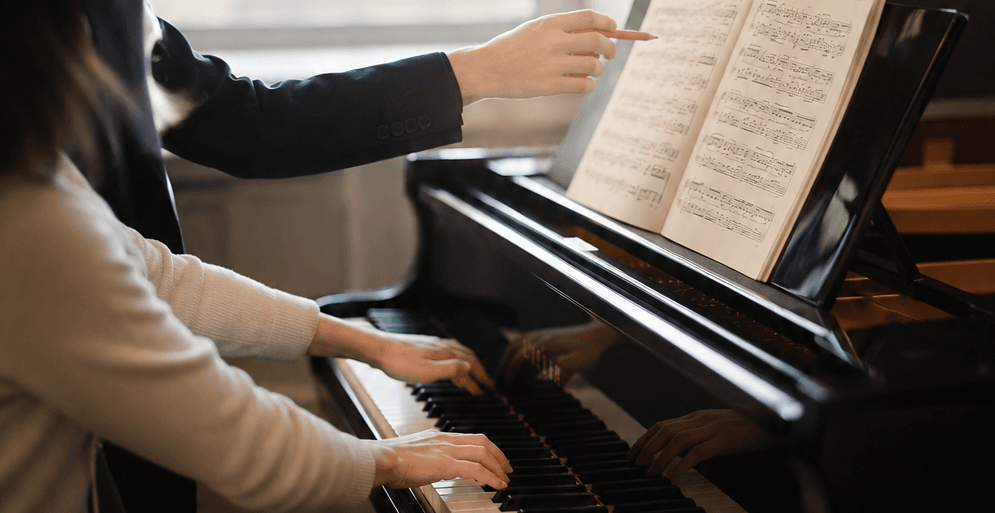
In a lesson, I can listen to your existing repertoire, discuss the musical range of the proposed programme, and help prepare the pieces that need more depth. Music-focused German or English can accompany the piano work when you are preparing to discuss it with a professor. Bring the target courses and the current requirements, together with the music you already play.
Vienna Piano School offers online lessons, with in-person lessons at piano studios in Ikebukuro and Shinjuku, Tokyo, starting in October 2026. Students of junior-high-school age and adults can request a free 30-minute trial. The starting point is your playing: what it already communicates, and what the next audition programme should reveal.