
How to Run a Mock Piano Audition and Use the Feedback
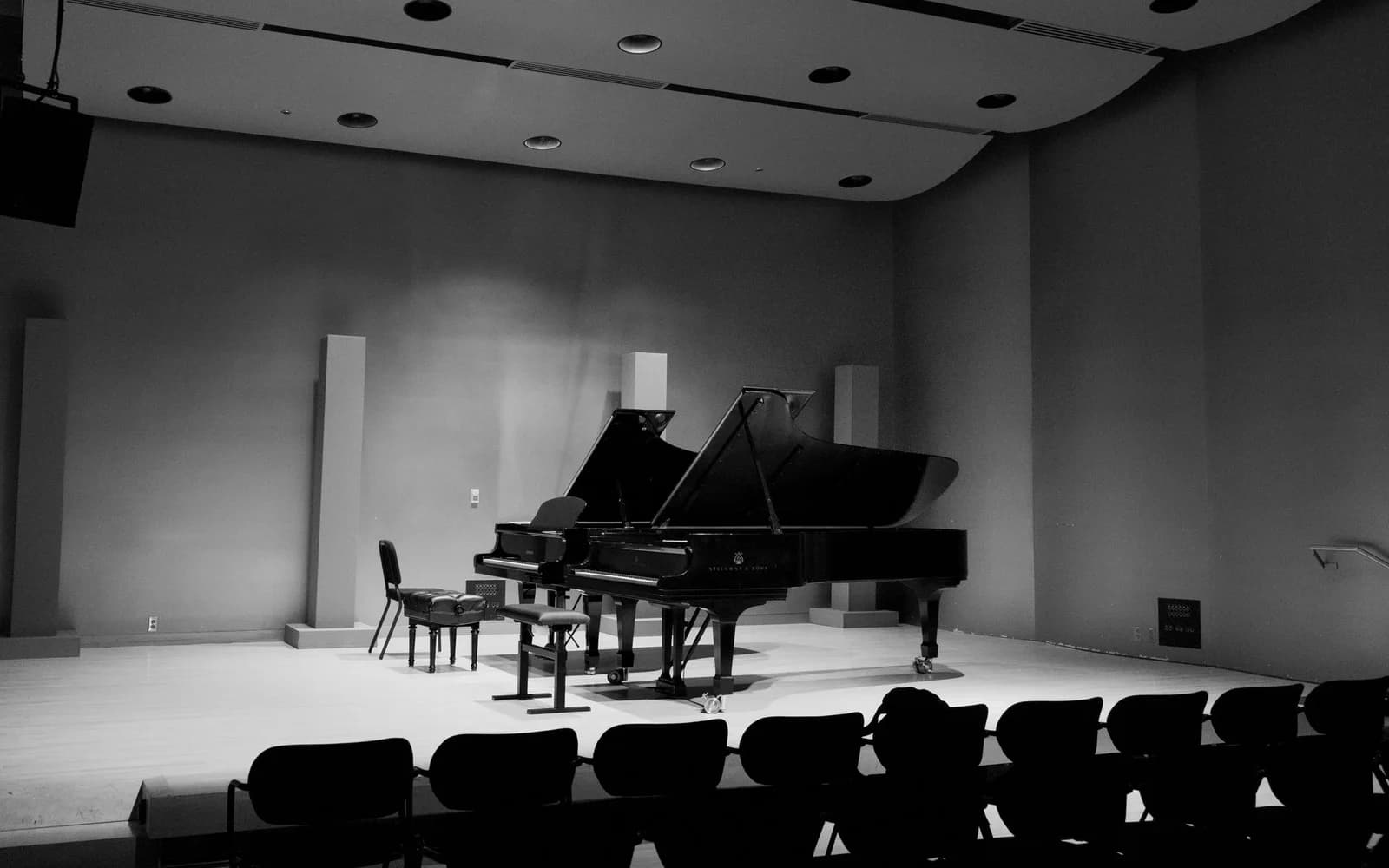
A useful mock piano audition ends with a small number of musical priorities you can hear and test. Arrange a performance that resembles the audition you are preparing for, let the listener hear it without turning every difficulty into a lesson, then discuss what happened. The value lies in the work that follows that conversation.
I want a student to leave a mock hearing knowing which parts of the performance already communicate and which need attention. “I made three mistakes” tells us much less than “the melody disappeared when the accompaniment became busier”. The second observation points towards a sound we can change.
- Match the format: use the repertoire, memory rules and additional tasks for your actual course and audition route.
- Hear a performance: agree when the playing ends and the teaching begins.
- Describe the sound: identify a passage and what reached the listener.
- Test the change: return to a complete musical context at the next hearing.
The audition you are rehearsing
Start with the current requirements for your intended course. A video screening, a live audition with selected excerpts and a full recital make different demands. The mock should reflect the event you are approaching, including a short discussion or sight-reading task where the published format includes one.
For example, the Royal College of Music’s current BMus piano requirements call for three contrasting works totalling at least 15 minutes, while explaining that a live panel may select only two. Preparing all three and rehearsing a selection therefore belong together. Its general audition guidance also describes sight-reading and a short discussion. Use the instructions for the actual degree and venue when deciding what to include.
A first mock can take place with your teacher in a familiar room. A later one might involve another musician and a different piano. These choices answer different questions: your regular teacher knows where your playing has changed, while a new listener hears the programme without that history. A small room with a few attentive listeners can provide a useful performance setting.
Agree a realistic amount of playing with the listener. If the real audition permits the panel to choose passages, rehearse that possibility. If you are preparing an uninterrupted video take, play the required sequence without stopping to repair it. Include the opening silence and the time between works, because those are moments in which you establish the character of the next piece.
A performance before a lesson
During the mock, the pianist should be able to follow a phrase through to its destination. A teacher who corrects every uneven scale has changed the purpose of the session: we hear a series of repaired fragments instead of how the player sustains the music. Save those observations and discuss them after the agreed performance portion.
I listen particularly to beginnings and transitions. The opening may be beautifully prepared, yet the tempo can change as soon as the texture becomes busier. A new theme may arrive without a change of colour. The pause before a slow movement may carry the energy of the preceding fast one. These things often become audible only when passages follow one another in real time.
Let an ordinary slip pass and continue the phrase. Notice what happens afterwards. Does the pulse recover? Does the player keep listening to the bass and melody, or does the next line become tentative? The musical consequence of an error can tell us more than the error itself. The RCM’s own audition advice encourages candidates to continue after a mistake.
Where excerpt requests belong to the target format, the listener can ask for another work or a new starting point. Keep the request clear and give the pianist a moment to hear the new music internally. There is little educational value in trying to unsettle someone with deliberately confusing instructions. We are practising a musical task, including the ability to respond to a request.
A short question can follow the playing: why this tempo, what changes at the return, or what you would most like to improve. Answer with something you have heard in the piece. If a word feels vague, demonstrate the difference at the keyboard. That can become the beginning of the lesson that follows the mock.

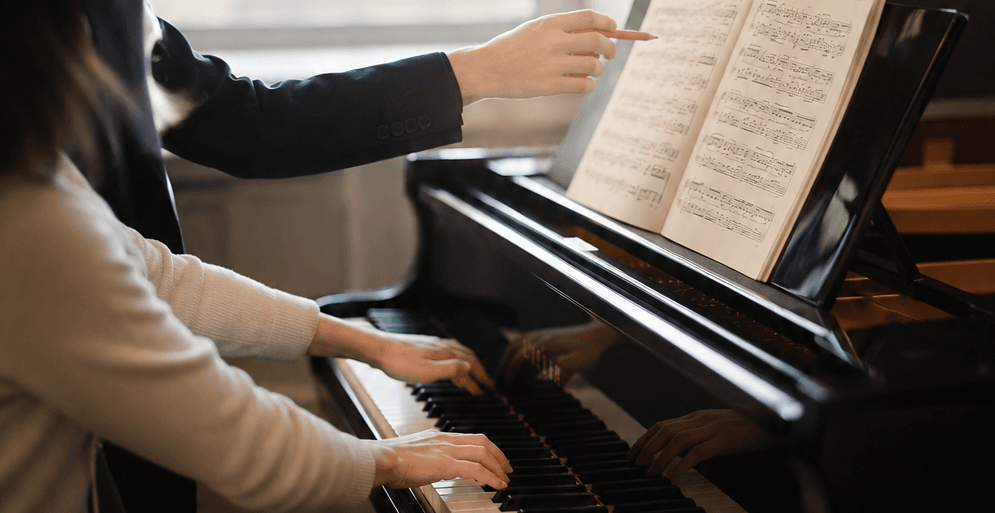
One-to-one classical piano
Beginner to advanced. Online, worldwide.
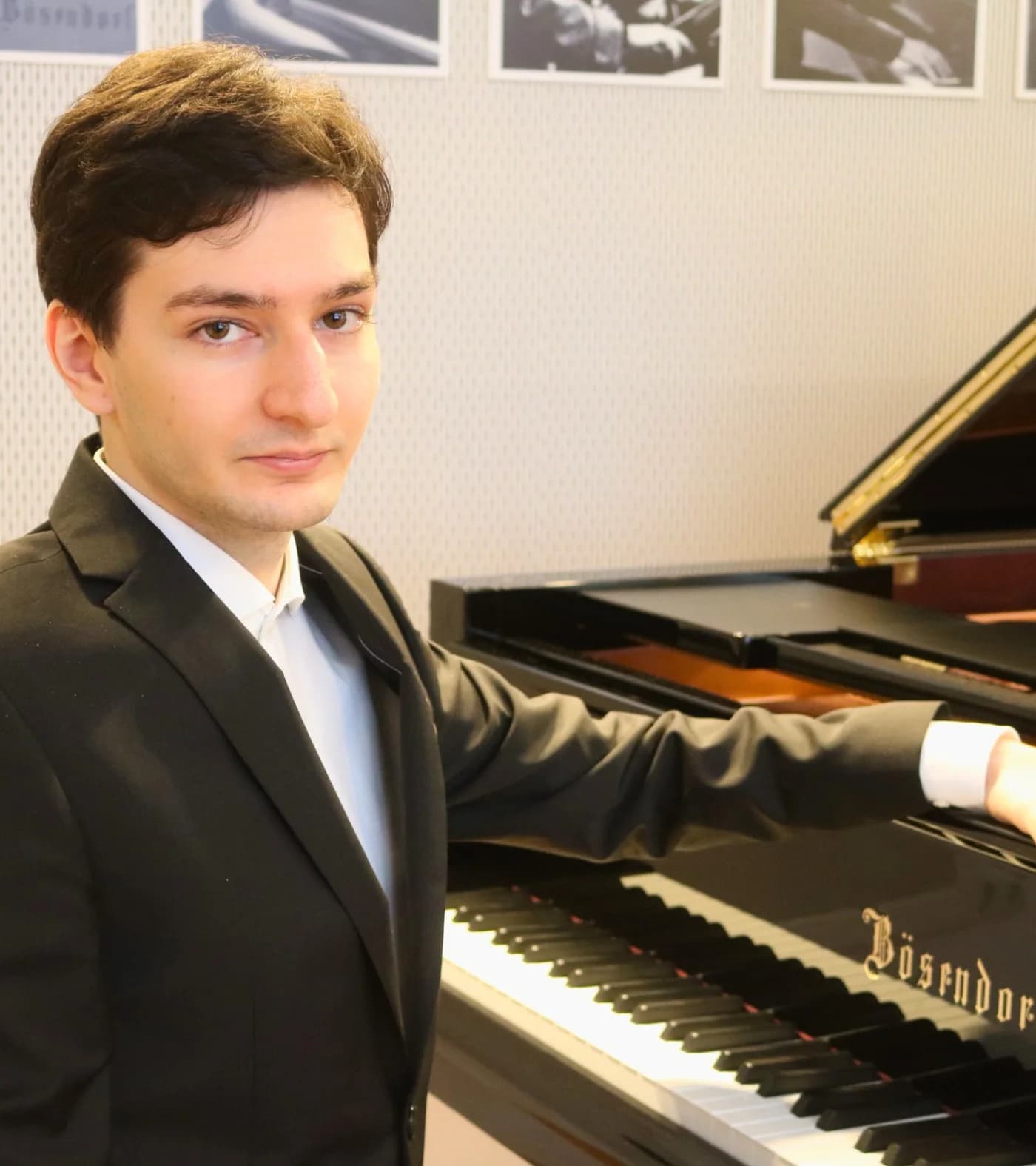
Enea
Concert pianist from Vienna
30 minutes · Ikebukuro & Shinjuku studios from October 2026
Listen beyond the mistakes
Before opening a score covered in notes, ask what the listener remembers from the whole performance. Perhaps the slow movement had a clear line, the contrasts between works were convincing, or a transition repeatedly lost momentum. These are useful starting points because they describe the experience of hearing the programme.
The pianist should give an account too. A passage that felt unstable may have sounded fluent, while a comfortable accompaniment may have covered the melody. Comparing the two accounts reveals where physical experience and audible result diverged. A recording can help settle a particular question, provided everyone has agreed to record the session.
I also want to preserve what worked. If the opening had a natural sense of movement, a week spent correcting details should not leave it stiff. Write down the successful quality as precisely as the problem: “the first phrase reached the cadence without losing its pulse” is more useful than “good expression”. It gives the student something to retain while changing the balance or articulation.
Several listeners can add perspective, especially when one knows the repertoire well and another hears it for the first time. Ask them for observations before a group discussion develops. Otherwise, the first strong opinion can become the language everyone uses, even when they noticed different things.
Feedback that names a sound
Broad comments need a place in the music. “More confident”, “less heavy” and “better rhythm” can all describe something real, but they leave the pianist guessing about what to change. Ask where the listener heard the problem and what was happening at that moment.
The examples below show how I would take three common comments into a lesson. Each practice idea is a starting hypothesis to test against the sound.
01
“The passage rushes.”
- What the listener heard
- The accompaniment’s short notes compress just before the leap, so the next phrase arrives early.
- A practice idea
- Play the bass line through the approach and landing. Restore the upper part while keeping the space between beats.
- At the next hearing
- Begin before the approach. Does the new phrase arrive with energy while retaining the established pulse?
If the observation is different
If the whole tempo is beyond your present control, revise the starting tempo too. A local rhythm exercise addresses a different problem from an unsuitable overall pace.
02
“The sound is heavy.”
- What the listener heard
- The middle notes of the accompaniment cover the melody, although the bass gives the phrase useful direction.
- A practice idea
- Play melody and bass alone, then add the inner notes softly enough to retain that relationship.
- At the next hearing
- Can the listener follow the melody through the complete texture, with the bass still moving?
If the observation is different
If the voices are balanced but harmonies still overlap, listen to note releases and pedal changes. Lowering every voice may leave the blur in place.
03
“The memory is insecure.”
- What the listener heard
- At a returning theme, the pianist continues into the earlier version instead of the changed continuation.
- A practice idea
- Compare both returns in the score. Hear the different bass and harmony, then practise each approach into its own continuation.
- At the next hearing
- Can the pianist reach the return from the preceding music and follow the correct harmonic direction?
If the observation is different
If the problem appears at an unrelated point each time, examine more of the movement. One repaired junction cannot explain every loss of continuity.
The distinction matters because a single word can conceal different causes. “Rushing” might mean that the basic tempo is too fast, that short notes are squeezed before a leap, or that the pianist arrives early at the next theme. Slowing down the entire piece may leave the local rhythmic habit untouched.
Similarly, a heavy sound can come from the balance between voices, the length of articulation, or resonance accumulating through the pedal. If the melody is already weak, asking for everything to be softer can make it disappear completely. Listen to the particular layer that is dominating, then change that layer and compare the result.
Musical feedback becomes especially useful when the listener can describe what they wanted to hear through the phrase. “Let the bass continue towards the cadence while the melody takes time” gives the pianist two related lines to listen to. An instruction about tempo alone may miss that relationship.
Choosing the next practice priorities
After a mock, choose the changes with the greatest effect on the performance. I would usually begin with a few connected priorities, rather than give equal weight to every mark in the score. A recurring balance problem may affect three works. An uncertain junction may threaten continuity. One untidy release may be easy to repair without reorganising the whole week.
Consider a programme in which the pianist plays accurate notes but the melodic line repeatedly loses direction. The first priority could be to hear the destination of each phrase and reduce the inner voices that mask it. A separate priority might be the transition into the finale’s second theme, where the pulse speeds up. Those two pieces of work ask for different listening, so they deserve separate practice time.
For the balance problem, begin with melody and bass. Establish the phrase’s shape, then restore the middle notes at a level that supports it. Record a short comparison and listen away from the keyboard. The question is whether the melody still travels through the phrase once the complete texture returns.
For the transition, find where the pulse first changes. It may begin several bars before the place the listener marked. Practise from that earlier point, carrying the accompaniment’s movement through the arrival. A metronome can reveal a compression of time, but the final test is a phrase that keeps its energy and proportion without the external beat.
Include a return to performance context in the plan. A passage played successfully after five attempts has shown something useful about learning it; the next mock asks whether you can reach it from the preceding music and play it on that occasion. Our guide to a more focused piano practice loop develops the work between those two situations.
The optional one-page mock-audition listening sheet leaves space for a quality to keep, two priorities, and what to listen for next time. Use a bar number, movement or recognisable musical landmark so the note still means something when you return to the piano.
When listeners disagree
Different comments do not always require a compromise halfway between them. One listener may want a clearer melody while another asks for a lighter sound. Both may be hearing an accompaniment that is too prominent. Try changing that balance before deciding that the advice conflicts.
There can also be a genuine difference of interpretation. One musician may prefer a more spacious approach to a cadence; another may hear that space as a loss of movement. Ask each to describe what is happening to the phrase, and try both possibilities. Then listen to the preceding music and the continuation. A choice that sounds attractive in two bars may disturb the proportions of the whole section.
Give technical observations and personal taste their proper weight. A missing voice, an altered rhythm or an inaudible dynamic change can be checked against the score and recording. Preferences about colour and timing invite discussion. Your teacher can help assess those ideas in relation to the work, its style and the interpretation you are developing.
A mock listener can give a considered view of your preparation, but cannot forecast the decision of a particular admissions panel. Use the session to improve the programme and identify unfinished work. Inventing a pass mark for a rehearsal adds apparent precision without telling you what to practise.
The next hearing
Schedule the next mock around the work that came out of the first. A small balance adjustment may be ready to hear after several practice sessions. Learning the remaining movements of a sonata requires a different span of preparation. Choose the next date when there will be something meaningful to test.
Keep one or two listening questions from the previous session. Does the melody now remain audible through the denser texture? Does the transition reach its new theme without accelerating? Alongside those questions, hear the performance as a whole again. Concentrating on a repaired passage can sometimes make the music around it cautious.
The second hearing should also test whether the change survives a different starting point or piano, where that is relevant to the real audition. A bass that was clear on a dry instrument may become too dominant in a resonant room. Listen and adjust the balance while preserving the phrase you have developed.
If the same problem returns, look at the practice task before simply repeating the mock. Perhaps the pianist can balance the voices in isolation but has not practised the approach to the passage. Perhaps a memory landmark works when named aloud but disappears during a longer movement. Change the preparation to include the missing context, then listen again.
Repeated mock auditions are most valuable when something changes between them. The goal is a programme you understand more deeply and can communicate under the conditions of the audition, with a clear account of the work that remains.
Preparing in lessons
Bring your intended course’s requirements, the proposed programme and any feedback from a recent performance. I can help you choose a useful rehearsal format, listen to the musical result and turn the main observations into focused work at the piano. English or German musical discussion can be included where it belongs to your study plans.
Vienna Piano School teaches learners of junior-high-school age and adults. Online lessons are available now, and in-person lessons at piano studios in Ikebukuro and Shinjuku, Tokyo, begin in October 2026. In a free 30-minute trial, we can discuss your audition goal, current repertoire and the parts of your preparation that need attention.