mdw or MUK? Comparing Piano Study in Vienna

mdw and MUK are two separate universities in Vienna, both offering substantial piano study. Choosing between them begins with the exact course and the people you would study with. A university name, a famous graduate or the word “conservatory” tells you much less about your future musical work than the principal-study teaching, curriculum and opportunities to play with others.
I studied at MUK, and my own teaching draws on growing up and studying music in Vienna. When I discuss a possible move with a pianist, I want to hear what they hope to change in their playing. A student seeking a stronger solo programme, a pianist drawn to working with singers and someone committed to teaching may all begin with “I want to study in Vienna.” Their next questions should be different.
Before comparing the two universities, identify three things: the degree you need, the musical work you want to develop, and the teaching relationship you are looking for. This guide explains the institutions and shows how to read their piano options through those questions. The separate application guides cover detailed audition requirements.
Names and institutional identity
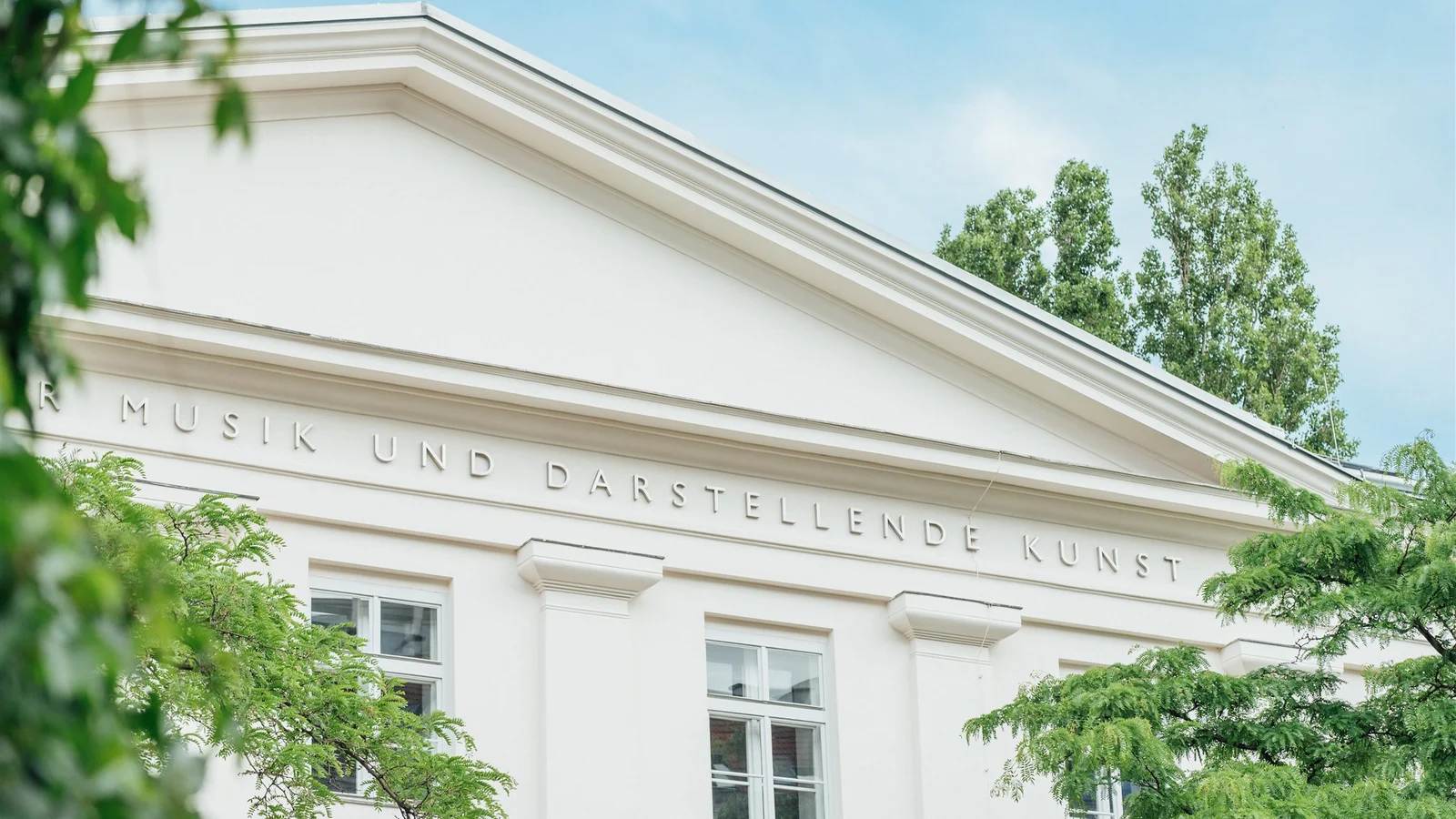
mdw is the University of Music and Performing Arts Vienna, or Universität für Musik und darstellende Kunst Wien. It is an Austrian public university. MUK is the Music and Arts University of the City of Vienna, or Musik und Kunst Privatuniversität der Stadt Wien. MUK is fully owned by the City of Vienna through Wien Holding and publicly funded, while its legal accreditation falls under Austria’s private higher-education framework.
That combination matters when interpreting the word Privatuniversität. It describes MUK’s legal status; the university is also a city-owned institution. Its own history traces it to the Conservatory of the City of Vienna, with university accreditation in 2005 and the MUK name adopted in 2015. Older references to Konservatorium Wien Privatuniversität can therefore refer to the institution now called MUK.
“Vienna conservatory” on its own is too imprecise to identify a present-day university or degree. When reading a biography, comparing an offer or searching for a professor, check the full institutional name and the course title. In application documents, use the name that appears on the university’s current page. This also keeps correspondence about a specific piano course from drifting into a discussion of a different institution.
| What to compare | mdw | MUK |
|---|---|---|
| Institution | mdwUniversity of Music and Performing Arts Vienna. Austrian public university. | MUKMusic and Arts University of the City of Vienna. City-owned and publicly funded; accredited under private higher-education law. |
| Performance bachelor’s | mdwPiano Performance / Klavier Konzertfach: Bachelor of Arts, 8 semesters, 240 ECTS. | MUKPiano: Bachelor of Arts, 8 semesters, 240 ECTS. |
| Performance master’s | mdwPiano Performance / Klavier Konzertfach: Master of Arts, 4 semesters, 120 ECTS. | MUKPiano: Master of Arts, 4 semesters, 120 ECTS. |
| Teaching-focused study | mdwPiano IGP is a separate course combining artistic and pedagogical study. | MUKPiano IGP is a separate bachelor’s route combining artistic development and teaching preparation. |
The degree level is one part of the comparison. Read the individual curriculum for its main subject, ensemble work, compulsory courses and options.
Piano degrees and related routes
The main performance piano routes have a similar formal outline: both institutions offer an eight-semester Bachelor of Arts carrying 240 ECTS credits and a four-semester Master of Arts carrying 120 ECTS. At mdw, the course is called Piano Performance, or Klavier Konzertfach. MUK lists its corresponding performance programmes as Piano, alongside a separate Piano IGP bachelor’s route focused on instrumental pedagogy.
The matching degree lengths establish a useful comparison, but they do not describe every part of the education. ECTS credits represent study workload. They include preparation and independent work as well as scheduled teaching; a credit total is not a count of weekly piano lessons. Look at the principal-subject provision, ensemble requirements, other compulsory courses and scope for choices within each curriculum.
A bachelor’s course develops the foundations of professional musical work across a substantial range of subjects. A master’s application should come with a clearer artistic direction and the relevant previous qualification. If you already hold a degree, read the exact entry requirements for your chosen master’s before treating another bachelor’s as the only route. The receiving university decides whether the previous qualification meets its requirements.
Related course names deserve equal attention. mdw has separate bachelor’s and master’s programmes in Art Song Interpretation Piano (Performance), as well as piano pedagogy study. MUK’s piano page also lists preparatory study and the Certificate of Performance. The latter is a certificate course, so it should be compared with a purpose that suits that type of study. An applicant seeking a full degree needs to check the qualification awarded, not just the opportunity to study piano with a particular teacher.
For the performance routes, the MUK piano study and application guide and mdw piano audition guide explain the separate entrance requirements. Keep those requirements attached to their own course: similarities in degree structure do not make audition programmes interchangeable.

One-to-one classical piano
Beginner to advanced. Online, worldwide.
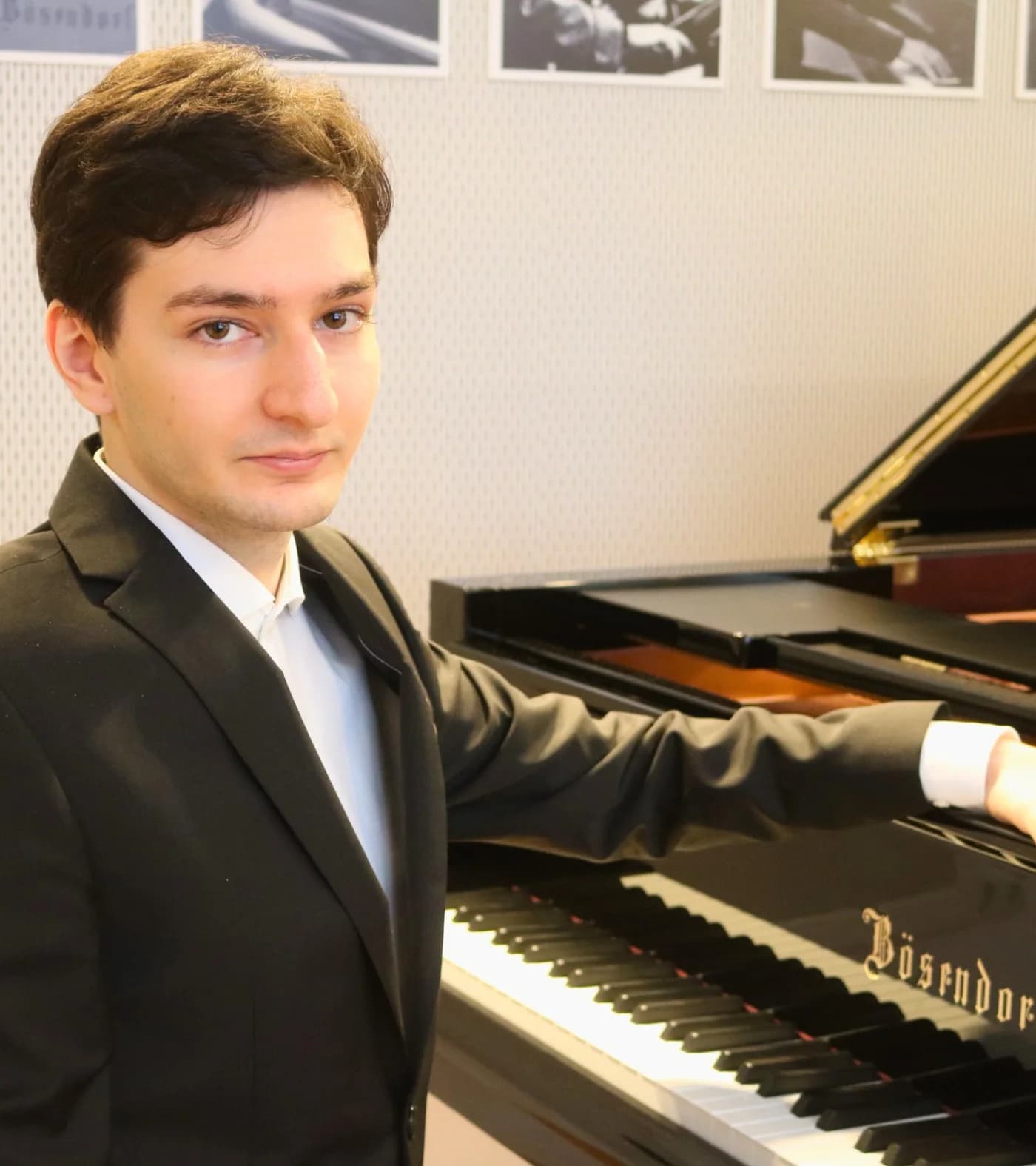
Enea
Concert pianist from Vienna
30 minutes · Tokyo studio from October 2026
Reading the curriculum musically
A curriculum becomes more informative when you imagine what its subjects would ask you to do. Principal piano study remains central, but a pianist’s education also takes place in rehearsals, class performances, theory work and discussions about editions and interpretation. The important question is how those experiences would develop the musician you hope to become.
MUK’s current piano bachelor’s curriculum includes principal study, class recitals, historical and contemporary performance practice, improvisation, ensemble work, theory and history, and research-related work. Its options include such areas as accompaniment, historical keyboard instruments and further ensemble study. The document distinguishes compulsory subjects from linked and optional modules, so an attractive item in the list should be read in that context.
The mdw Piano Performance curriculum likewise extends beyond the main instrument, including work in chamber music, accompaniment and musical subjects. Its bachelor’s description explicitly connects solo piano, chamber music and piano accompaniment with artistic independence. Read the detailed curriculum together with the course catalogue to see how that breadth is organised and which subjects belong to your stage of study.
Take a Classical sonata you already play. In an individual lesson, the work might centre on the weight of an arrival, the release of a short slur or the balance between melody and accompaniment. A theory class can explain why a harmonic change makes that arrival feel inevitable. Chamber music then tests whether you can shape the same kind of gesture while responding to another player’s breathing and timing. These are different encounters with a musical idea, rather than unrelated extras around the “real” piano lesson.
I would read a curriculum with a pencil beside the pieces and questions that currently interest me. If a student loves Schubert but struggles to sustain long spans, I want to know how they will work on harmonic hearing, ensemble pacing and phrase direction as well as the solo repertoire itself. A course title such as chamber music gains meaning when the student can describe what they hope to learn by playing with someone else.
The practical follow-up is to ask how a listed activity operates: what students prepare, how participation is arranged, and what feedback they receive. A subject listed in a curriculum is a sound starting point for that discussion. It does not by itself tell you which partner, project or repertoire you will have in a particular semester.
Principal-study teaching and feedback
The teacher you work with will have a large influence on your daily study. Begin with the current faculty information, listen to performances where available and seek an appropriate opportunity to learn more about the teaching. A trial lesson, when a professor offers one, gives you something that a biography cannot: experience of working on your own playing together.
Bring a piece with a real question in it. Perhaps the melody sings when played alone but disappears once the accompaniment returns. Perhaps a rapid passage sounds efficient yet has no direction. A polished complete performance can establish your level, but a passage you can examine and change reveals more about the working relationship. Listen to how the teacher identifies the problem and how you respond to the next attempt.
I pay particular attention to what happens after an instruction such as “let the phrase breathe.” Does the teacher show where the phrase releases? Can the student try a different timing, compare the two sounds and explain what changed? The instruction becomes valuable through that exchange. Its usefulness is harder to judge from the phrase alone.
A demanding lesson can be a good fit when the work gives you a clear musical direction and leaves you curious to practise. Afterward, ask yourself what you heard differently, which task you could continue alone and what questions remain. Feeling challenged and understanding the purpose of the challenge can coexist. That combination tells you more than simply counting compliments or corrections.
I also resist assigning one uniform teaching style to an entire university. Vienna contains many artistic approaches, and individual musicians develop their own priorities. The article on Viennese tradition in a modern piano lesson explores some musical connections without reducing them to a fixed national method. For a study decision, return to the actual teacher, course and musical work you have encountered.
Solo piano, chamber music and song
“I want to be a better pianist” is a starting point. It becomes more useful when you name the situations in which you want to play well. Preparing a solo recital, rehearsing a trio and performing songs with a singer all demand excellent piano playing, but they direct your attention differently.
In solo repertoire, you shape the relationship between voices yourself. With a violinist or cellist, another musician controls a sustained line, and your accompaniment has to respond to a sound that continues independently of the piano’s decay. With a singer, the meaning and rhythm of the words influence the phrase. These experiences can enrich each other while suggesting different priorities for your next years of study.
Both universities’ performance piano education includes work beyond solo playing. MUK describes opportunities in solo concerts, chamber music evenings and other performances, while its curriculum includes ensemble and accompaniment options. mdw’s dedicated Art Song Interpretation route gives an applicant with a strong interest in singers another course to investigate alongside Piano Performance.
For example, imagine a pianist who enjoys the piano introduction and postlude of a song as much as the vocal line itself. The relevant questions include how closely they want to work with singers, how much attention they want to give the text, and whether that interest should become the main subject of a degree. Simply asking which university has “more opportunities” misses the kind of opportunity the pianist is seeking.
For a chamber-minded student, useful questions concern recurring ensemble work, coaching and the process of finding partners. A concert calendar can show the kinds of work students present. The curriculum shows where ensemble study sits in the degree. Conversations with the department or current students can then fill in how participation is organised. Read those sources together rather than using one impressive event as a picture of an entire course.
Performance study and piano pedagogy
Both mdw and MUK offer routes in instrumental pedagogy, commonly abbreviated IGP. A student who wants to teach should investigate these alongside the performance degrees. The distinction concerns the content and aims of the course, including supervised teaching, pedagogical thinking and the relationship between artistic work and explaining music to someone else.
MUK’s Piano IGP description combines artistic piano development with communication and practical teaching skills, including cooperation with the City of Vienna’s music schools. mdw’s Piano IGP description also joins artistic practice with pedagogical study and reflection. These are useful starting points for an applicant who values teaching as part of a musical career.
Consider a beginner who plays a phrase unevenly. As a performer, you may immediately hear the unevenness and demonstrate a more fluent version. As a teacher, you need to work out what the student is doing: reading too slowly, losing the pulse, hesitating over a fingering or struggling to coordinate the hands. The next task should address that cause. Good pedagogical study examines how to make such judgments, communicate them and evaluate the student’s response.
I find that the wish to teach deserves a positive reason. Enjoying the process of listening to another player, finding a useful explanation and watching their understanding change is a substantial musical interest. It should appear in your choice of course. If you want both performance and teaching, compare how the programme develops each, including the artistic level expected in the main instrument and the time devoted to practical teaching.
The exact qualification and professional requirements also matter if you have a particular school system or country in mind for employment. Check those with the relevant institution or employer. A course description about teaching preparation should not be stretched into a promise of automatic eligibility for every teaching position.
German, fees and everyday study
Language preparation can affect which application timetable is realistic. For the main piano performance routes, MUK normally requires B1 German at initial enrolment. In special cases it permits A2 initially, with B1 required after the second semester. mdw’s Piano Performance language proof is due before continuing into the third bachelor’s semester or second master’s semester. Those deadlines allow different preparation schedules; they do not describe how much German you will use in the first lesson or rehearsal.
Think about the language needed to take part: explaining a fingering problem, asking about a phrase, understanding a theory assignment and arranging a rehearsal. If you hope to teach, you will also need to discuss music with learners and explain tasks clearly. Read the requirements for the exact pedagogy course rather than carrying the performance course’s language level across to it.
Fees also require a comparison of the category that applies to you. MUK publishes its own rates by course and student group; its categories are more specific than a simple EU/non-EU division. mdw’s fee rules include nationality or residence-related provisions and exemptions, as well as study-duration conditions for certain groups. Use the official fee pages for your situation and proposed entry year. Public funding and legal status alone will not calculate the amount you owe.
Alongside tuition, investigate practice access, travel between teaching locations and accommodation that supports regular work at an instrument. A beautiful city can be part of the attraction, but your week will be built around lessons, rehearsals, classes and independent preparation. Ask what those days would look like for the actual course. A plan that leaves room to practise and listen is part of choosing a sustainable education.
Preparing a decision from abroad
A useful comparison ends with a small number of specific questions. Which course develops the musical work you most want to do? What did you learn about the principal-study teaching? Which part of the curriculum would stretch you beyond your present habits? Then check that the qualification, language preparation and practical arrangements fit your circumstances.
You can begin this work while still at home. Choose a piece that represents your current playing and another that shows the direction you want to explore. Discuss them with your teacher, record a passage and listen for the questions you would take into a lesson in Vienna. The aim is to arrive at a conversation about music and study, with the administrative requirements already understood well enough to ask the right follow-up questions.
At Vienna Piano School, I help pianists prepare their playing for further study and work on the German needed for musical conversation, professor communication and application preparation. You can read more about my teaching background. I work with teenagers from junior-high-school age and adults in English, Japanese and German. Lessons are available online, with in-person teaching in Tokyo’s Shinjuku area from October 2026. If you are considering a Vienna course, a free 30-minute trial lesson can begin with your repertoire, study goals and the questions you want to resolve.