Applying for Piano at mdw Vienna: Auditions and Preparation
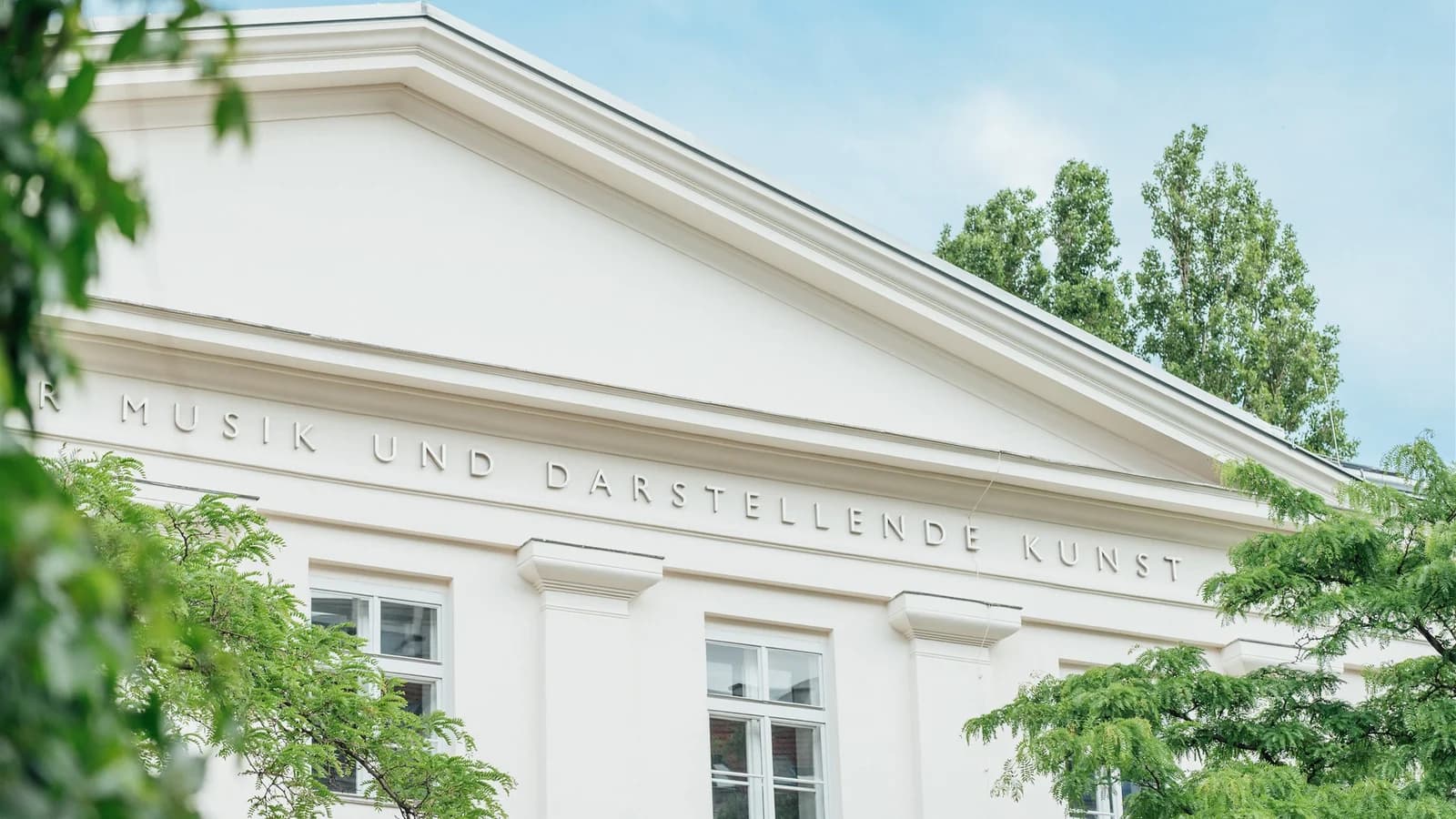
Applying for piano at mdw in Vienna involves two very different kinds of preparation. There is the application itself, with a video round and dates that depend on the degree and intake. Then there is the musical work: keeping a substantial programme alive, hearing what changes from Bach to Schubert, and arriving ready to make music on an unfamiliar piano.
When I help a pianist prepare for study abroad, I listen beyond the most impressive passage. A convincing opening, a clearly heard bass line and a slow movement with direction often tell me more about the preparation than a few bars played at maximum speed. Those qualities deserve attention from the beginning, alongside the pieces that feel like obvious audition material.
This guide concerns Piano Performance, or Klavier Konzertfach, at mdw, the University of Music and Performing Arts Vienna. The bachelor’s and master’s routes share several repertoire requirements, but differ in prior qualifications, the full programme and the examination stages. The upcoming published dates are set out below.
Piano BA and MA
The Bachelor of Arts in Piano Performance runs for eight semesters and carries 240 ECTS credits. It gives an undergraduate pianist time to develop across solo playing, chamber music, accompaniment and the musical subjects that support performance. A strong application should show both present ability and room for that broader development.
The Master of Arts in Piano Performance runs for four semesters and carries 120 ECTS credits. Admission requires a relevant bachelor’s degree or accepted equivalent studies, as well as success in the audition. The artistic question becomes more focused: what do you want to investigate and develop after your previous training? That might be a particular part of the repertoire, a deeper relationship with chamber music, or a more independent approach to programming and interpretation.
For the MA application, mdw asks for the bachelor’s diploma, transcript and diploma supplement in German or English. Applicants still completing their degree after the audition must provide their institution’s official confirmation of the expected graduation date and finish the qualification before enrolling. If your degree has a different title, send its details to the StudiesCenter early so that mdw can assess it.
Course identity matters. A search for piano at mdw also brings up music education and other piano-related programmes with their own requirements. Match the name on the application to the examination information you are using. Vienna’s MUK is a separate university; the MUK piano study guide covers its degrees and audition structure.
Application dates and the video round
The dates above separate registration from video upload. For the MA audition in January 2027, registration closes on 18 November 2026, while video upload closes on 25 November. For the June 2027 BA and MA auditions, those deadlines are 7 and 14 April respectively. The extra week belongs to the recording submission; it does not extend the application period.
Applications go through mdwOnline. The upload function becomes available after the StudiesCenter has reviewed and approved the application, with notification by email. Submit the application in time for that review, and use the upload instructions linked at the end of this article. Waiting until the final evening to discover which documents are missing puts the recording at risk as well.
For the January MA cycle, video results are due by 23 December 2026. For the June BA and MA cycle, they are due by 19 May 2027. That leaves roughly a month between the result and the live audition. The full repertoire therefore needs to be in preparation before the video decision arrives. A sonata with two unfinished movements is a much larger problem at that point than a recording with a slightly plain background.
The department lists the June live piano audition on 21 June and the BA theory examination on 22 June. A BA applicant travelling to Vienna should account for both days. Use the department’s current schedule and the individual invitation when arranging travel; the published dates are for the specified intakes, rather than an annual pattern to reuse automatically.
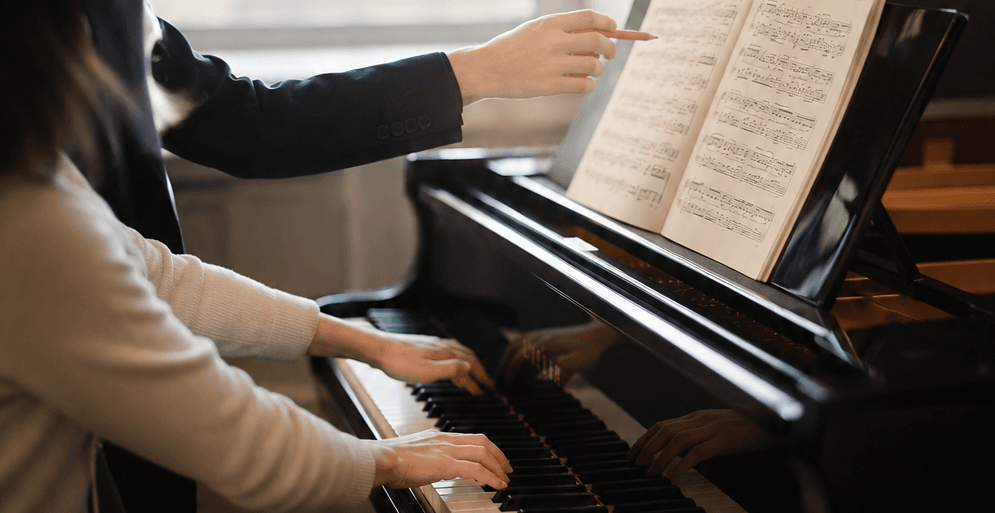
One-to-one classical piano
Beginner to advanced. Online, worldwide.
Enea
Concert pianist from Vienna
30 minutes · Tokyo studio from October 2026
Audition repertoire
Both degrees ask for two selections in the video round: a virtuosic étude and a freely chosen work. The complete live programme is larger. The following comparison keeps the video selections within that whole programme, because they also remain part of the repertoire prepared for Vienna.
Record a + b. Prepare a–e for the BA live audition, or a–f for the MA. Each category needs its own work.
| Repertoire | Piano BA | Piano MA |
|---|---|---|
| a · Virtuosic étudeVideo + live | BA:One étude | MA:One étude |
| b · Free choiceVideo + live | BA:One different work; an individual sonata movement is permitted | MA:One different work; an individual sonata movement is permitted |
| c · Haydn, Mozart, Beethoven or Schubert | BA:One work; all movements if it is a sonata | MA:One work; all movements if it is a sonata |
| d · Bach | BA:One prelude and fugue | MA:One prelude and fugue |
| e · Romantic repertoire | BA:One work | MA:One work |
| f · Twentieth or twenty-first century | BA:No separate category in the BA list | MA:One work; includes Impressionism |
Play from memory, except for works composed after 1950. You select the first work in the live audition; the jury chooses what follows.
Can the video works be played again in Vienna?
Yes. The live programme includes a and b. The rule against repeating a work concerns filling different repertoire categories with the same music; it does not remove the video selections from the live programme.
The free-choice work occupies its own slot. For example, if a Beethoven sonata supplies the required Haydn, Mozart, Beethoven or Schubert category, one movement from that same sonata cannot also fill the separate free-choice category. An individual sonata movement is permitted for free choice, but it must come from a different work. This distinction is worth settling before recording.
For the required Classical-period category, mdw includes Schubert alongside Haydn, Mozart and Beethoven. When the choice is a sonata, all movements must be prepared. The Bach requirement is a prelude and fugue for both BA and MA. The Romantic category expressly includes Rachmaninoff, Scriabin through Op. 52 and Szymanowski through Op. 21. These boundaries matter when a programme sits between familiar historical labels.
MA applicants add a twentieth- or twenty-first-century work, a category that includes Impressionism. Think about the musical language it contributes: colour and resonance, rhythmic precision, texture, or a different relationship between the two hands. It deserves the same attention as the sonata and the Romantic work, even if the opening video pair does not feature it.
The published piano sheets require memorisation except for works composed after 1950. That exception depends on the composition date, rather than simply on whether the music sounds modern. If you plan to use a score, establish that the particular work falls within the exception before building your preparation around it.
Choosing the video works
The étude and free-choice piece form a small portrait of your playing. I would listen to them together before committing to the pair. If both depend on a continuous wash of pedal and the same brilliant surface, a listener may hear relatively little of your control of a quiet melody, a transparent texture or a long phrase.
A virtuosic étude still needs a musical argument. In a texture with rapid right-hand figuration, listen to the bass and the harmonic rhythm: where does the phrase actually travel, and which arrival matters most? If every beat receives the same physical emphasis, speed can make the playing sound more laboured. Work on the shape at a tempo where the moving notes remain light enough for the underlying line to speak.
The free-choice work can reveal another part of the pianist. A lyrical selection asks whether the melody sustains through changing accompaniment; a Classical movement exposes articulation, proportion and pulse. Contrast alone is insufficient, though. A slow piece chosen only to balance a fast étude still needs an interpretation with a clear character and a secure sense of time.
In a lesson, I might ask for the melody alone, then the accompaniment alone, before putting them together. The melody should retain its destination; the accompaniment should have its own phrasing without claiming the foreground. When the full texture returns, listen for the exact note at which the balance changes. That is more useful preparation than repeatedly playing through and hoping the next take feels better.
Choose works you can sustain across several performances. A piece that succeeds once after hours of warming up may consume the entire recording period. Try the proposed pair on separate days, with a normal warm-up, and listen back to complete performances. Notice recurring problems in tempo, voicing and concentration. Those patterns should influence repertoire choice as much as the best take.
The full programme and live audition
A programme becomes convincing through the differences between its works. Bach needs a sense of how one voice continues while another enters. A sonata needs relationships between movements and between contrasting subjects. Romantic repertoire asks for its own sound, harmonic pacing and flexibility. Applying the same articulation and pedal habits to everything can flatten those distinctions, even when the notes are secure.
For Bach, take a passage where the subject moves into an inner voice. Sing or play that entry separately, then restore the other voices without losing its direction. The task is to hear a continuing line within the texture, rather than accenting every subject entry so heavily that the rest of the music disappears. The prelude needs an equally considered character; it is part of the required pair.
In a sonata, compare the first movement’s final bars with the slow movement’s opening. The change of pulse and sound should feel intentional. Practise the transition between movements as well as their difficult passages. A complete sonata exposes decisions about scale: how much space to give a cadence, how to hold a quiet passage, and how much energy to reserve for the final movement.
At the live audition, you choose the first piece; the jury selects the subsequent works from the submitted programme. Choose an opening whose sound and character you can establish immediately. The most technically spectacular option is useful only if it is also dependable on the day. A quieter opening can be equally demanding because its timing and balance are exposed from the first note.
The rest of the programme needs that same readiness. Rehearse beginning a selected work without first playing everything that usually precedes it in practice. Hear the opening tempo and bass before moving, then let the first phrase settle into its own character. This develops musical independence between pieces without turning the audition into a collection of isolated starts.
On an unfamiliar grand piano, listen closely to how the bass resonates and how far a soft attack carries. A pedal depth that worked at home may blur the room. In preparation, I like to revisit a passage with several degrees of pedal and accompaniment weight, keeping the intended phrase constant. The pianist then has choices when the instrument responds differently, rather than one physical setting that must work everywhere.
BA theory and ear training
The BA audition includes a separate written examination in general music theory and ear training, which may be supplemented orally. The published outline names treble- and bass-clef notation, intervals and chords, musical dictation, and recognition of simple rhythmic, melodic and harmonic patterns. This calls on skills that playing a memorised repertoire programme can leave surprisingly uneven.
Start by separating what you can recognise from what you can write. A student may hear that a melody rises, yet hesitate over the interval or its notation. Another may identify chords on paper but struggle to hear their qualities without the keyboard in front of them. A teacher can locate that difference quickly by moving between a short sung or played example and its written form.
A useful practice task is to listen to a short phrase, sing it back and mark its rhythm before adding pitches. Keep the pulse audible in your mind during the silence. Then compare your notation with the original and identify the first place they diverge. If the rhythm is wrong, adding more pitch guesses usually makes the page harder to interpret.
Bring this work into your repertoire as well. Sing the bass of a cadence, identify the intervals between its notes, and describe how the harmony approaches the arrival. In a Bach passage, hear the subject away from the instrument before checking it at the keyboard. These are preparation exercises, not a reconstruction of an mdw examination paper; their value lies in joining the ear, the score and the hands.
The MA admission sheet sets out video and live performance rounds rather than the BA’s separate written test. Follow the requirements for your actual degree. For BA candidates, leave regular time for listening and written work during repertoire preparation: the day after the live audition is too late to discover that dictation has been neglected.
Recording and submission
mdw requires each work to be recorded in one uncut, unedited take, from a single fixed angle. The pianist’s entire body, especially hands and feet, and the keyboard must be visible. The recordings are submitted as one or two video files through the application portal. A close-up that beautifully shows the hands but loses the feet does not meet that framing instruction.
Make a short test from the proposed camera position and watch it all the way through. Check the frame during passages that move towards the ends of the keyboard, then listen to a loud chord and a quiet sustained phrase. The recording should preserve the contrast without distorted peaks or an accompaniment that masks the melody. The home piano audition recording guide covers microphone placement and sound checks in more detail.
The upload manual specifies a maximum Full HD resolution and a maximum video size of 4 GB. Keep the piano department’s uncut-performance requirements in charge when preparing the files. The manual’s general advice for other uploads is not a reason to split a piano work into edited sections or to pad a short selection to an invented minimum duration.
After upload, check that the portal displays completion and enter the work information accurately. The manual explains that there is no separate confirmation of completion: files uploaded before the deadline are processed automatically, and no completion or deadline-reminder email is sent. Leave time to check the files in the portal itself. Save the final recordings locally as well; they are valuable evidence of where your playing stood before the next stage of preparation.
German and preparation with a teacher
For these Piano Performance degrees, the admission sheets list B1 German, with proof due before admission to the third semester for BA students and before the second semester for MA students. The accepted certificates and their validity conditions appear in the official documents. Missing the required proof by the deadline prevents registration for the main artistic subject, so language preparation belongs in the study plan from the outset.
The certificate level and the language of a lesson meet in everyday musical exchanges. Hearing ab dem zweiten Takt means finding the requested starting point promptly. Explaining Ich möchte die Oberstimme deutlicher hören means saying that you want to hear the upper voice more distinctly. Practise understanding an instruction, trying it at the piano, and describing what changed in the sound. That exchange demands more than remembering a list of musical nouns.
My own musical training in Vienna shapes how I approach this preparation. I want the pianist to arrive with musical decisions they can demonstrate and discuss: why a tempo suits the phrase, what the bass contributes, or where the sound needs to change. The broader Viennese piano tradition is part of that background, while the individual player and the actual score guide the lesson.
I work with teenagers and adults on repertoire, audition preparation and music-focused German, with lessons available in English, Japanese and German. Support can also include preparing communication with professors and organising the application process. We can begin with a current performance, the intended degree and the published requirements, then decide which musical and language work needs the most attention.
Lessons are available online, with in-person lessons in Tokyo/Shinjuku planned from October 2026. Read about my teaching and background, or book a free 30-minute trial lesson to discuss your mdw preparation. Bring the pieces you are considering and a recording of your current playing; we can listen to what the programme already communicates and where the next stage of work belongs.