
How Much German Do You Need for Piano Study in Germany or Austria?
The German you need for piano study depends on the exact programme, the accepted proof and the deadline. A performance bachelor’s, a teaching-focused degree and a performance master’s can have different rules at the same university. You also need to distinguish the certificate required on paper from the German you will use in a lesson, rehearsal or theory class.
I grew up taking piano lessons in German in Vienna. For me, German belongs to the sound and movement of a lesson: where to begin, what to listen for, how a phrase changes. When I help someone prepare to study abroad, I want those musical exchanges to develop alongside the language qualification. The certificate gets dealt with as a real requirement, while the student practises taking an active part in the teaching.
Start with three questions: Which piano course am I applying for? What proof will it accept? When must that proof reach the university? The examples below show why all three matter. They cover selected programmes in Austria and Germany, followed by ways to prepare the German you will actually use as a pianist.
Programme levels and deadlines
An application deadline, an enrolment deadline and a deadline for continuing into a later semester are different points in your study plan. Some piano courses allow the language certificate after the artistic selection. Others allow proof during the first part of the degree. Read the condition attached to the exact course, including its degree level and artistic or pedagogical focus.
At mdw in Vienna, Piano Performance requires B1 German, with proof due before continuing into the third bachelor’s semester or second master’s semester. Mozarteum’s Piano bachelor’s and Piano Solo master’s require A2 by enrolment. MUK normally requires B1 at initial enrolment for its performance degrees; its special-case provision permits A2 initially, with B1 required after the second semester.
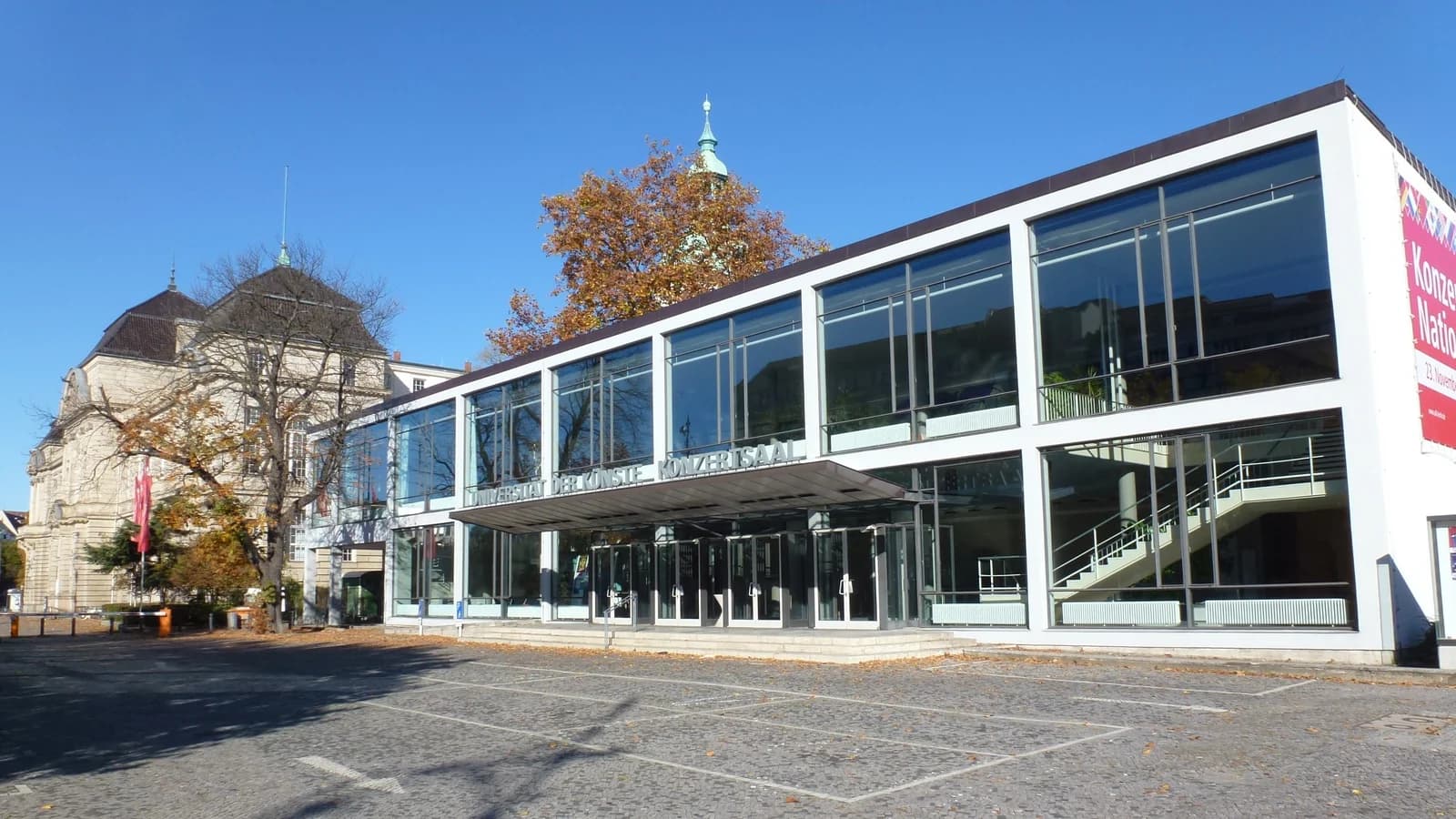
In Germany, Munich’s HMTM lists B1 for its artistic piano bachelor’s, with the language certificate due at enrolment. UdK Berlin’s Piano BA application guide lists B2 and allows the proof to be submitted by enrolment. These are programme examples, not national thresholds.
| Programme | German | Proof deadline |
|---|---|---|
| mdw ViennaPiano Performance BA / MA | German:B1 | Proof deadlineBefore continuing into semester 3 of the BA or semester 2 of the MA. |
| Mozarteum SalzburgPiano BA / Piano Solo MA | German:A2 | Proof deadlineBy enrolment at the latest. |
| MUK ViennaPiano performance BA / MA | German:B1 normally | Proof deadlineAt initial enrolment; the special-case A2 provision is explained in the article. |
| HMTM MunichPiano BA, artistic route | German:B1 | Proof deadlineAt enrolment. |
| UdK BerlinPiano BA application guide | German:B2 | Proof deadlineThe guide allows proof by enrolment. See the article’s note about the English department page. |
Each row applies to the named course. Teaching-focused degrees and other master’s routes can have different requirements.
The difference between artistic and pedagogical study matters too. MUK’s IGP route normally requires B2, and Munich’s accepted-certificate document places its pedagogical degrees in the B2 group. At Munich, that same document says performance-profile master’s programmes generally do not require formal language proof, with named exceptions in other fields. A rule for one bachelor’s should therefore never be carried across to every master’s or teaching course.
For degree and audition context, the mdw piano application guide, MUK study guide and Mozarteum piano guide cover their separate routes. Here, the task is to connect each language condition to your own preparation.
Reading the requirement
Look for the level and the timing in the same passage. Deutschkenntnisse means knowledge of German; Nachweis is the proof you must provide. Immatrikulation refers to enrolment. A sentence that permits a document to be submitted later still has an endpoint. The wording tells you which part of your application can proceed before the certificate is ready.
UdK’s Piano BA guide offers a useful example. Its language condition names B2, then says the proof may follow by enrolment. The main questions are therefore which B2 certificates are accepted and what the enrolment deadline will be for the offered place. A booking confirmation for a language test and a completed certificate are different documents; check which document the university is requesting.
University pages can disagree. UdK’s English piano-department page also describes an arrangement involving A2 initially and B2 by the end of the second semester. That arrangement is not stated in the current Piano BA application guide; the German department page refers applicants to the university’s language information. Anyone hoping to use the A2 arrangement should obtain confirmation from UdK for their course and intake before planning around it.
A useful enquiry identifies the degree, entry semester, certificate you hold and the exact condition you want clarified. For example: “I am applying for the Piano BA and currently hold an A2 certificate. Does the arrangement described on the English piano page apply to my intake, and what proof is required for enrolment?” This is a question the university can answer about your case. It is more useful than asking whether your German is “good enough.”
Keep the written reply with the application information. If you apply to several universities, retain each course’s own condition. A deferred deadline at one institution does not extend the deadline at another.


One-to-one classical piano
Beginner to advanced. Online, worldwide.
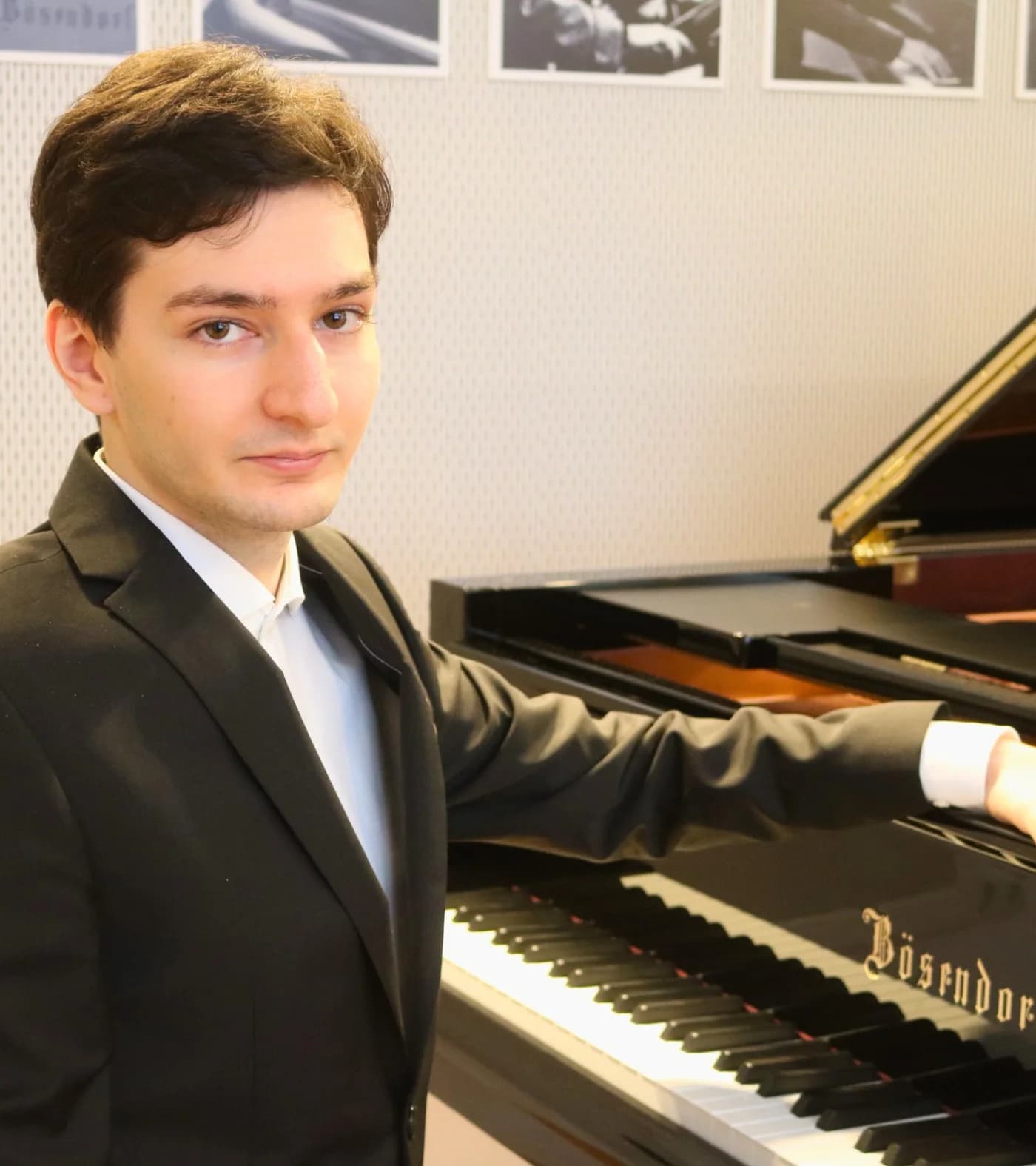
Enea
Concert pianist from Vienna
30 minutes · Tokyo studio from October 2026
Certificates and accepted proof
The name of a level is only part of the requirement. A university may specify examination providers, accepted school or university qualifications, the age of a certificate and whether all language skills must be passed at the required level. Read the list before booking a test, particularly if you already have a certificate and hope to reuse it.
For Munich’s artistic bachelor’s B1 requirement, the published list includes Goethe, telc and ÖSD B1 certificates, alongside specified school qualifications. The document also separates B2 and C1 evidence for other routes. Use the list for the required level rather than assuming any document bearing the word “German” will qualify.
Mozarteum requires its listed test certificates to be no more than two years old at the relevant 1 October or 1 March reference date. Listening, reading, writing and speaking must all have been passed at the required level with the same provider. Its rules also distinguish a passed examination from merely attending a language course. These details affect whether an existing certificate is usable.
mdw’s language ordinance uses a five-year limit measured at presentation, counting from the last examination component. Its supplementary-proof provisions are the relevant ones for the deferred piano requirements. The university also offers its own German test, whose result is for mdw’s purposes and does not provide an external language certificate. If you are applying elsewhere too, consider whether the proof you prepare will serve more than one application.
The practical timing question is when the result and accepted document will be available. Work back from the university’s deadline using the actual examination date and the provider’s stated result process. Leave room to respond if a component must be repeated. A universal “take the exam a month before departure” rule would ignore those differences.
A2, B1 and B2 in musical study
The CEFR describes language ability across reading, listening, speaking and writing. A2 covers simple, familiar exchanges; B1 includes connected communication about familiar interests and brief explanations of reasons or plans. B2 extends towards more complex material and more independent discussion, including topics in a person’s field. These are broad descriptions of language use, not grades of musical understanding.
A pianist may understand a demonstration immediately and still struggle to explain why a passage feels awkward. Another student may write accurately about a composer but lose track of a quick instruction during a rehearsal. In preparation, look at the particular situation where communication breaks down. Recognising a word on a page, catching it in speech and using it in your own sentence are related skills that need practice in different settings.
At an early stage, useful tasks include locating a bar, confirming a starting point and asking for a demonstration. As your German develops, describe what you heard and what you tried: the melody disappeared, the chord arrived late, a different fingering allowed the hand to move. Later, work on explaining choices and comparing interpretations. The language grows around musical observations you can actually make.
I would rather hear a clear, short explanation of a real sound than an elaborate sentence learned for an interview. If you can say where the phrase loses its direction, point to the score and try another version, you are already contributing to a lesson. The next step is to make that exchange more precise and flexible.

German in the piano lesson
Imagine a passage that becomes tense as it gets louder. You can play it, identify the moment of tension and say, “Hier werde ich fest”: “I get tense here.” The teacher asks you to begin earlier and listen to the approach. After trying again, you might say, “Mit diesem Fingersatz bleibt die Hand beweglicher”: “With this fingering, my hand stays more mobile.” The words help you compare two physical and musical experiences.
Begin with a sentence you understand, then change one part to match the piece. Mit diesem Fingersatz can become mit weniger Pedal, “with less pedal.” The result should express something you have actually tested. Memorising the sentence without listening to the difference would miss the musical purpose of the exercise.
Comprehension also depends on small words. In “Nicht schneller, nur leichter”, the teacher asks for a lighter quality while keeping the speed. A student who catches only schneller may accelerate. Practise listening for the correction and the relationship between the ideas, then demonstrate what you understood at the piano. A short instruction can contain a substantial interpretative distinction.
Questions keep the lesson active. “Meinen Sie die Oberstimme?” means “Do you mean the upper voice?” “Können Sie den Unterschied vorspielen?” asks the teacher to demonstrate the difference. Choose the question that addresses what you missed: the place in the score, the sound being discussed or the action you are being asked to try. A precise question gives the teacher something concrete to answer.
German-speaking teachers have individual accents, speeds and habits. My experience of lessons in Vienna makes me especially attentive to spoken phrasing and to the gap between a textbook sentence and a quick musical instruction. Work with connected speech as well as isolated vocabulary, and listen to how a familiar idea is expressed in more than one way.
Theory, rehearsals and university life
Your principal-study teacher is one part of the language environment. Theory classes, ensemble rehearsals, administrative messages and conversations with other students bring different tasks. Even when English helps in an individual conversation, those other settings can demand sustained listening and a response of your own.
In theory or aural work, separate understanding the instruction from solving the musical problem. If a task asks you to identify an interval, complete a rhythm or continue a melody, first establish what you are being asked to do. Then use your musical ear and knowledge. Practising with the vocabulary of the actual task stops unfamiliar wording from consuming all your attention before the music begins.
In chamber music, language often describes a shared moment: who leads an entry, whether a note releases together, or where the phrase takes more time. Try explaining one rehearsal decision aloud, then play it with the change. “I will wait for your breath before the next chord” has a musical consequence that both players can hear. The purpose is to coordinate listening, not simply to produce a correct sentence.
University writing brings another kind of precision. A message about changing a lesson needs the date, the lesson concerned and the requested alternative. A message about a document needs the programme and the document’s name. General German study supports these everyday tasks, while specialist music lessons build the language around your instrument and repertoire.
Preparing German alongside the audition
Language preparation belongs beside the piano programme from the beginning. If all available attention goes into the audition until the result arrives, an enrolment-stage certificate deadline may leave very little time. A deferred university deadline also arrives during a period when you are settling into classes, rehearsals and a new city.
Use your actual starting point to plan the language work: what you understand now, the required proof, the available learning time and the dates on which the relevant examinations can be taken. A placement assessment and discussion with a language teacher give a firmer basis than estimating from the number of years you studied German at school. There is no single number of months that takes every pianist to B1 or B2.
Alongside general language study, keep a short record of useful sentences from piano work. Write the instruction, the passage it concerns and what you changed. At the next lesson, explain the result without reading the whole note. For example, describe whether the melody remained audible when the accompaniment returned, and which part of the balance still needs work. The same sentence becomes more flexible as the musical question develops.
Another useful task is to introduce a piece and explain one interpretative choice. Name the work, identify the passage and say what you are trying to hear. A prepared introduction is a starting point; follow-up questions test whether you can continue the conversation. Try answering why you chose a particular tempo or where you hear the phrase’s main arrival, then return to the piano to demonstrate.
Keep the two kinds of progress visible. A certificate plan needs dates and accepted evidence. Musical communication needs repeated opportunities to listen, ask, explain and play. When both are developing, language preparation serves the education you want to enter.
Piano and German preparation lessons
At Vienna Piano School, I help pianists prepare for further study and develop the German needed for lessons, musical discussion, professor communication and application preparation. The work can begin with a current piece: what you can already express through the playing, what you want to change and how to discuss that change with a German-speaking teacher.
My teaching background includes study in Vienna, and I teach teenagers from junior-high-school age and adults in English, Japanese and German. Lessons are available online, with in-person teaching in Tokyo’s Shinjuku area from October 2026. In a free 30-minute trial lesson, we can look at your piano goals and the language demands of the courses you are considering, then decide where the musical preparation should begin.