Studying Piano at Mozarteum Salzburg: From Video to Live Audition
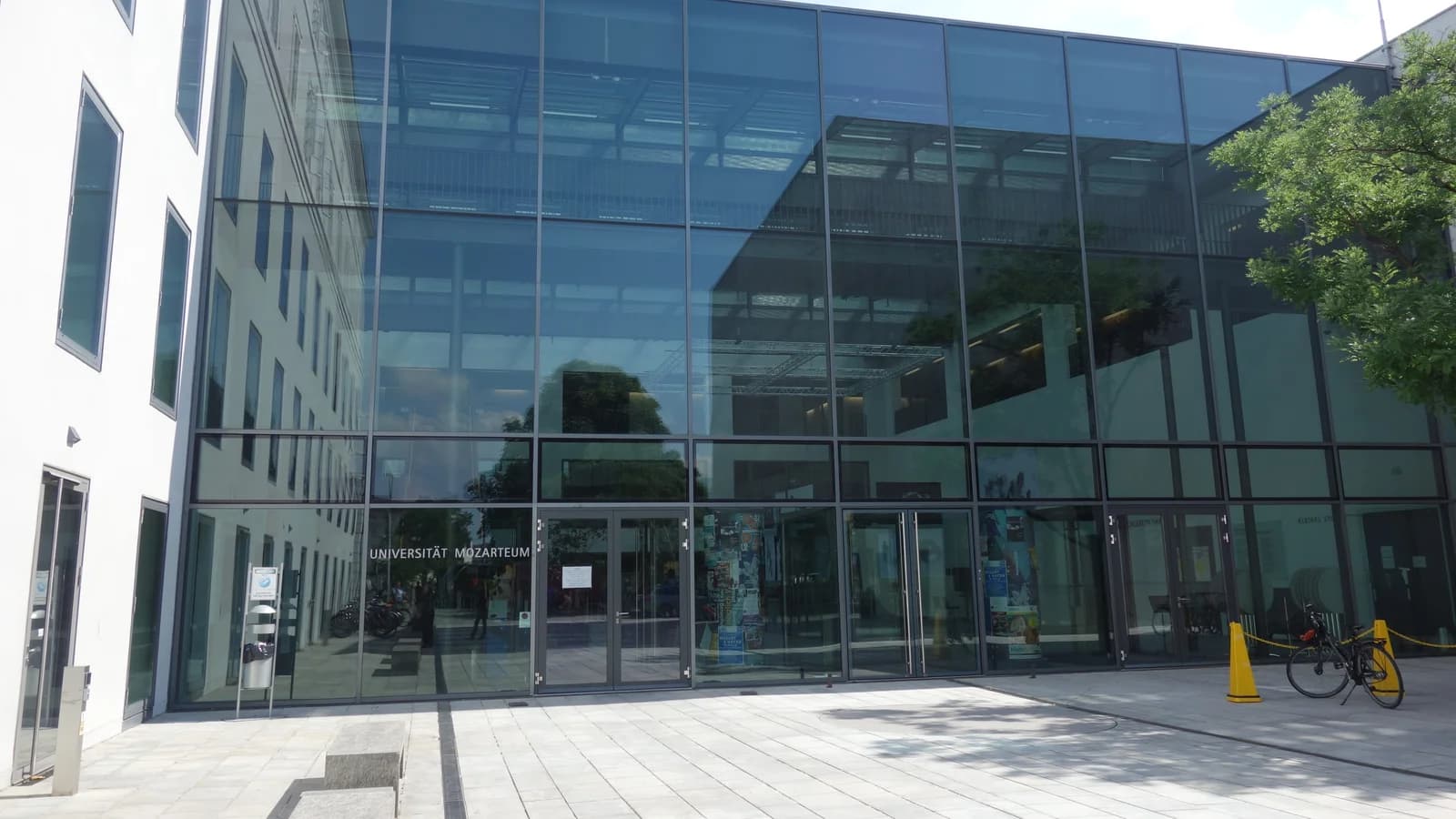
Mozarteum’s piano audition begins with a substantial video programme, then asks more of you in Salzburg: a complete Classical sonata, a broader live programme and a short piece you receive only after arriving. That last task deserves a place in your preparation from the beginning. Months spent polishing familiar repertoire develop one kind of confidence; making musical sense of a new score calls on another.
My own studies have included Mozarteum, and Salzburg is a place I know as a musician. When I help someone prepare for study abroad, I want the application to grow out of a serious musical question: what do you want to learn there, and what does your playing currently reveal? The answer should be audible across the programme, from a Bach fugue to the music you have only just met.
This guide concentrates on the Piano BA, with a separate section on the Piano Solo MA. The dates currently displayed on the piano course pages belong to the closed 2026 round. Use the overview to understand the sequence, then check the official pages for the next intake’s dates and requirements before applying.
Piano study in Salzburg
The Piano BA is an eight-semester, 240-ECTS degree taught in German. Its scope includes solo playing, chamber music and the musical knowledge that supports both. For an applicant, this matters beyond the entrance examination. A degree asks you to keep learning new repertoire, work with other musicians and discuss what you hear over several years.
Start by looking at the course and the teachers together. Listen to substantial performances by teachers whose work interests you, then examine the repertoire and musical questions behind that interest. “I admire your playing” is a beginning. Being able to describe your interest in the pacing of a Schubert movement, the balance of a fugue or a particular area of repertoire gives a prospective study conversation some substance.
The application uses Muvac. Applicants new to Austrian university study first follow Mozarteum’s MOZonline and UHstat1 instructions to obtain an application number; applicants with an Austrian matriculation number follow the corresponding existing-student route. Creating a profile is only the account stage. A submitted application receives confirmation, and the subsequent invitation to the video round must also be accepted with the video uploaded by its deadline. The official registration guide is linked at the end.
The video programme
The BA video contains four selections: a Bach prelude and fugue, a fast movement from a Classical sonata including Schubert, a virtuosic Chopin étude and a free-choice work lasting at least five minutes. The excluded études are Op. 10 Nos. 3 and 6, and Op. 25 Nos. 1 and 7.
These details follow the German BA page. Its five-minute minimum is absent from the English version, where the étude exclusions are also unclearly printed. Keep the German requirements beside your programme when checking those two points.
The live programme builds on the video. Plan the whole sonata and the additional repertoire before recording.
| Repertoire | Video | Live in Salzburg |
|---|---|---|
| Bach | Video:One prelude and fugue | Live:The same prelude and fugue |
| Classical sonata, including Schubert | Video:One fast movement | Live:The complete work |
| Virtuosic Chopin étude | Video:One étude, excluding Op. 10 Nos. 3, 6 and Op. 25 Nos. 1, 7 | Live:The same étude |
| Free choice | Video:One work lasting at least five minutes | Live:May be drawn from either of the two categories below |
| Romantic + twentieth/twenty-first century | Video:One of these works may serve as the free choice | Live:One Romantic work and one twentieth-/twenty-first-century work |
| Newly issued short piece | Video:Not part of the video | Live:Score supplied at registration on day one; prepare for round two |
Live memory exceptions: contemporary music from 1945 onwards and the newly issued piece. The committee selects excerpts in Salzburg.
How can one free-choice work serve both stages?
Choose a suitable work of at least five minutes from the Romantic or twentieth-/twenty-first-century part of your live programme. Record it as the free choice, then retain it for Salzburg. You still prepare both live categories.
The free-choice work is a useful opportunity to show something the other selections leave unheard. A programme already full of fast, densely textured music might benefit from a work with sustained melodic lines and a long dynamic arc. Another pianist may need music that reveals rhythmic imagination or a sharper response to changing colour. The useful contrast depends on the actual pieces, not simply their composers’ dates.
Mozarteum explicitly allows the free-choice selection to come from the Romantic or twentieth-/twenty-first-century works prepared for the live audition. That gives you a practical way to build one connected programme. Choose the complete live programme before committing to the recording, so a favourite five-minute piece does not leave you scrambling for an unsuitable sonata or contemporary work later.
I pay particular attention to the Chopin étude at this stage. Speed can hide a surprisingly small range of sound. Listen for the melody within the figuration, the direction of the bass and the change in character when the harmony moves. If a passage has only one usable dynamic because the hands lose their bearings at anything softer, it still needs work. An étude should sound like music you can shape, even at its most demanding point.
Bach asks for a different kind of attention. In a fugue, identify the subject’s entries, but also follow the voice that continues beneath each new entry. Making every subject equally loud can turn the whole piece into a succession of announcements. Practise a passage in pairs of voices, then restore the full texture while retaining the phrase of the voice you were following.
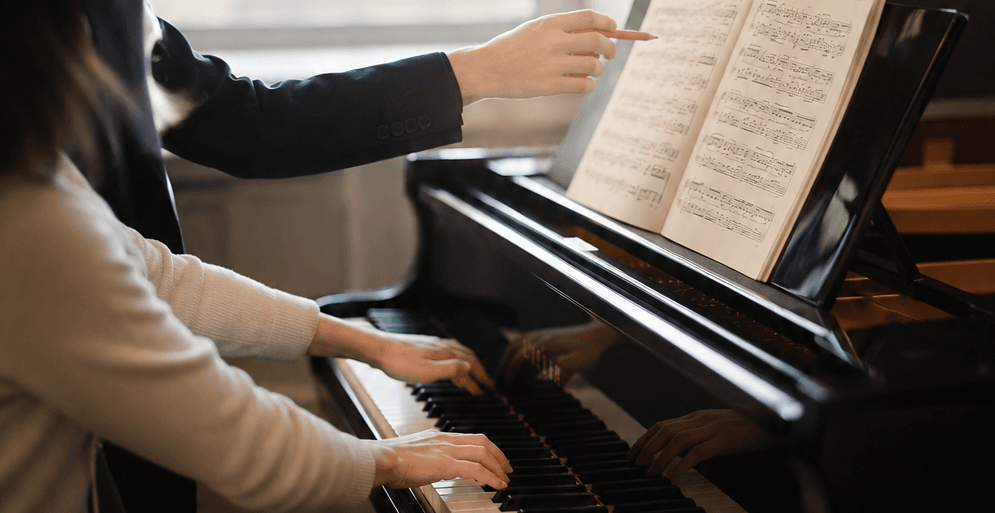
One-to-one classical piano
Beginner to advanced. Online, worldwide.
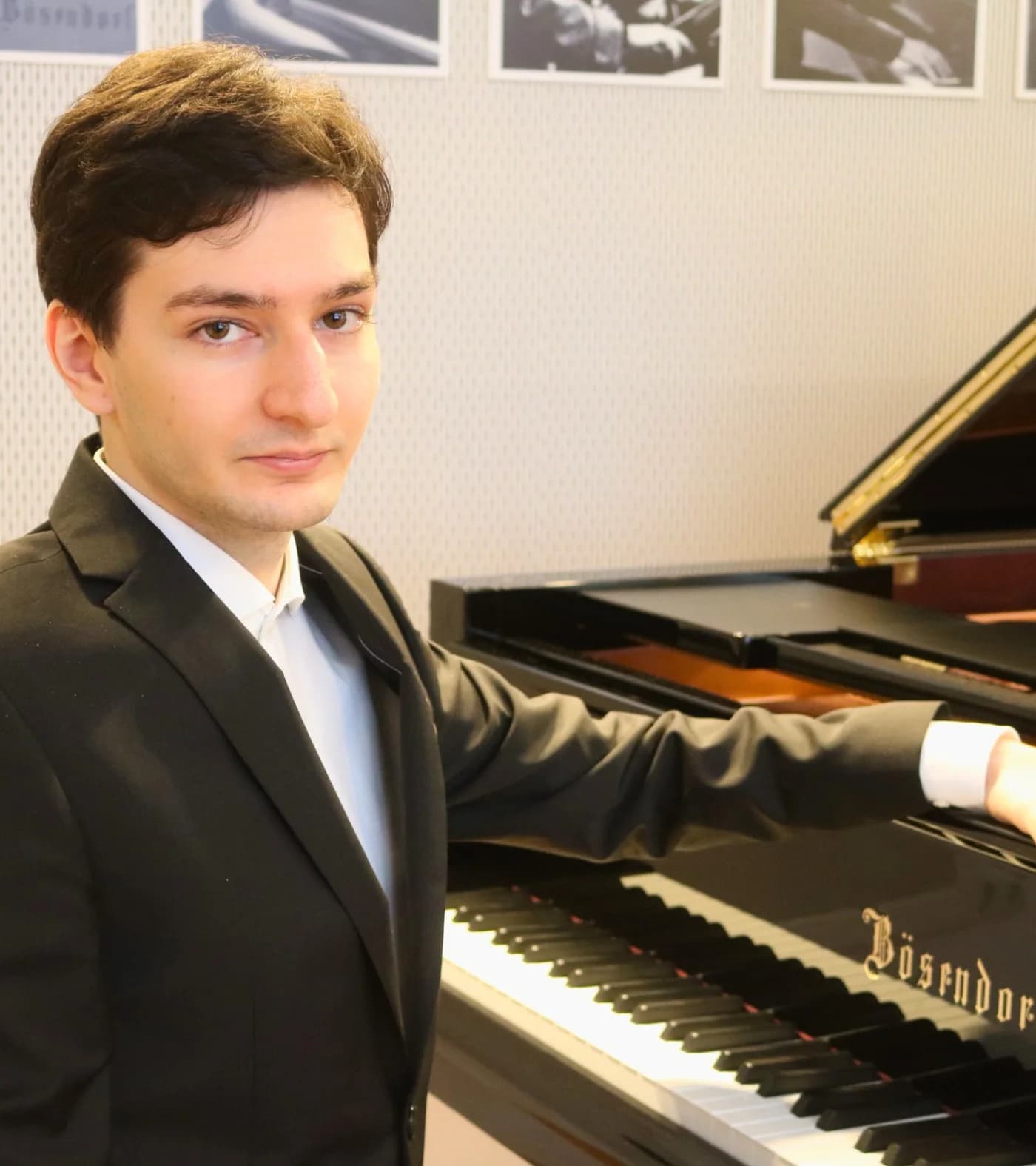
Enea
Concert pianist from Vienna
30 minutes · Tokyo studio from October 2026
The introduction and recording
The video begins with a freely spoken introduction of no more than two minutes, in German or English. The musical programme follows directly, in an order you choose. For piano, the published rules require one continuous, unedited video, including the transitions from speaking to playing and between pieces. Submit exactly one file, with a maximum size of 5 GB.
Think of the introduction as the start of a musical conversation. Your name, current musical background and reason for applying establish the essentials. Then say something with content: perhaps you want to develop chamber playing alongside solo repertoire, or you have become interested in how a particular composer’s writing changes your approach to sound. Rehearse the thought aloud until you can express it naturally; a memorised promotional speech tends to conceal the person who is about to play.
The continuous take changes how you rehearse. Run the introduction and all four selections together before the main recording session. Between works, hear the next opening internally and let its pulse settle before moving. After an energetic étude, a quiet opening often needs a different physical and aural preparation. Those few moments belong to the performance, too.
The camera must show your face and body, and the sound and picture must be clear. Mozarteum’s wording also prohibits electronically amplifying or altering the recorded sound. Set the recording level sensibly at capture and preserve the unprocessed performance. My separate guide to recording a piano audition at home covers microphone placement, room sound and checking the result without turning this article into an equipment list.
When reviewing a take, listen past isolated blemishes. Does the tempo have a stable character? Can you hear the important voice throughout? Does a climax have somewhere to go? A recording in which every passage survives but every phrase sounds guarded may tell you that the programme needs another week of musical work, rather than another evening of repeated takes.
The full programme in Salzburg
The live instrumental examination has two rounds. The committee chooses excerpts from the prepared programme, which retains your Bach and Chopin selections and expands the Classical movement into the complete work. It also includes a Romantic work, a twentieth-/twenty-first-century work and the newly issued short piece discussed below. The Romantic category includes Rachmaninoff and Scriabin through Op. 53.
For the BA, the memory exceptions are contemporary music from 1945 onwards and the newly issued piece. These are Mozarteum’s published boundaries. Applicants also considering Vienna should check the separate mdw piano requirements, because the repertoire and memory rules differ.
A complete sonata can expose weaknesses that its impressive first movement conceals. A slow movement may need more careful control of accompaniment than anything in the video; a finale may demand a lightness that disappears when you are tired. Learn those movements while preparing the recorded movement. Otherwise, the live invitation can arrive just as you discover the true size of the programme.
Consider how the movements belong together. If the first movement has become unusually heavy, the slow movement can feel like a further loss of momentum, even when each sounds convincing alone. Try the end of one movement, a real pause, and the beginning of the next. Listen for the change of character and the larger proportion of the work. This is a musical task, not a requirement to make every tempo mathematically related.
Because the committee selects excerpts, practise beginning at meaningful places within a work. A return of the main theme should already carry its harmonic and expressive context when you start there. Hear the preceding cadence, identify the bass under the opening note and begin with the sound you intend. Starting mid-piece reveals whether your memory includes musical landmarks or relies heavily on the chain of movements from bar one.
A different piano also changes the balance you hear. In a trial session on an unfamiliar instrument, I would spend time on quiet chords, a singing line over accompaniment and the densest part of the programme. Those textures reveal the instrument’s response quickly. Keep the musical intention clear while adjusting the amount of sound and pedal needed to realise it.
The newly issued piece
Mozarteum gives BA candidates a short piano piece at on-site registration on the first examination day, to prepare for the second round. The score is permitted. This task has its own preparation period; it is different from being handed a page and immediately sight-reading it in the examination.
Practise this kind of work well before travelling. Ask your teacher to choose an unfamiliar short piece and agree on a limited period before you play it for them. The point is to discover what you notice first, how you use the available time and which musical decisions survive a complete performance. Use different pieces on later attempts so the exercise remains about learning.
Begin by reading the whole score away from the keyboard. Look for recurring material, changes of metre or texture, articulation and the shape of the ending. Then play slowly enough to hear what connects the phrases. An unusual chord may make sense once you recognise a moving inner voice; a rhythm that looks complicated may be a familiar pulse with accents in unexpected places.
Suppose the right hand repeats a short figure while the bass changes underneath it. Practising the right-hand pattern twenty times may solve little. Play the bass, hear the harmony it creates, then add the figure with a consistent pulse. Mark a fingering where it prevents hesitation, and decide which voice carries the phrase. You are building a reading that can be heard as a piece.
The trap is to spend almost all the available time on the hardest two bars. I would rather hear an intelligible whole with a measured solution to those bars than a brilliant fragment surrounded by uncertainty. After detailed work, play through and find out what still interrupts the line. That final hearing often changes the next practice priority.
This exercise also tells a teacher something valuable before an application: how independently you can work. When you bring the piece back, explain one choice you made and one place you remain unsure about. The quality of that conversation matters for future study, where new scores will keep arriving long after the audition programme has served its purpose.
Theory and aural skills
The BA includes a separate music-theory and aural examination, with a written part of about sixty minutes and an oral part of five to ten minutes. The published tasks reach beyond naming intervals. They include melodic and rhythmic dictation, chords and inversions, harmonic recognition, continuing a melody and finding a melody for a given text. The oral work includes sight-singing, singing chords and playing an extended cadence in major and minor in two different keys.
Mozarteum provides an examination sample and preparation materials. Try the sample early enough to identify what needs teaching. A pianist who reads complex repertoire may still struggle to sing an inversion or write down a short phrase heard once. Equally, someone who can label every chord on paper may hesitate when asked to play a cadence in an unfamiliar key.
Bring these skills into your repertoire practice. Take a short phrase from the Classical sonata and sing its melody without the accompaniment. Play the bass separately, then identify where the harmony creates tension and where it settles. Transpose a simple cadence to another key and listen for the same relationship. Naming, hearing and playing should support one another.
For melodic continuation, first decide how the given opening behaves. Does it suggest a question, a sequence or a phrase moving towards a cadence? Sing a possible answer before writing it. Then check the notation and play what you actually wrote. That last step exposes the gap between an attractive idea in your head and the rhythm or intervals on the page.
Text setting deserves attention because a pianist may rarely practise it. Speak a short sentence naturally, notice its stressed syllables and create a brief melody that respects them. Listen to what happens if the musical accent falls on an unimportant syllable. The task draws on the same sensitivity to stress and direction that makes an instrumental phrase persuasive.
The Piano Solo master’s route
The Piano Solo MA lasts four semesters and carries 120 ECTS. It requires a relevant bachelor’s degree or equivalent qualification from a recognised institution, alongside the entrance examination. Application documents must show the subject actually studied; a broad degree title alone may not establish the required piano background. Applicants still completing their degree follow the university’s provisional-document instructions and must supply the completed qualification before enrolment.
The MA video follows the same four-part outline described above, including the five-minute free choice and Chopin exclusions stated on the German page. The live programme is larger in one important respect: it asks for a work from the early twentieth century and a separate contemporary work from 1945 onwards, alongside Bach, the complete Classical work, Chopin, Romantic repertoire and the newly issued piece. The two live rounds and committee selection of excerpts also apply.
At this level, I would look closely at what links your repertoire interests to the study you are seeking. An application can show a coherent musical personality while still offering strong contrasts. If contemporary music is the least developed part of your experience, allow time to study its notation and sound world with the same care you give the Classical sonata. Adding it late as a requirement to be covered usually leaves that difference audible.
The MA page does not list the BA’s separate theory and aural examination. Use the requirements for Piano Solo, since Mozarteum also offers other piano-related master’s courses with their own purposes and admission conditions.
German and preparation from abroad
For both the Piano BA and Piano Solo MA, applicants whose first language is not German need A2 German by enrolment. Mozarteum’s accepted-proof rules require the relevant examination components to be passed; attending a language course alone does not meet that condition. Check the current accepted certificates and their validity periods when booking the exam.
A2 is an admission threshold. Rehearsing and studying in German will ask you to keep expanding your language. Work with sentences you can use at the piano: describe where a phrase begins, ask whether the teacher means the upper or inner voice, or explain why you changed a fingering. In my teaching, I like to combine the sentence with the sound: say what you intend, play it, then describe what changed. That gives the vocabulary an immediate musical use.
From Japan or another country, develop the full live repertoire while the video is taking shape. Include unfamiliar-score work and theory in ordinary study, and allow for the formal language examination separately. Before travelling, confirm the invitation, your individual examination arrangements and access to a practice instrument. A Salzburg visit should leave room to hear and respond to the piano you find there.
I offer audition preparation, music-focused German, and help with professor communication and the application process. You can read about my background and teaching, including study in Vienna and Salzburg. Lessons are available online now, with in-person lessons in Tokyo’s Shinjuku area from October 2026, for adults and teenagers of junior-high-school age and above, in English, Japanese or German.
If Mozarteum is on your shortlist, bring your proposed programme and a recent recording to a free thirty-minute trial lesson. We can listen for the musical work that needs time, choose a sensible direction for the remaining repertoire and begin preparing the German you will use alongside it.