
A First Piano Lesson: What to Bring and What to Listen For

The session can begin with your first notes, a piece remembered from years ago, or a passage you are already practising. The teacher listens, suggests a change and compares the result with you. By the end, you should have a sense of the teaching and a useful direction for your own playing.
For the appointment, bring:
- Your current score or method book, if you are using one.
- A piece, passage or musical goal you would like to explore.
- A pencil and a way to keep a few practice notes.
- The confirmed studio details, including the appointment time.
If you are completely new to the piano, begin by telling me what you enjoy listening to and what you would like to play. That gives our first work at the keyboard a musical direction.
Settling at a different piano
An unfamiliar piano can change how your playing feels. The keys may respond differently from those at home, the bench may need adjusting, and the sound in the room may be more immediate than sound through headphones. Take a little time to play and listen before deciding that an unexpected result says something about your ability.
Adjust the bench so you can reach the keyboard without crowding it, then try a few sounds or a familiar phrase. Listen from the bench and compare a recording made a little farther away. A chord that seems quiet from the bench may have a substantial bass; a melody that felt prominent on a digital piano may need a different balance here.
For an experienced player, this settling-in time also shows how you adapt. For a beginner, it is already part of learning: discovering that the same key can produce different sounds, and that listening continues after the finger has played it.
Starting from your first notes
A beginner's trial can move from finding a few keys to playing a small musical pattern. Reading enters through something you are actually doing: a note goes up, stays on the same pitch, or lasts longer than the one before it.
The short Beyer exercise below offers an example. It uses C and the neighbouring D, with four even notes in the first bar and a long C at the end. The starting C is one octave above middle C. Its small size leaves room to pay attention to the sound and the pulse.
Beyer, Op.101: preliminary right-hand exercise 1.
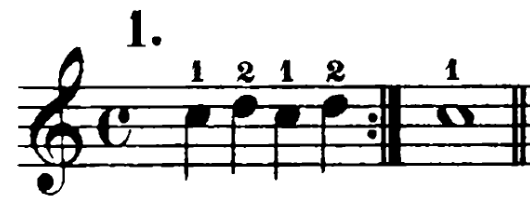
Select the score to enlarge it. The C-shaped time signature means 4/4: four quarter-note beats per bar.
Read the pattern
C–D–C–D. Start on C, then move up, down and up by one white key.
Repeat the first bar
Play one note on each of four even beats. The two dots tell you to play that bar again.
Keep the ending alive
Hold the final C through four beats, then release. Keep listening while the hand is still.
First find the keys, then play the short pattern with a steady count. Once the order is familiar, the interesting work begins. Do the sounds join, or does a gap appear between them? Does the D arrive with a much stronger attack? Does the pulse continue while the final C is held?
Changing one of those details gives you something audible to judge. You may discover that a smaller movement produces a more even result, or that counting through the long note changes the ending. The point is to experience how an instruction becomes sound, rather than collect several new rules at once.
This is one possible starting example. Your first material depends on your experience and interests. The adult beginner guide develops the relationship between first pieces, reading and the instrument in more detail.
Returning after a break
For a returning pianist, an old piece can reveal quite a mixture: a phrase the hands still remember, a passage whose notes have faded, or a familiar movement that now feels awkward. Bring the score you used, including its pencilled fingerings and other notes.
A teacher might first listen to a manageable stretch, then choose a place where a change could be useful. Suppose the opening still flows, but the left hand hesitates before a new bass note. Look at the move from the preceding note, try a different preparation, then put it back into the phrase. That tells us more than labelling your playing with the grade you last took.
The old markings also give us something to discuss. A fingering that once worked may still suit you; another may make the next movement harder than it needs to be. Try the alternatives in context, with enough surrounding music to hear the result.
Mention how long the break has been and what practice is possible now. A plan for someone with a piano at home will differ from a plan built around occasional studio access. The returning-to-piano guide covers those first choices beyond the trial.
Intermediate playing: one useful passage
At an intermediate level, the question is often more specific than whether the notes are correct. Perhaps a melody disappears inside chords, a quick passage remains uneven, or the music sounds flat despite careful practice. Choose a passage that actually shows the problem.
Play enough around it for the phrase to make sense. If the difficulty is an arrival on a chord, I want to hear where you came from. If it concerns pedalling, the preceding harmony matters. An isolated chord or a few fast notes can hide the very transition that causes trouble.
From there, compare two attempts with one clear change. For example, in a melody over repeated chords, keep the melody the same and reduce the accompaniment. Listen for whether the long melody notes now remain audible through the chord changes. Then try the phrase at your usual pace. Does the balance survive when you stop concentrating on each individual attack?
You should also have room to describe what you want from the music. “I want this phrase to feel more unsettled before the return” is a worthwhile musical question. Harmony, timing and sound all contribute to that effect. A first meeting can reveal how a teacher discusses interpretation as well as technique.
If your main goal is one particular work, the guide to taking lessons for one chosen piece explains how score choice and preparation can fit around it.
I grew up in Vienna and completed my master's studies in piano at MUK. That background informs how I listen to a phrase and write about music. A beginner's two-note pattern deserves careful listening just as a substantial classical work does.
A useful explanation leaves you with something you can use. A demonstration can show a difference in tone or timing; your next attempt tells us whether the explanation has translated into your own playing. If the sound changes only while the teacher counts or plays along, try it with that support removed.
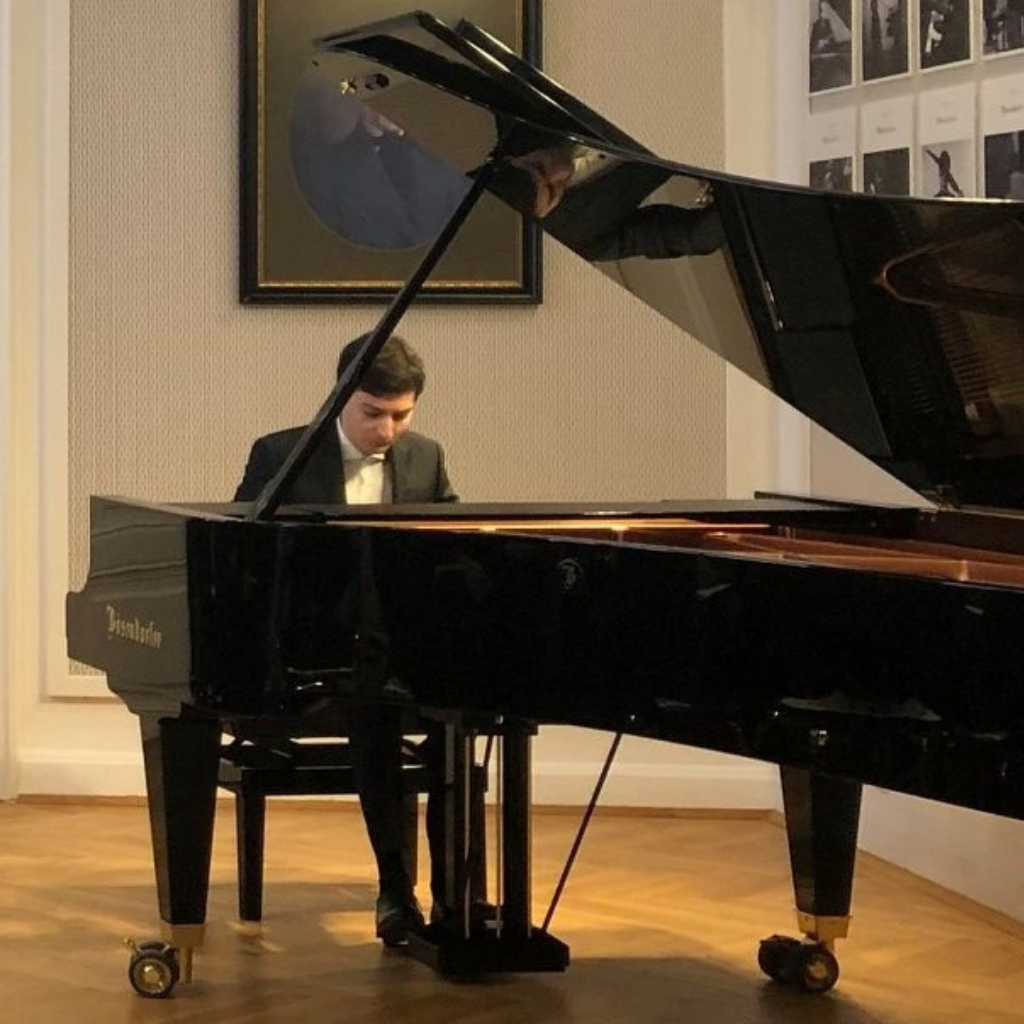
You can read more about my musical training in the faculty profile. A first meeting with a prospective teacher is also a chance to see how the conversation feels in English: whether the musical terms make sense, whether there is time for your questions, and whether the pace suits you.
What to notice during the trial
A useful correction has a recognisable purpose. “Make this quieter” becomes more informative when you know which part should come forward instead. “Move sooner” needs a place in the phrase where that movement can begin. Listen for the connection between the instruction and the result.
You can assess the lesson through a few concrete questions:
- Can I hear or feel what changed after the explanation?
- Do I understand what to try when I practise alone?
- Did we work towards the musical goal I brought?
- Could I ask about something I did not understand?
Some difficulties take longer than a first meeting to change. In that case, the useful outcome is a clear account of what is happening and a manageable first task. A promise that everything will be solved quickly tells you less than a careful explanation you can test.
Before leaving, try saying the practice idea back in your own words. For example: “I will begin two notes before the jump, prepare the destination early, and listen for a gap.” That tells both of us whether the task is clear. A short note in the score can preserve it without turning the lesson into a long written report.
Ikebukuro, Shinjuku and the appointment
When applying, say which area suits your routine and give a few times when you could attend. Ikebukuro and Shinjuku are the two studio areas offered for in-person trials. The exact venue is part of the email arrangement, so use the confirmed address and access details when planning your journey.
Think about the actual trip you would make: from home, from work, or between other commitments. A location that looks convenient on a map may involve an awkward change of trains at the time you travel. Your preference is useful information when arranging the trial and discussing possible longer-term arrangements.
Bring the music in a form you can read comfortably at the piano. If it is on a tablet, charge the device and make sure the pages are available without relying on the studio's internet connection. For printed music, keep the pages in order and bring your existing copy with its markings.
Clothing that allows comfortable sitting and arm movement is practical. If you are working on pedal, wear shoes in which you can feel how the pedal moves. The aim is to spend the appointment making and listening to music.