Applying for Piano at UdK Berlin: Documents, Videos and Audition
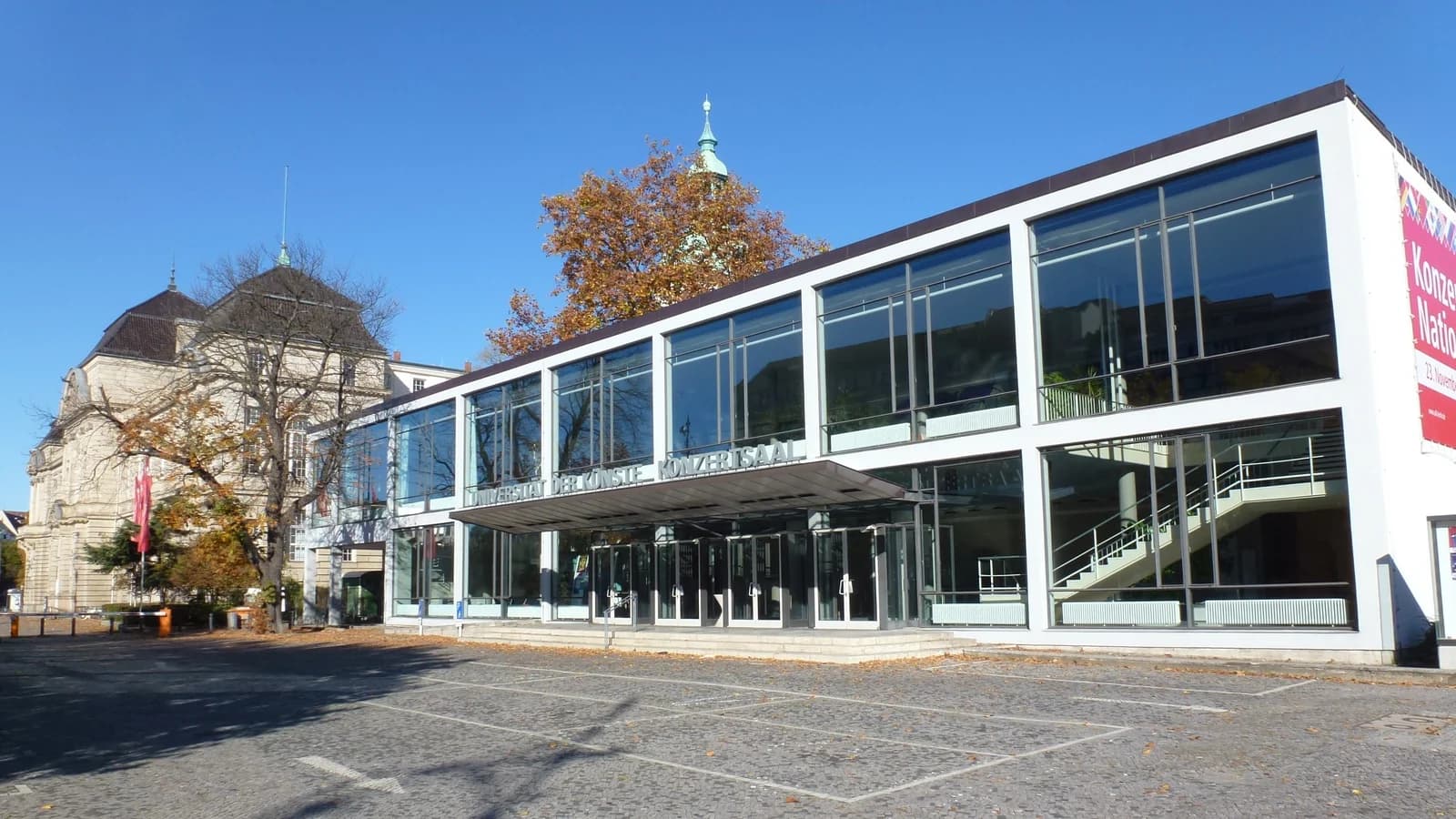
Applying for the piano bachelor’s degree at the Universität der Künste Berlin means preparing two submissions: an application with academic documents in my.udk, and performance videos in BEMUS. The musical selection then continues with an invitation to a live audition and a theory test. A strong recording belongs within that whole application, with the correct course, documents and language arrangements behind it.
This guide concerns UdK’s Bachelor of Music in Piano. Its master’s degrees and Konzertexamen have different entry conditions and repertoire. Berlin’s Hochschule für Musik Hanns Eisler is also a separate institution, with its own application process.
Before choosing a recording date, establish four things:
- Your intended intake and its application window.
- The school and previous-study documents relevant to your background.
- The complete works needed for the video and live rounds.
- Your German certificate and the deadline for submitting it.
The piano bachelor’s at UdK
UdK’s piano bachelor is an eight-semester, 240-credit degree. Its study regulations describe preparation for solo playing, chamber music and song accompaniment. The curriculum includes principal-study lessons, contemporary piano music, music history, theory and aural work, alongside ensemble study. Applying is therefore a decision about several years of musical development, as well as an audition programme.
When I discuss a conservatoire application with a pianist, I want to hear what already holds their attention in the music. One player may be fascinated by the way an accompaniment changes a singer’s phrase; another by the different voices inside a fugue. Those interests help give substance to a conversation about study. They also reveal areas that deserve more experience before moving into a demanding degree.
A professor’s recordings and teaching profile can be useful starting points. Listen for a musical question you would like to explore, rather than trying to reproduce a recording as an audition strategy. A convincing performance comes from understanding the score and making choices you can sustain. The university’s formal selection process determines admission, even if you have already had a useful conversation or lesson with a teacher.
Academic documents and previous study
The piano bachelor guide asks for a CV describing musical education, a school-leaving certificate, relevant previous-study records where applicable, German-language proof and evidence of the application-fee payment. Prepare the formal documents as separate PDFs within the portal’s stated size limit. Keep the musical CV factual: dates of study, teachers, repertoire interests, ensemble experience and performances that show your development.
Your school certificate and your musical history serve different purposes. A transcript establishes what you have studied; a repertoire list shows what you have played. If you are already attending a conservatoire, provide the requested record of completed studies and examinations. UdK assesses recognition and placement; a certain number of years at another institution does not by itself establish the semester you will enter.
The university’s general guidance distinguishes purely artistic degrees from programmes that require the usual general university entrance qualification. Follow the piano bachelor’s own requirements when presenting your schooling. Applicants who are still completing school can use the university’s guidance on submitting their latest school report and providing the final certificate for enrolment. Ask the admissions office about an unfamiliar qualification or the required translation format before commissioning documents.
Do piano bachelor applicants need a uni-assist VPD? UdK’s published list of bachelor’s degrees requiring that preliminary credential assessment does not include Piano. The piano department’s own VPD explanation concerns master’s applicants with previous study abroad. A generic VPD link in the application guide is therefore not a reason to assume every international piano bachelor applicant must obtain one. If your educational history raises a special case, give the admissions office the exact degree title and qualification you hold.
A useful enquiry identifies the document and the decision needed: for example, whether your final school certificate can follow after the current report, or what form of translation is accepted. “Are my documents okay?” leaves the office guessing which stage of the application you mean.
One-to-one classical piano
Beginner to advanced. Online, worldwide.
Enea
Concert pianist from Vienna
30 minutes · Ikebukuro & Shinjuku studios from October 2026
my.udk and BEMUS
The two portals share login details but receive different material. In my.udk, choose the piano bachelor and submit the formal application. BEMUS receives the performance recordings for the course you have applied to. The current piano guide lists MP4, M4V and MOV, a maximum of 2 GB per file, and up to eight files totalling 12 GB. Formal-document PDFs in my.udk have a 5 MB limit per file.
Academic application
my.udk
Course choice, musical CV, school and study records, language evidence and payment proof.
PDF documents: up to 5 MB each
Artistic preselection
BEMUS
Performance videos for the piano bachelor application made in my.udk. Use the same login details.
Up to 2 GB per video; 8 files / 12 GB total
After successful preselection: an invitation to the live audition and theory examination.
Check the application status after submitting. In my.udk, in Vorbereitung means that the application has been started but has not been sent. Antrag abgegeben means it has been submitted. BEMUS displays a success message for a completed upload, and the uploaded files can be reviewed while the upload period is open. Confirm the actual file names and complete playback, including the final page of a movement.
The piano bachelor’s current application fee is €50; the guide asks for evidence of payment with its value date. Use the university’s current payment instructions for the transfer details. The administrative documents, payment evidence and video files all need time before the deadline, particularly when a long sonata produces a large file. Leave the final days for correcting a problem, not for making your first complete recording.
The video sonata and étude
For the video preselection, UdK asks for a complete Classical sonata and a virtuoso étude. Its piano department explicitly excludes Schubert from the sonata slot. The bachelor’s étude can come from the range of composers indicated in the department’s instructions; the more specific Chopin requirement on the same page belongs to the master’s video round.
The recording must be no more than a year old, with a fixed camera showing the applicant and keyboard throughout. Performances must be unedited. Every movement of the chosen work is required, although individual movements may be recorded separately and even at different locations. That permission concerns separate movement performances, not joining corrected passages within a movement.
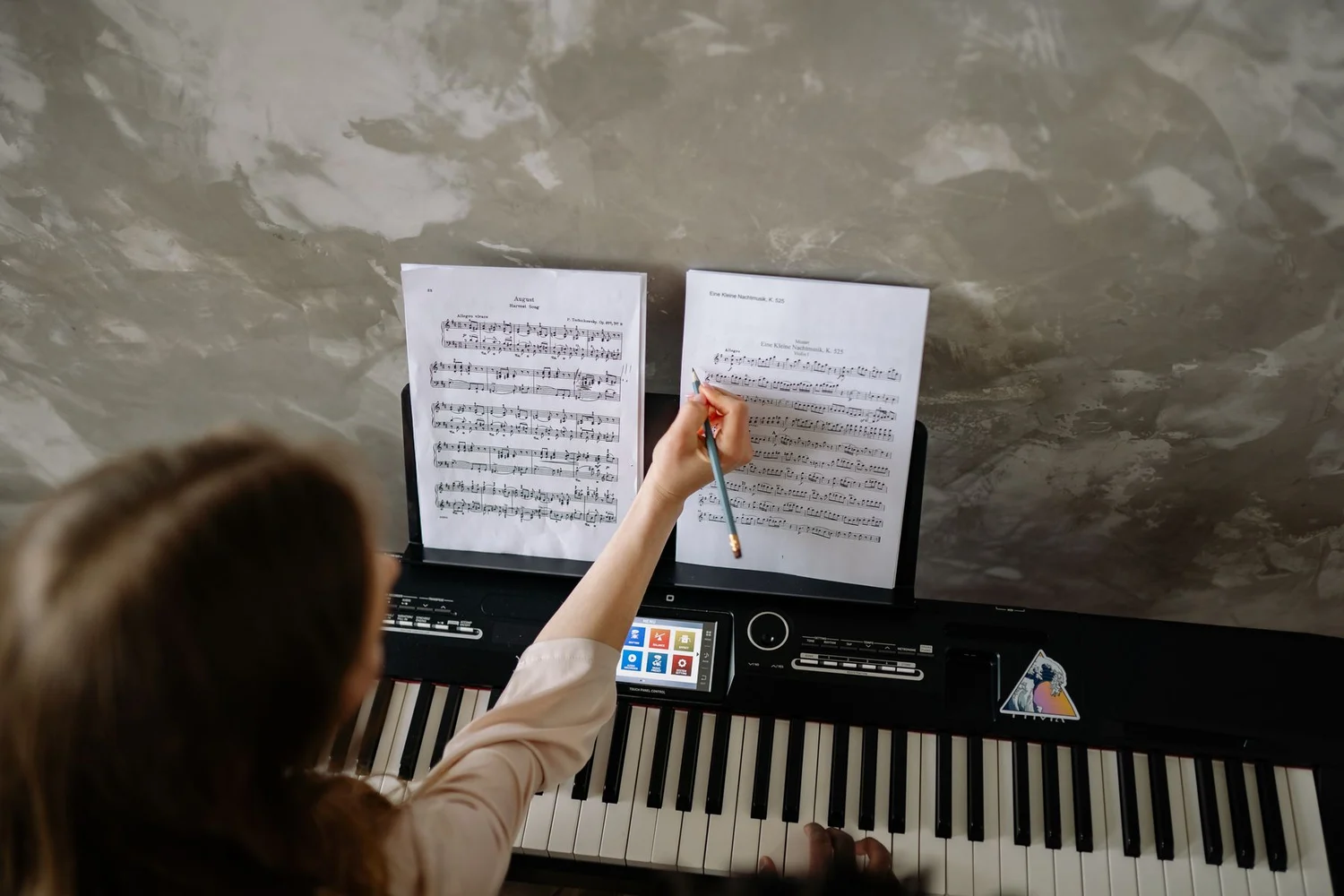
A complete sonata changes the preparation. The slow movement has its own concentration, and a finale tests how quickly you establish a new character. Practising only the first movement leaves the shape of the whole work undeveloped. Even when you intend to record separate movements, play the sonata through in practice and listen to the relationship between them.
In a Mozart sonata, for example, a lyrical second movement may need a different sense of the beat from the outer movements. Taking more time is only one part of that. The accompaniment must still carry the harmony, and the melody needs direction through its ornaments and small notes. I often ask a pianist to sing the line while playing the bass, then restore the full texture. It exposes places where the fingers have been moving fluently while the phrase has stopped travelling.
An étude asks another question: what does the technical pattern make possible musically? In a passage of repeated figurations, identify the melody, the harmonic arrivals and the change in register before choosing the final tempo. A brilliant opening followed by a rushed middle section tells a different story from a performance whose pace allows the music to unfold. Choose repertoire with your teacher according to both the requirement and the performance you can develop.
The live programme and theory test
The live bachelor audition requires a work by J. S. Bach, a complete sonata by Haydn, Mozart or Beethoven, and a freely chosen work from the Romantic period or later. Short sight-reading is also listed. The admission regulations include a brief musical conversation and a written theory and aural examination. Prepare the full programme even though the panel may hear only portions of it.
01 · Video round
- Complete Classical sonata, excluding Schubert
- One virtuoso étude
02 · Live round
- A work by J. S. Bach
- Complete Haydn, Mozart or Beethoven sonata
- A freely chosen Romantic or later work
- Sight-reading and a short musical conversation
Alongside the live piano selection: a written examination in theory and aural skills.
What does “complete” mean for the video?
Prepare every movement. Separate movements may be recorded in separate takes and locations. Each movement performance must remain unedited, with a fixed camera showing the player and keyboard throughout.
Maintaining the programme after the video submission deserves its own practice time. Keep the sonata active while bringing the Bach and later work to performance standard. Rotate which piece you play first for a listener: the music that feels secure after an hour’s warm-up may behave differently at the beginning of a session.
Bach and later piano repertoire also ask for different kinds of listening. In a fugue, follow where the subject moves after its first appearance, including the entries that sit inside the texture. In a Romantic work, listen to how a moving accompaniment supports a long melodic note. Pedalling, articulation and balance should follow those different textures. The contrast between pieces can show musical judgement without turning the programme into a display of unrelated effects.
For sight-reading, practise keeping a pulse through a short unfamiliar passage. Read the key, metre, bass movement and repeated patterns before starting. If the hands share a rhythm, let that relationship guide the eye; if one part sustains while the other moves, hear the sustained harmony rather than treating it as an empty beat. Use simpler material for this practice than the works in your prepared programme.
The theory component deserves preparation alongside the piano work. UdK’s admission regulations name intervals, triads, seventh chords and inversions, cadences, melodies and other pitch sequences. Connect that work to the repertoire: identify a bass note, sing the phrase ending, or explain why a chord points towards the next key. Our guide to music theory and aural tests at German conservatoires offers a listening task and explains the German instruction words applicants encounter.
German proof and musical conversation
The current piano bachelor application guide states German B2, with proof permitted by enrolment. UdK’s central language page lists accepted evidence, including Goethe, telc and ÖSD B2 certificates, among other routes. It also identifies Piano as a programme with specific rules, so the general advice for other B2 courses should not replace the piano guide.
There is a discrepancy to resolve if you hope to start with less German: the English piano department page describes beginning with A2 and reaching B2 by the end of the second semester, while the current application guide says B2 by enrolment. Plan for B2 by enrolment and obtain direct confirmation from the piano department and admissions office before relying on the A2 arrangement. Keep that confirmation with your application correspondence.
The certificate is one part of being ready to study. At the piano, you will also want to understand a starting point, explain a musical intention and respond to a new suggestion. “From the second subject” demands knowledge of the piece as well as vocabulary. So does a request to bring out an inner voice or change the timing of a cadence.
Practise discussing a passage you already know. Explain where the phrase is heading, demonstrate it, then try a different timing or balance. I find this much more revealing than a rehearsed paragraph about loving music: it shows how the player listens and thinks. For a broader account of certificates and lesson communication, see German requirements for piano study in Germany and Austria.
Intake dates and university contacts
For summer-semester 2027 entry, the published application window runs from 20 September to 20 October 2026. The piano department lists the live bachelor audition on 25 January 2027, in the Joseph-Joachim-Saal, and the theory test on 26 January 2027. These are the currently announced dates for that intake; follow the individual invitation for your appointment details.
The recurring winter-semester application window is 20 February to 20 March. Here the official pages differ: the central piano bachelor guide says video uploads share the application deadline, while the department page gives 1 April for winter-intake videos. Confirm the upload date for your intended winter intake with the department. Completing both submissions by 20 March avoids depending on the later date until it is confirmed.
Choose the contact according to the question. The piano department handles musical selection and repertoire questions; the admissions and examinations office handles formal documents and enrolment. StudyGuide can help direct a general application query, and BEMUS has a technical support contact for upload problems. The links at the end of this article lead to the university’s current contact information.
Include the degree, intended intake and application number if you already have one. A repertoire question should name the complete work, including its catalogue or opus number. If a title covers several movements or a paired work, spell out what you intend to perform. Our guide to emailing a piano professor in Germany or Austria covers the separate conversation about musical interests and possible study.
Preparing for the degree
A useful preparation plan brings the different demands into the same week. Work on complete movements, keep a short sight-reading habit, and give listening and theory regular attention. Read the German instructions early enough to practise the tasks they describe. These strands support each other: recognising a sequence helps with memory, hearing the bass helps with harmony, and naming a phrase’s destination can sharpen its performance.
Record an early full performance before trying to make the submission take. Listen for the larger questions first. Does the tempo hold its character through a difficult passage? Can the slow movement sustain a phrase across a bar line? Does the final movement begin with a clear idea, or simply with relief that the previous one is over? Those observations give the next lesson something musically substantial to work on.
Also imagine the work after admission. UdK’s curriculum includes chamber music and song accompaniment, and the bachelor’s final work involves more than the execution of solo pieces. Experience listening to another musician, following a singer’s text or discussing a programme will contribute to that study. A conservatoire application is strongest when the preparation is already widening the applicant’s musicianship.
Vienna Piano School offers piano preparation and music-focused German and English support for learners of junior-high-school age and above, including adults preparing to study abroad. Lessons are available online now, with in-person teaching at piano studios in Ikebukuro and Shinjuku, Tokyo from October 2026. Bring your intended UdK programme and current repertoire to a free 30-minute trial lesson. We can discuss the playing, musical language and application communication that need attention, including any additional theory or aural teaching required.