
Emailing a Piano Professor in Germany or Austria
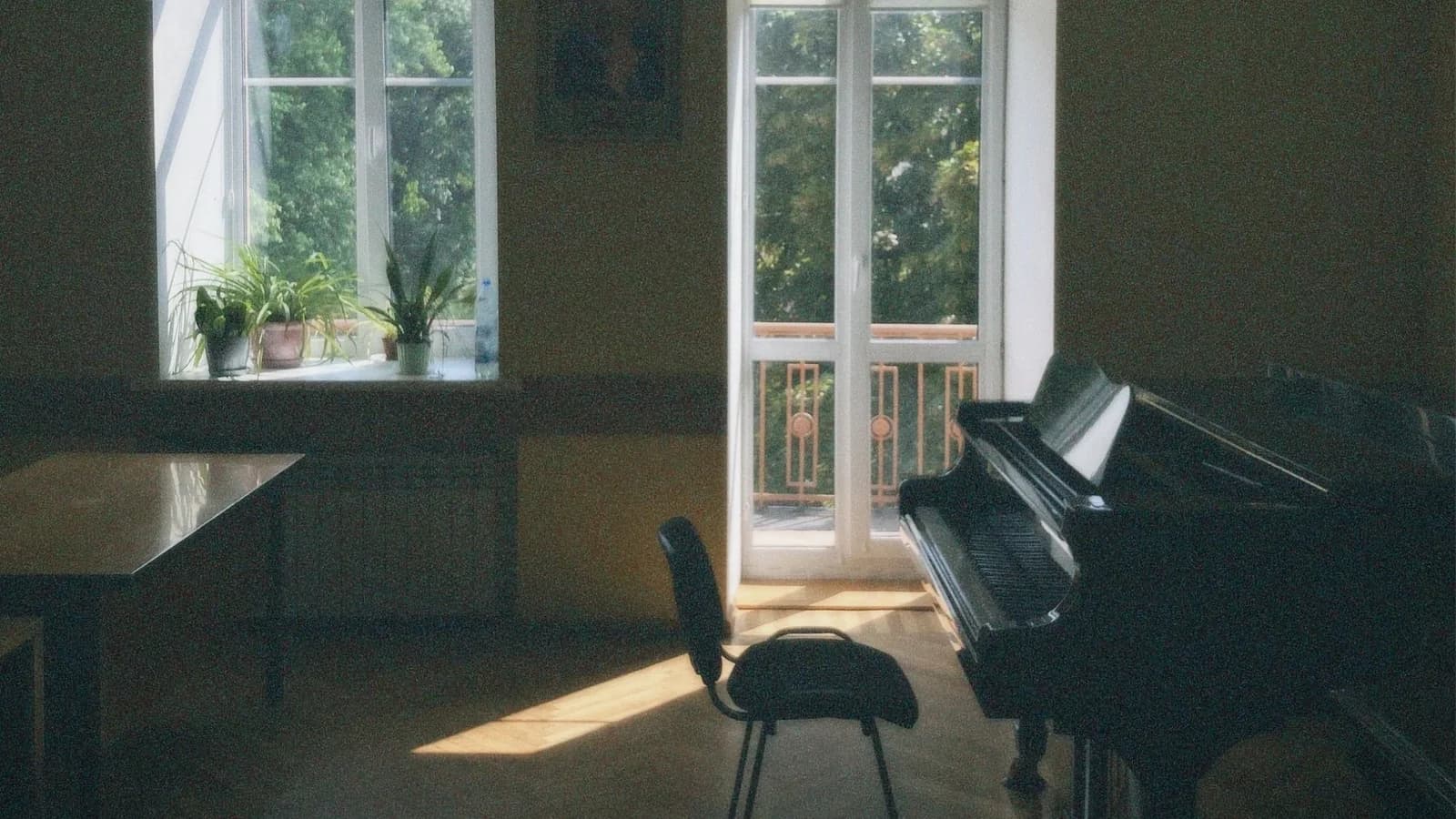
A first email to a piano professor in Germany or Austria should make one request: a chance to play and work together before you decide where to apply. Introduce your present studies, name the programme and intended entry year, link a representative recording, and give possible dates. The professor can then respond to a musical person and a manageable question.
Before writing, gather four things:
- The right contact: the professor's current university profile and any instructions for prospective students.
- Your study aim: the exact piano programme, degree level and intended intake.
- Your playing: one or two clearly labelled recording links and the repertoire you could bring.
- Your request: a trial lesson, a short opportunity to play, or permission to observe, with realistic dates.
I grew up studying in Vienna, where German was the language of my piano lessons. When I help someone prepare a first contact, I want the email to sound like the musician who will arrive at the piano: attentive, interested in the music, and able to say what they want to learn. Elaborate praise usually tells the reader less than a thoughtful sentence about a work.
Finding the right contact
Start with the university's current department and staff pages. Check that the person teaches the instrument and course you intend to study. Solo piano, song accompaniment and instrumental pedagogy may have different teaching teams even within one institution. A concert biography establishes an artist's work; the university page establishes their current role there.
There are also different people for different questions. HMTM in Munich lists its artistic principal-study teachers by instrument, while its piano bachelor's page names an examinations-office contact. At mdw in Vienna, the concert-piano admissions page gives both the institute office and the StudienCenter. These are useful routes for questions about applications or finding the appropriate departmental contact.
Read any published instructions before emailing. If lesson enquiries go through an office, use that route. If a current staff profile provides a professional email address and there is no separate procedure, a brief individual request is a reasonable starting point. A public contact address does not establish that the teacher offers trial lessons or has space in a class; those are questions for the reply.
Keep administrative eligibility questions with the office responsible for them. A professor can discuss your playing and musical interests. Whether a particular diploma qualifies you for a master's application, or which translation a university accepts, belongs with admissions. Asking each person about their own area gives the conversation a clear purpose.
The kind of meeting you want
In English, “trial lesson” can mean several things. In a university enquiry, it helps to explain whether you hope to receive some teaching, play briefly for feedback, or listen to an existing lesson. These German terms distinguish the requests.
- Probestunde
- A trial lessonYou play and receive some teaching. Ask whether the teacher offers this and agree the conditions.
- Vorspiel
- An opportunity to playYou play for the teacher. Say that you are seeking an initial view of your preparation; the word also appears in formal audition contexts.
- Hospitation
- Observing a lessonYou attend as an observer. Ask permission and follow the arrangements for that class.
For a first working lesson, Wäre eine Probestunde bei Ihnen möglich? asks directly whether a trial lesson would be possible. If your immediate aim is an initial assessment, Dürfte ich Ihnen vorspielen? asks whether you may play for the teacher. Add the reason: you are considering a particular course and would value their view of your preparation.
The musical value of a meeting comes from what happens after the first run-through. Does an explanation lead you to hear something you had missed? Can you try a suggestion and discuss the result? A teacher might ask for a lighter bass, a clearer release, or a different sense of arrival in a phrase. Notice both the sound and the way the two of you work on it.
Arrange the visit before booking travel around it. A lesson may be offered privately, through a university event, or in another format, with its own conditions. Confirm the duration, venue and any fee once a meeting is being arranged. “Probestunde” alone says nothing about whether it is free.

One-to-one classical piano
Beginner to advanced. Online, worldwide.
Enea
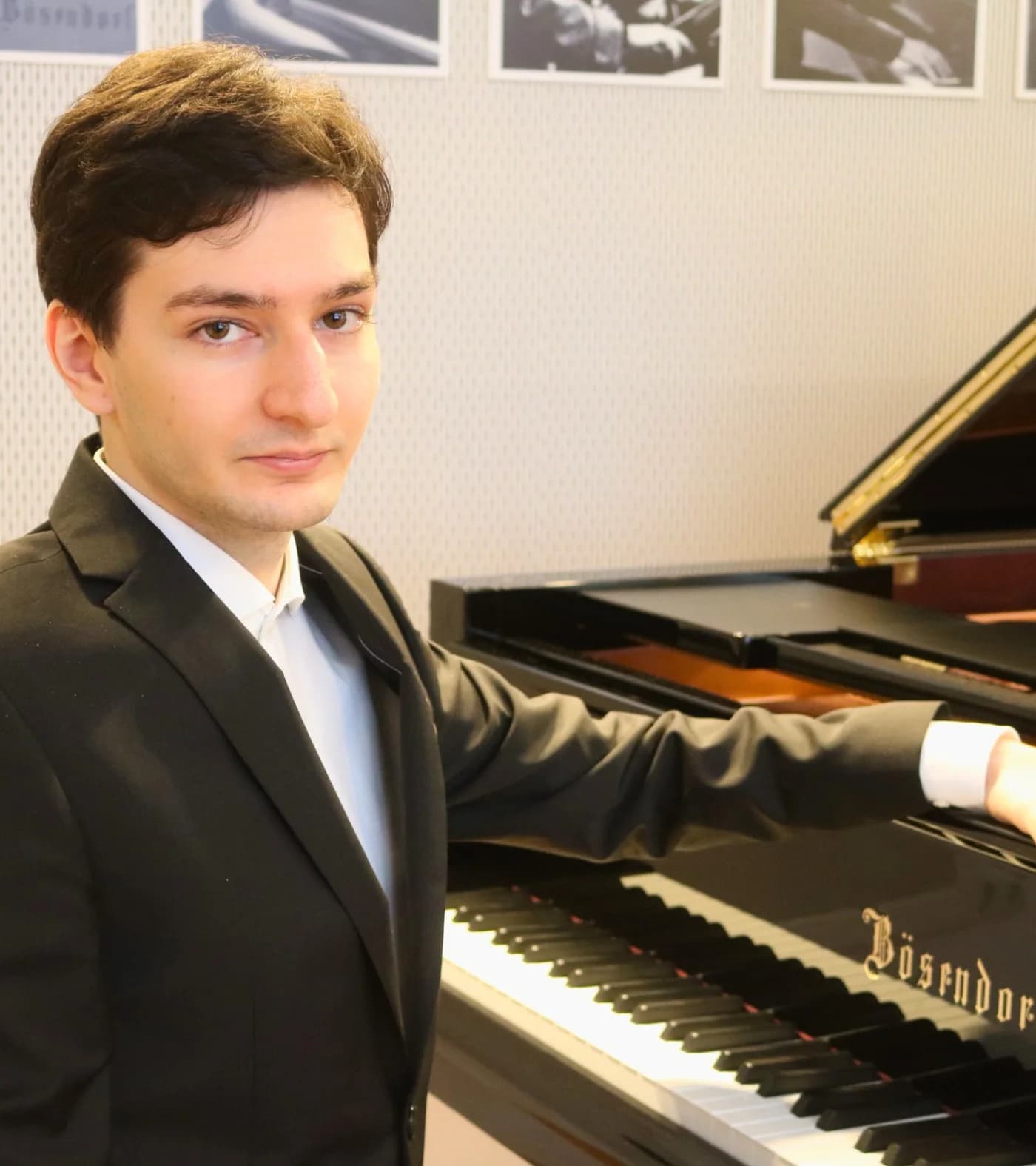
Concert pianist from Vienna
30 minutes · Ikebukuro & Shinjuku studios from October 2026
A German email you can adapt
The example below is for a bachelor's applicant who can visit the city. Replace the bracketed fields with your details, choose the appropriate greeting, and name the actual course. Keep the musical reason only if it describes your interest in that teacher's work.
Sehr geehrte Frau Professorin [Nachname],
mein Name ist [Vorname Nachname]. Ich lebe in [Ort] und erhalte derzeit Klavierunterricht bei [Name]. Ich möchte mich für den Bachelorstudiengang [genaue Bezeichnung] zum [Semester und Jahr] bewerben.
In Ihrer öffentlich zugänglichen Meisterklasse zu [Werk] hat mich besonders Ihre Arbeit an der Stimmführung interessiert. Ich würde diese Frage gern in einer Probestunde mit Ihnen vertiefen.
Aktuelle Aufnahmen von [Werk, Satz] und [Werk, Satz] finden Sie hier: [Links mit Aufnahmedatum]. Für die Stunde könnte ich [Werk, Satz] vorbereiten.
Ich bin voraussichtlich vom [Datum] bis [Datum] in [Stadt]. Wäre in diesem Zeitraum eine Probestunde bei Ihnen möglich?
Vielen Dank für Ihre Zeit. Mit freundlichen Grüßen [Vorname Nachname]
Replace every bracketed field. This example uses the greeting for a female professor; alternatives are explained below. Use your own reason for choosing the teacher.
Read the English translation
Subject: Enquiry about a piano trial lesson · Bachelor's application [year]
Dear Professor [surname],
My name is [full name]. I live in [place] and currently take piano lessons with [name]. I would like to apply for the bachelor's programme [exact name] for [semester and year].
In your publicly available masterclass on [work], I was particularly interested in your work on the handling of the voices. I would like to explore this in a trial lesson with you.
You can find recent recordings of [work, movement] and [work, movement] here: [links with recording dates]. For the lesson, I could prepare [work, movement].
I expect to be in [city] from [date] to [date]. Would a trial lesson with you be possible during this period?
Thank you for your time. Kind regards, [Full name]
The subject names the request, instrument and study level. A professor who reads it between lessons can identify the topic before opening the message. For a master's enquiry, change both the subject and the course in the body; write the degree's official name where possible.
The first paragraph places you musically. “I study piano privately in Tokyo” and “I am completing a bachelor's degree in piano” describe different starting points. State the one that is true. If you are finishing a degree, include your institution and expected completion date. If you are preparing from school or private study, name that present situation without converting it into a university credential.
The reason for contacting this teacher should come from something you have actually heard or read. Perhaps a masterclass showed how they discuss voicing, or a performance drew your attention to their approach to rhythm. One observation is more persuasive than “I have always admired your world-famous artistry.” It also gives the lesson somewhere to begin.
Use “Sehr geehrte Frau Professorin [Nachname]” or “Sehr geehrter Herr Professor [Nachname]” when that title applies. For a teacher without a professorial title, “Sehr geehrte Frau [Nachname]” or “Sehr geehrter Herr [Nachname]” is suitable. Follow the person's published form of address where one is provided, and start with Sie. If they later invite du, follow that invitation.
Write in German you understand. You should be able to explain your own message when the conversation continues. If you would prefer English for the lesson, ask plainly: Wäre es möglich, die Probestunde auf Englisch zu führen? That means, “Would it be possible to conduct the trial lesson in English?” The answer concerns this meeting; the degree's language requirements still apply. Our guide to German for piano study in Germany and Austria explains that separate preparation.
Recordings and musical background
Choose recordings that represent how you currently play. Unless the teacher specifies material, I would begin with one or two contrasting works or movements, each clearly labelled with composer, title, movement and recording date. Make the links open directly to the intended performances, and check them in a browser where you are signed out.
A complete movement often tells a teacher more than a compilation of difficult passages. They can hear how you sustain tempo, shape a return, change the balance between voices, and carry an idea across a larger span. For a long work, a clearly identified excerpt can introduce your playing, but say where it begins and ends. Avoid making the reader search a long concert video without a timestamp.
Think about contrast musically. A quick étude and a fast sonata finale may both show fluency, while leaving your handling of a sustained melody largely unheard. A slower movement could reveal how you listen between attacks and manage the bass under a long line. The point is to offer an informative picture of your playing, using repertoire you genuinely know.
In my teaching, the relationship between the melody and accompaniment often gives us a useful first conversation. A recording might show that the top line disappears whenever the left hand changes position. We can then investigate whether the problem is balance, timing, or attention moving away from the phrase. That is a much more useful lesson starting point than a general claim that your technique is “advanced.”
A short musical CV may help when you already have substantial studies and performances to summarise, or when one is requested. Keep the email readable without it. Current study, recent relevant repertoire and one or two pertinent experiences usually explain more than a list of every event since childhood. For the recording itself, see making a clear piano audition recording at home.
An introductory link and an official audition submission serve different purposes. Follow the university's exact repertoire, recording and upload rules when you apply. HMTM and mdw both direct formal applications through their online systems; sending a professor a video does not submit an application.
Dates, fees and the reply
Give a useful range of dates, including the year and city. “I will be in Vienna from 12 to 15 January” tells the teacher far more than “I can come whenever you are free,” especially if that apparent flexibility actually depends on flights, work or school. If the trip is still provisional, say so: Ich plane, im Januar nach Wien zu kommen; die Reisedaten stehen noch nicht fest.
For someone abroad, an online meeting may be worth asking about when travel is impractical: Wäre alternativ eine Online-Stunde möglich? Treat this as an option the teacher can consider. There is no need to add a second request for a detailed written assessment of every recording in the same first email.
When a teacher offers a time, confirm it and ask for missing practical details in one reply. A concise sentence for the fee is Könnten Sie mir bitte die Dauer und das Honorar für die Stunde mitteilen? It asks for the lesson's length and fee without assuming either. For an online appointment, name the date and local time zone explicitly. For an in-person meeting, confirm the building and room rather than relying on a university's main postal address.
Read the wording of the reply carefully. An invitation to play, an offer of a lesson and a comment that your programme is promising each mean something specific. None is a formal admission decision. Equally, a reply saying that a class has no places answers a capacity question. It does not tell you everything about the artistic value of your playing.
If you are offered an opportunity to observe, ask how to attend and whether there are any conditions. Another student's lesson is their working time. Listen for how the teacher develops an idea, how the student responds, and how much room there is for questions. Those observations can help you decide what you would want to explore in your own lesson.
A short follow-up
If no reply arrives, my usual approach would be one brief reminder after about two weeks, allowing longer around a published holiday or absence. This is correspondence advice, not a university response deadline. Use the existing email thread so the original request and recording links remain visible.
For example: Ich möchte kurz auf meine Nachricht vom [Datum] zurückkommen. Wäre eine Probestunde im genannten Zeitraum grundsätzlich möglich? Über eine kurze Rückmeldung würde ich mich freuen. Mit freundlichen Grüßen, [Name].
This means: “I would like to follow up briefly on my message of [date]. Would a trial lesson during the period mentioned be possible in principle? I would appreciate a brief reply. Kind regards, [name].” If your available dates have changed, replace the reference to the original period with the new dates.
After an unanswered reminder, continue your preparation and other suitable enquiries. Where the institution provides an office for prospective students, ask whether there is a preferred way to request contact. Repeated messages through several personal channels add pressure without supplying new musical information.
Write to each teacher individually. The programme, the reason for your interest and the proposed lesson should belong to that person. If a teacher declines, thank them for the reply and move on. Keep any feedback with your practice notes rather than reading the outcome of one enquiry as a verdict on the whole application season.
From the email to the piano
Once a lesson is arranged, choose a piece that you can play continuously and are still interested in changing. Prepare the score and a question rooted in the music. “The second theme loses momentum when I try to make the melody sing” invites work on tempo, voicing and harmonic direction. “Am I good enough?” asks for a verdict before the teacher has had much chance to teach.
During the lesson, try the suggestion before defending the previous version. If you cannot hear the requested difference, ask for a demonstration or a comparison between two ways of playing. A short phrase such as Könnten Sie mir den Unterschied zeigen? asks, “Could you show me the difference?” Your response to an idea is part of what makes the meeting informative for both people.
Afterwards, note the musical changes you heard and what you want to test in practice. Perhaps a quieter accompaniment revealed a phrase ending; perhaps a different fingering freed the inner voice but needs slow work. A brief thank-you can mention that particular discovery. You now have something more valuable than a successful email exchange: an experience of learning with the person.
At Vienna Piano School, I can help you prepare the playing, German correspondence and musical conversation around a prospective lesson, alongside your wider audition preparation. We can work from your chosen programme, a recent recording and the questions you want to ask. Read more about my background and teaching.
Lessons are available online now, with in-person teaching at piano studios in Ikebukuro and Shinjuku, Tokyo from October 2026. We teach learners of junior-high-school age and adults in English, Japanese or German. To discuss your preparation, request a free 30-minute trial lesson and name the course you are considering.