
A Realistic 30-Minute Practice Plan for Busy Adult Pianists
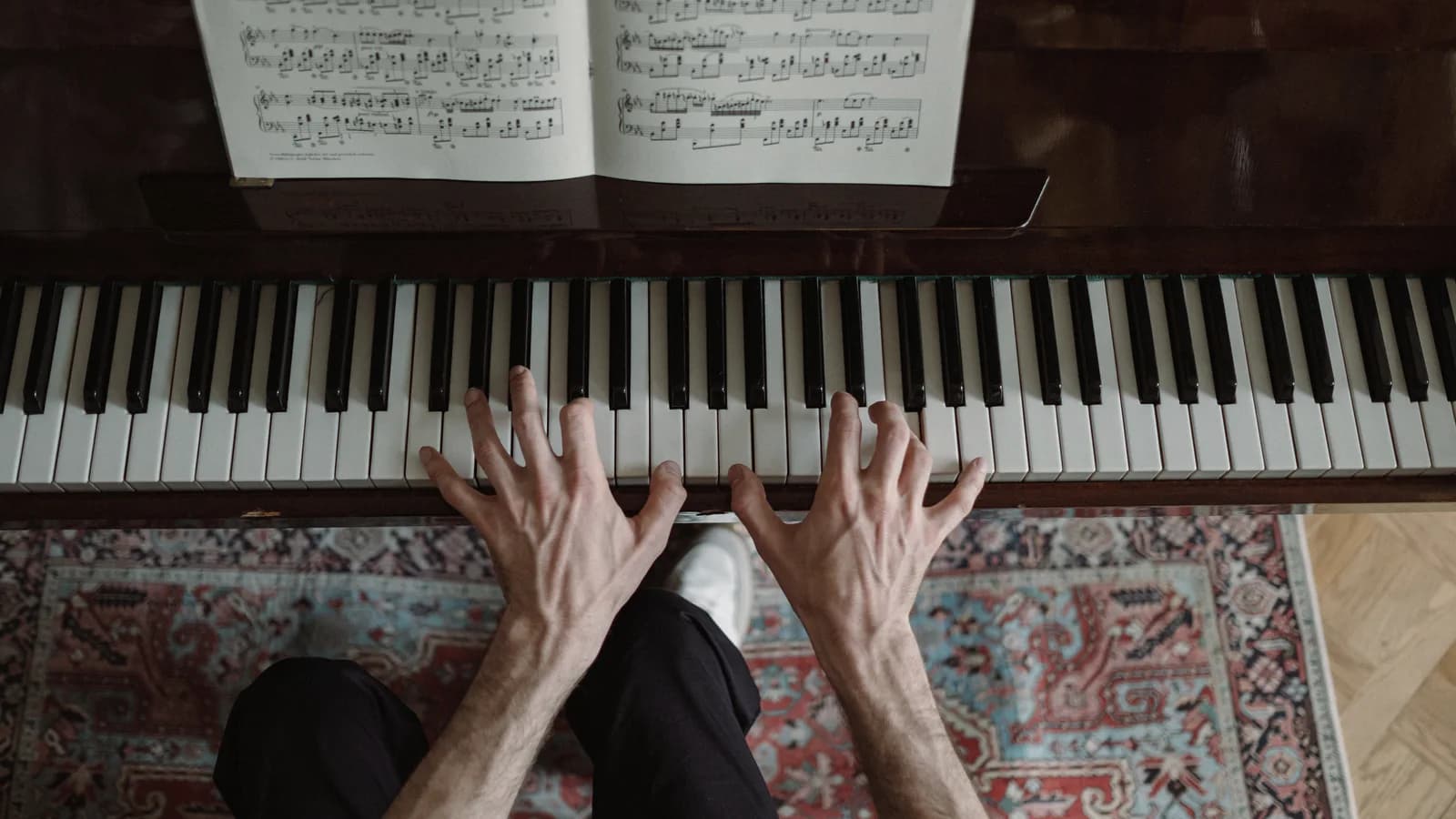
A useful 30-minute piano practice session gives most of the time to one musical problem, then tests the result in context. Use the five-part plan below as a flexible starting point. It is not a claim that 30 minutes is enough for every pianist.
Start with one result you can hear
Before touching the keys, complete this sentence: By the end of this session, this passage will... The ending should describe something that can be heard or checked.
“Work on the sonata” is too large. “Play bars 17 to 20 with an even left-hand rhythm at a tempo where the phrase remains continuous” gives the session a boundary. Other useful outcomes might be:
- Keep the melody audible while the accompanying chords remain quiet.
- Join the two-bar leap to the following downbeat without a pause.
- Choose a fingering for one scale passage and write it into the score.
- Make one planned pedal change without blurring the new bass.
The goal need not be solved completely. It should be precise enough to show whether the next attempt is different from the first.
A small study of five tertiary pianists preparing two quick-study pieces found that the higher-ranked approaches included planning and interpretive goals. The top-ranked pianist also used pauses, score study, markings, and self-recording. The sample was too small to support a universal routine, but it illustrates how thinking, listening, and writing can belong inside a practice session.
The 30-minute plan at a glance
A realistic 30-minute session
30 min total
0–3 min
Play once and listen
Make one short attempt and hear what needs attention today.
3–8 min
Choose one task
Name one technique or sound you want to change.
8–20 min
Solve one difficult passage
Use a short loop and test one solution at a time.
20–27 min
Put it back into context
Reconnect the passage to the music before and after it.
27–30 min
Leave one next-step note
Record what changed and where the next session should begin.
This is a flexible starting template, not a universal optimum. Move a few minutes between stages when the music needs it.
The 12-minute focused block is the center of the session. The other four stages help choose the right problem, prepare for it, test it in context, and make the next session easier to begin.
Treat the minute marks as decision points. If a useful comparison needs another minute, take it. Avoid letting the whole half hour disappear into unrelated warm-ups, repeated play-throughs, or several half-addressed problems.

One-to-one classical piano
Beginner to advanced. Online, worldwide.
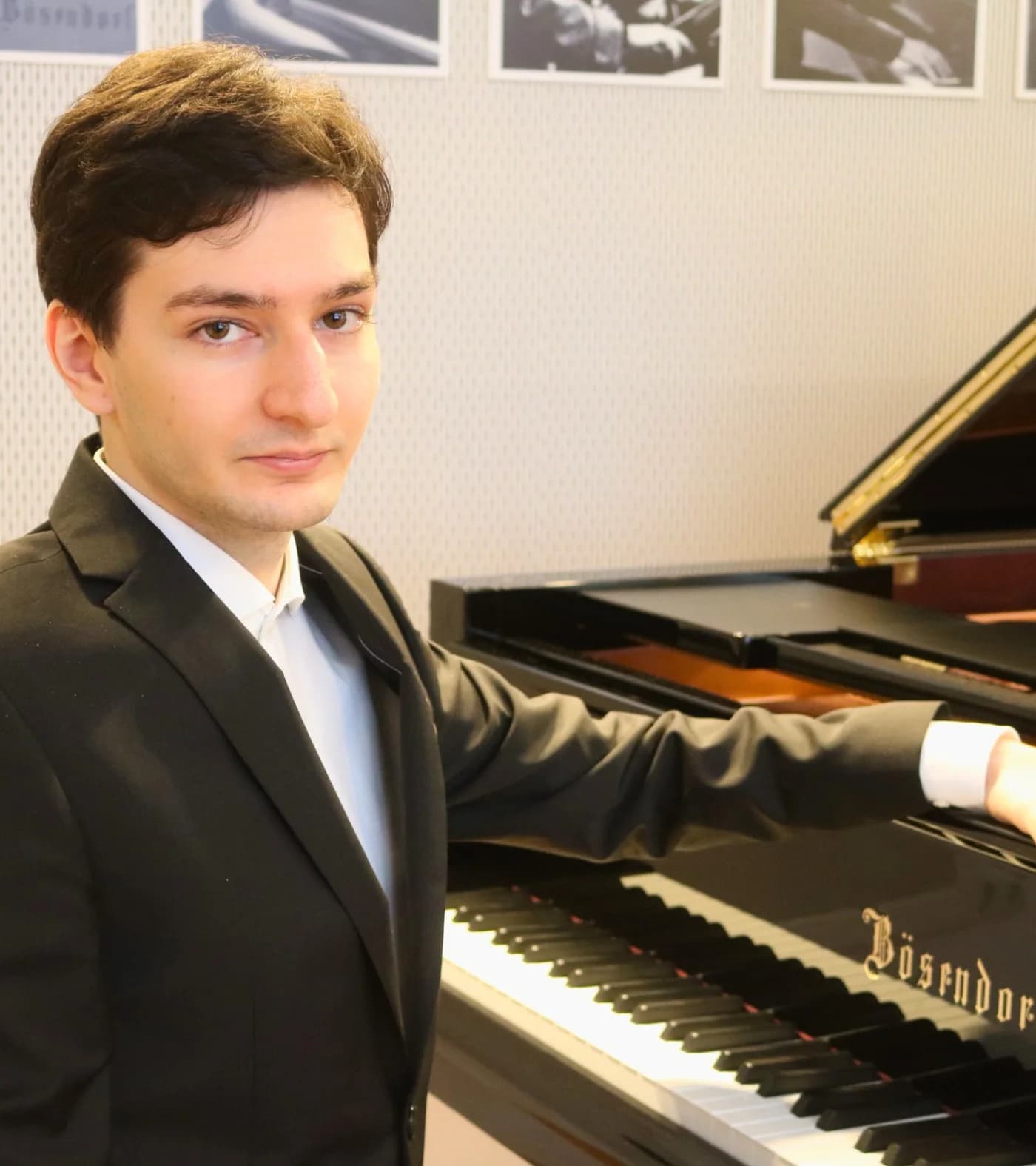
Enea
Concert pianist from Vienna
30 minutes · Tokyo studio from October 2026
Minutes 0 to 8: listen before you work
Use the first three minutes for one short, uninterrupted attempt at the chosen passage. Begin far enough before the problem to hear how it arrives, and continue far enough beyond it to hear what it disrupts. Do not correct while playing. The purpose is to collect evidence.
After stopping, name the first observable issue. “It was bad” offers no direction. “The left hand rushed on the second beat,” “the top note vanished in the chord,” or “the wrist changed position before the leap” gives the next stage a job.
The following five minutes belong to one technical or sound preparation task connected to that evidence. A scale is useful when its fingering, articulation, or key pattern belongs to the passage. It is not compulsory simply because practice has begun. The appropriate task might instead be:
- play the left-hand rhythm on one repeated note;
- voice two notes of each chord before restoring the whole texture;
- rehearse the landing notes of a leap without filling in the notes between them;
- compare the passage without pedal and with one planned pedal change; or
- sing the upper line, then play it alone with the intended direction.
Keep the preparation close enough to the score that its purpose remains audible. At minute eight, return to the actual passage. If the preparatory task has no clear connection to what went wrong, choose a different one rather than completing it out of habit.
Minutes 8 to 20: solve one difficult passage
Choose the smallest unit that still contains the problem. That may be one beat, a two-chord connection, or a short phrase. A unit that is too large hides the cause. A unit that is too small can remove the movement or harmony that makes the passage difficult.
Then use a short problem-solving loop:
- Play the small unit once and identify the exact point of failure.
- Change one variable, such as tempo, fingering, texture, rhythm, articulation, or where the movement begins.
- Make two or three comparable attempts while listening for the same criterion.
- Keep the change only if it produces a repeatable improvement.
- Add the neighboring beat or bar and test it again.
Changing one variable matters. If fingering, tempo, pedal, and dynamics all change together, the next attempt may sound better without revealing why. A controlled comparison turns repetition into information.
A study of 17 graduate and advanced-undergraduate piano majors observed them practising one difficult three-measure passage and tested retention about a day later. Retention ranking was not significantly related to total practice time or number of trials. Among the strongest performers, the researchers observed prompt, precise error correction and repetition that stabilized the correction. The sample and task were narrow, so this does not prove that short sessions outperform long ones. Its relevance here is limited to how the players handled errors, not how many minutes anyone should practise.
If no test improves the passage after several minutes, do not spend the remaining block repeating the same failure. Reduce the unit, remove one layer, or revise the goal. Sometimes the most productive result is a better diagnosis: “The leap is secure alone, but the preceding chord leaves the hand in the wrong place.” That is a concrete starting point for the next experiment.
Minutes 20 to 30: reconnect and leave a trail
For seven minutes, rebuild context in stages. Add the beat before the short unit, then the beat after it. Expand to the phrase. Finally, begin from a musically natural point rather than directly before the difficulty.
Use the same listening criterion from the opening attempt. If the corrected rhythm survives alone but disappears inside the phrase, the change is not yet stable in context. Return briefly to the boundary where it fails. There is no need to start the entire piece again.
The last three minutes are for one final attempt and one factual note. A useful note identifies the location, the change that helped, and the first task for next time: “Bars 17 to 20: fingering is settled; begin one bar earlier and keep the bass quiet.” A vague verdict such as “needs work” only recreates the original decision tomorrow.
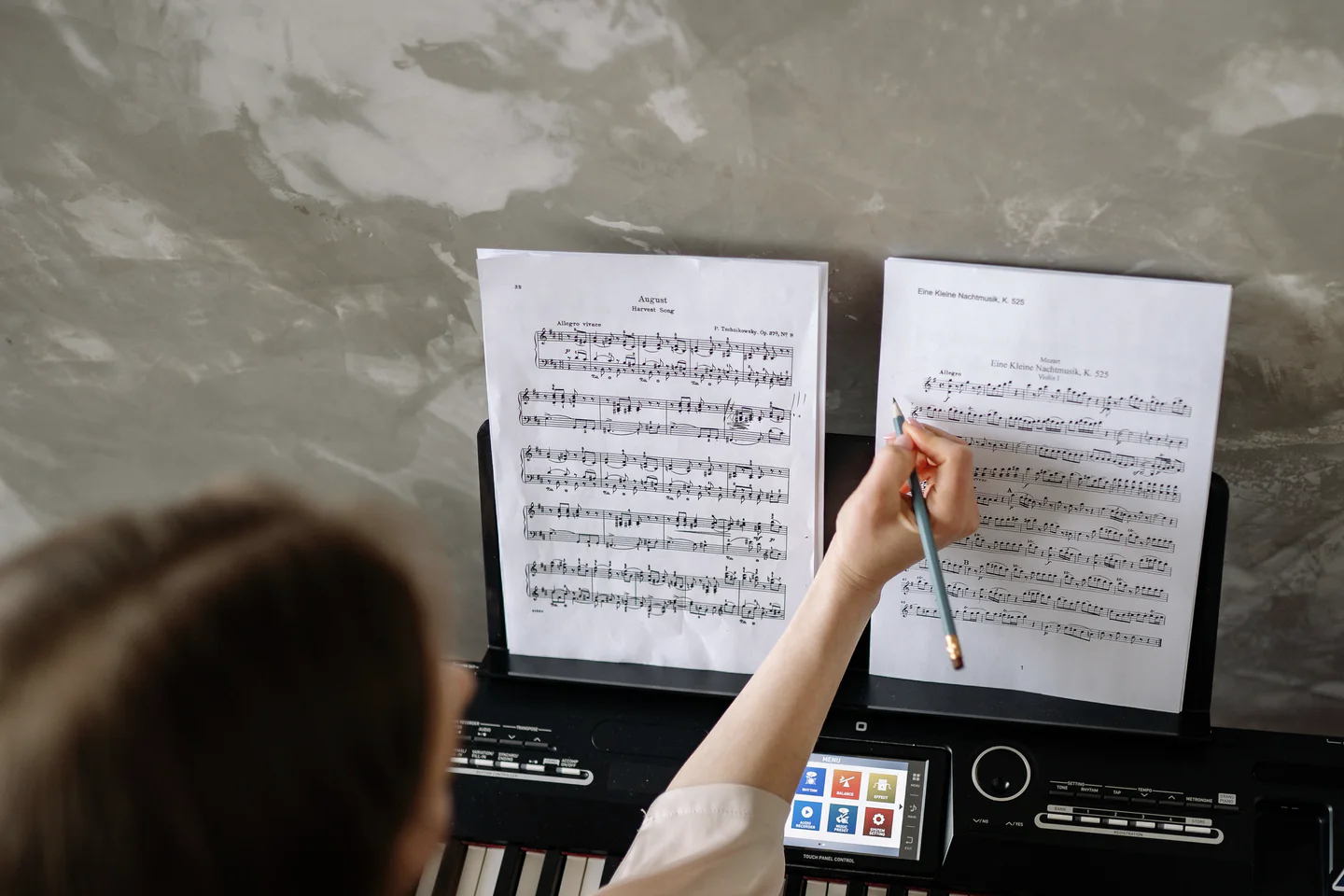
A pencil mark can preserve the next decision without turning the score into a diary. Photo: Yan Krukau / Pexels.
A short recording can help with balance, pulse, or phrase shape. Record the same excerpt before and after the change, then compare only the chosen criterion. Keep the recording short enough to review immediately.
Adapt the same plan to your level
The five jobs remain useful across different stages, but their contents should change. The beginner does not need the same focused task as the pianist preparing a recital programme.
For a beginner
Choose a very small outcome, such as joining two measures without losing the pulse or keeping the left hand quiet enough to hear the melody. The five-minute preparation may be hands separately, speaking the rhythm, or finding the notes without tempo. The 12-minute block can alternate between one-hand certainty and a short joined unit. End by playing from one measure before the join, not by attempting the whole piece repeatedly.
For a returning pianist
Choose the problem that reflects current playing, not the level reached years ago. The first attempt may reveal that reading is secure but repeated chords lose evenness quickly, or that the notes return before rhythmic control does. Use the preparation block to revisit one movement pattern or sound at a manageable tempo. Keep the repertoire excerpt short enough that old expectations do not turn the session into a test of former ability.
For a repertoire-focused adult
Frame the result musically: clarify an inner voice, sustain a long line through changing harmony, or keep a transition's character at tempo. The focused block may compare two fingerings, voicings, pedal choices, or phrase plans. The context block should then test the decision across a longer span. The same play, name, test, and replay method is also central to serious online work on interpretation and technique.
When only 15 minutes are available
Do not race through all five blocks at half speed. Remove breadth and preserve the problem-solving loop:
- 3 minutes: play one short excerpt, listen, and state one result.
- 8 minutes: work on the smallest useful unit. Fold in a technical preparation only if it addresses the problem directly.
- 3 minutes: reconnect the unit to the phrase.
- 1 minute: write the first action for next time.
Omit the separate warm-up, a complete play-through, a second piece, and general review. Those activities can belong to another session. A short session becomes useful when its scope becomes smaller, not when every task is rushed.
If there is no established piece to work on, use the same structure for note learning: preview a tiny section, solve one reading or fingering question, and connect the measures. Mark the restart point so the next session begins with a clear task.
Keep this checklist beside the piano
Before and during the session, ask:
- What exact passage is receiving the 30 minutes?
- What result should be audible by the end?
- What did the first attempt reveal?
- Which one variable is changing now?
- Does the change survive in the surrounding phrase?
- What is the first action for the next session?
This structure does not need to govern every day. A first reading, a complete performance run, sight-reading, memorization testing, or preparation across several movements may require a different session. Longer practice may also be necessary for larger goals. The value of the template is that it prevents a limited half hour from becoming an unfocused tour of everything on the music stand.
Tools are secondary to that decision. A timer, metronome, recording, app, or video becomes useful only when it has a defined job. The guide to what lessons, apps, and YouTube each help with can help separate feedback, repetition, demonstration, and diagnosis.
If deciding what deserves the 30 minutes is harder than doing the practice itself, bring one current passage to a free 30-minute online trial lesson. A focused lesson can turn a broad difficulty into one specific task and a clear test for the next practice session. The article on what happens in an online classical piano lesson explains how that feedback is used.
Sources and further reading
- Robert A. Duke, Amy L. Simmons, and Carla Davis Cash, “It's Not How Much; It's How: Characteristics of Practice Behavior and Retention of Performance Skills”, Journal of Research in Music Education, 2009, DOI: 10.1177/0022429408328851.
- Akiho Suzuki and Helen F. Mitchell, “What Makes Practice Perfect? How Tertiary Piano Students Self-Regulate Play and Non-Play Strategies for Performance Success”, Psychology of Music, 2022, DOI: 10.1177/03057356211010927.
- Guadalupe López-Íñiguez and Gary E. McPherson, “Using a Music Microanalysis Protocol to Enhance Instrumental Practice”, Frontiers in Psychology, 2024, DOI: 10.3389/fpsyg.2024.1368074.