
Piano Tension and Pain: What Practice Can Address and When to Stop
If playing the piano causes pain, numbness or weakness, stop playing and seek advice from a qualified health professional. Do not use another repetition to test whether you can work through it. A lesson can help examine the musical task and how you practise, but it cannot identify the medical cause of symptoms.
When playing feels tense without those symptoms, a more useful question than “How can the hands relax?” is “What is being held, repeated or forced, and when?” That gives a teacher something specific to observe. The aim is to understand the task, choose a manageable way to study it and recognise the limits of practice advice.
“Tension” does not explain what is happening
Pianists use the same word for different experiences. It might describe a shoulder staying raised through a phrase, fingers remaining on notes that have already ended, a feeling of effort, or a painful hand. Those descriptions should not be treated as interchangeable.
Start with ordinary observations. Which passage is involved? Does the difficulty appear as the tempo rises, when a large chord arrives, or after repeated attempts? Has the practice schedule recently changed? An observation can make a lesson more useful without turning it into an explanation of an injury.
Effort also needs context. A new coordination task may demand attention and deliberate movement; that does not establish whether a particular sensation is harmless. Fatigue is a reason to pause and reassess, rather than a target to build towards. Pain is not proof that the practice is effective.
The instruction to be completely relaxed is too broad to guide a phrase. Ask what action the music requires, what happens between notes, and what can be observed. If the concern is a symptom, the next step belongs with an appropriate health professional.
When to stop and seek help
Stop the playing that brings on symptoms. Arrange qualified advice for pain that persists, worsens or repeatedly returns, or for tingling, numbness, weakness or a loss of normal dexterity. Symptoms affecting ordinary activities also deserve attention. A teacher's impression that a passage looks easier is not medical clearance.
Some wrist symptoms need urgent assessment: severe pain, inability to move the wrist or hold objects, a change in shape or colour, or lost feeling in part or all of the hand. Use the appropriate urgent medical service where you live; do not wait for a piano lesson. This is not a complete list of reasons to seek urgent care.
Avoid choosing a diagnosis from a video, a symptom chart or the location of the pain alone. Do not keep replaying a painful passage to obtain a recording for a teacher. A description of what happened is enough to begin the conversation.

One-to-one classical piano
Beginner to advanced. Online, worldwide.
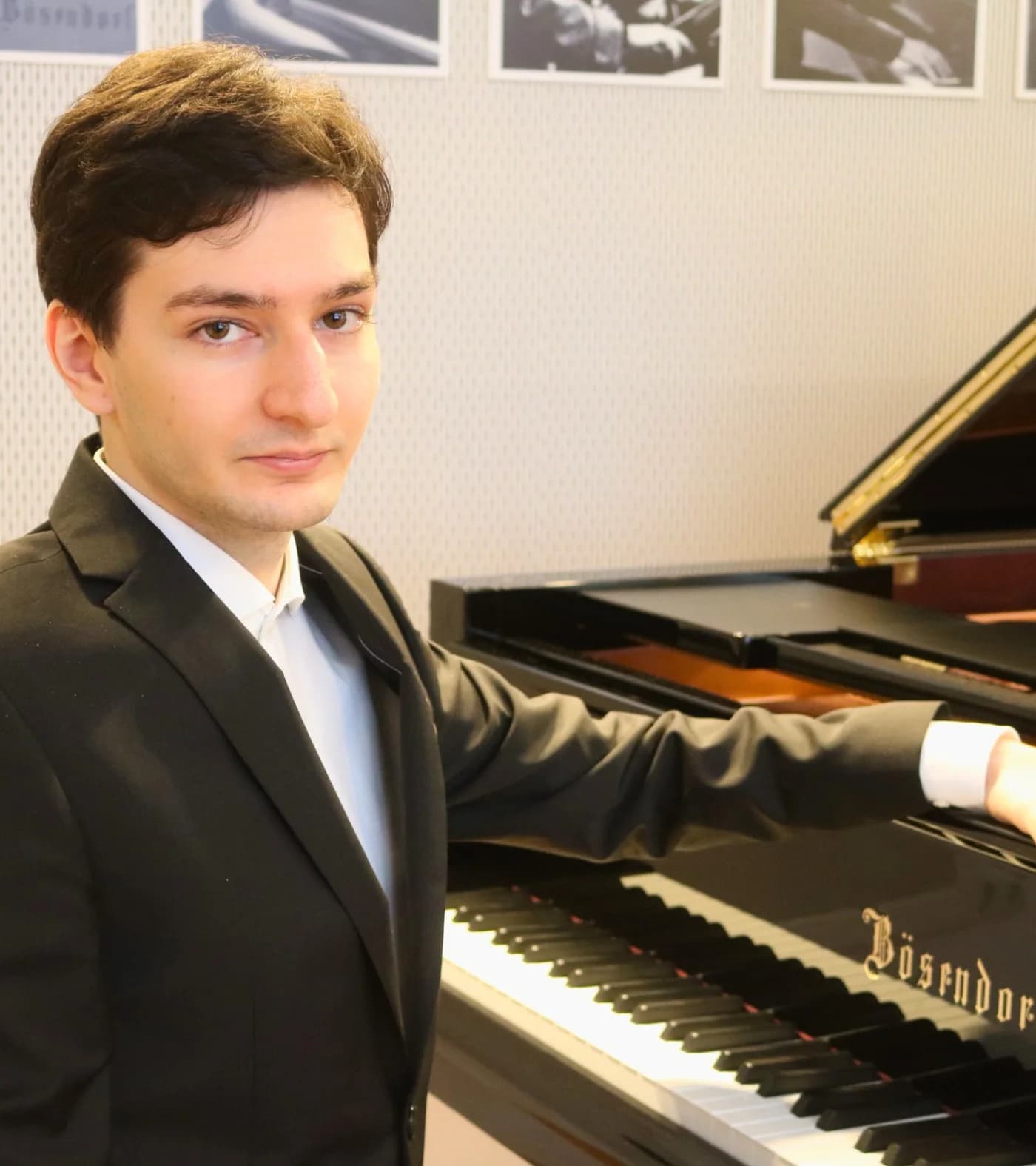
Enea
Concert pianist from Vienna
30 minutes · Tokyo studio from October 2026
Look at the demands of the whole session
The duration of a practice session is only part of its story. Twenty minutes spent exploring a familiar melody is a different task from twenty minutes of repeated, fast chord passages. Tempo, loudness, technical difficulty and repetition belong in the description alongside time at the keyboard.
Recent changes matter too. Perhaps a returning player has added another piece, a rehearsal and a longer evening session at once. Writing down those changes is useful information for a teacher or clinician. It does not establish which activity caused a symptom.
Occupational-health guidance identifies repetition, sustained force, awkward positions and insufficient rest breaks as relevant factors in upper-limb problems. That is a reason to look beyond a single supposedly perfect hand position. It is not a test that can determine an individual pianist's diagnosis or safe workload.
An unplanned loop
Difficult passage immediate repeat another repeat
The same demand continues without a new musical question.
A plan for comfortable practice
- Name the question
Choose one detail in the score or sound.
- Try a defined task
Use a short passage for that musical question.
- Break from playing
Put the task aside and leave the keys.
- Choose what comes next
Listen, read, ask the teacher or finish the session.
A break is not medical clearance. If playing causes pain, numbness or weakness, stop and seek qualified health advice. This diagram does not decide when you can resume.
For comfortable playing, define the task before repeating it: “Check the left-hand entry after the rest” is clearer than “Practise this page until it feels better.” Decide what the next attempt should reveal. Once that question has been answered, choose whether another playing attempt is useful at all.
If repetition has become automatic, a more focused passage-practice loop can help organise the musical work. That approach addresses learning decisions; it should not be used to work around pain.
What a lesson can usefully examine
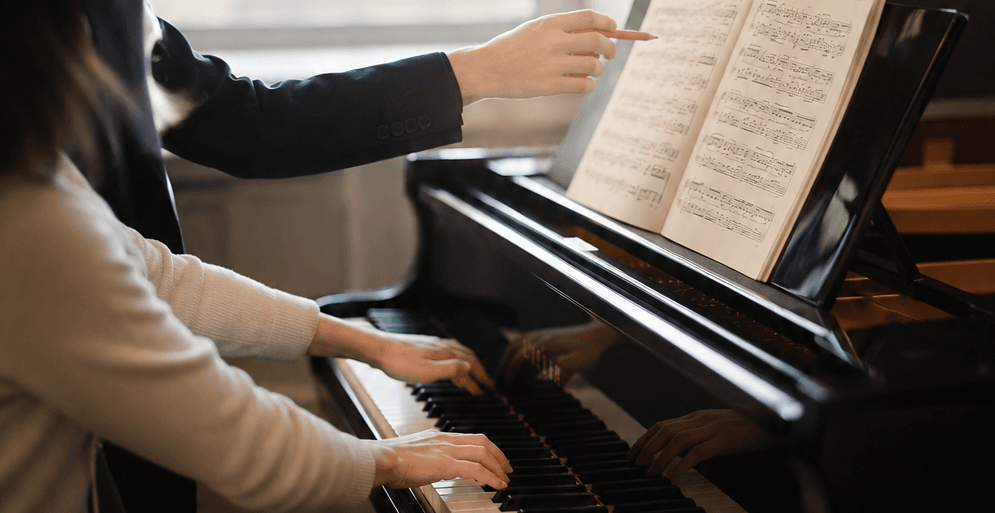
A teacher can compare the score, the sound and the visible action. Are notes being held beyond their written length? Does a fingering leave enough time to prepare the next position? Is the accompaniment louder than the phrase needs? These are musical questions with something concrete to inspect.
Consider a passage in which the melody pauses while the accompaniment continues. A learner might keep the melody fingers resting heavily on the previous notes because attention has moved to the other hand. The lesson question is where those notes end and how the next entry is prepared. That is more precise than repeatedly asking for general relaxation.
A second example is a large chord that interrupts the pulse. Before prescribing more chord repetitions, a teacher can check the notes, their distribution between the hands, the fingering and the intended sound. The musical solution may involve a different approach to the passage or a discussion of suitable repertoire. An uncomfortable reach should not become an endurance exercise.
Turn a general complaint into a musical question
Two illustrative lesson situations. Neither identifies a medical cause or asks you to reproduce symptoms.
A melody note stays held after its rest begins
- What can be observed
- The score gives the melody a rest, but the previous note remains held while the accompaniment continues.
- A question for the teacher
- Where does the note end, and what needs to happen before the melody returns?
- How to discuss it
- Locate the release and the next entry in the score first. When comfortable playing is appropriate, a teacher can listen to that transition and observe how it is prepared. There is no need to repeat the whole page.
A large chord interrupts the pulse
- What can be observed
- The pause occurs before the same chord, even though the preceding notes are secure.
- A question for the teacher
- Are the notes, fingering and preparation clear, and is the passage suitable for this player?
- How to discuss it
- Discuss the chord in its musical context before adding repetitions. A teacher can consider the distribution between the hands or an appropriate alternative. Do not stretch into discomfort to demonstrate the problem.
These examples are for discussing technique when playing is comfortable and appropriate. They do not show how to treat an injury. A change that sounds better or looks simpler cannot establish the cause of pain or prove that continuing is safe.
For an online lesson, a camera view showing the keyboard and relevant movements can support that discussion. Set it up before playing. If demonstrating would reproduce symptoms, explain the passage instead, using the score or an existing recording where available.
Give breaks a real place in the plan
A break from playing needs to interrupt the playing. Holding the hands over the keys while deciding what to repeat next is not much of a change in task. Put the passage aside and leave space between attempts, rather than treating every available minute as keyboard time.
A practice plan can name both the musical question and the point at which to step away. For example, after listening to an existing recording of a phrase, decide what needs attention before returning to the instrument. There is no obligation to fill the remainder of a planned session with repetitions.
The 30-minute practice plan can provide an organisational starting point for comfortable practice. Its duration is not a requirement, a health target or a prescription for someone returning from injury. A shorter session, a different task or stopping altogether may be appropriate to the circumstances.
Beginning with familiar, gentle playing is different from launching straight into the hardest passage. Even so, a warm-up does not make painful playing acceptable. Avoid adding unfamiliar stretching, strengthening or “release” exercises from the internet as a way to keep a session going.
Keep studying the music away from the keys
Some musical decisions can be made without playing. If listening or looking at the score is comfortable and fits any advice you have received, choose a small question that does not require a demonstration. Taking a complete break is also a valid choice.
For example, follow the melody through a page and mark where it rests. Then find the accompaniment's entry after each rest. This prepares a useful discussion about timing without requiring repeated attempts at the piano. It does not replace any clinical advice about rest or activity.
Another option is to compare two phrases in a recording you already have. Listen for whether the second phrase answers the first, whether the tempo changes unexpectedly, or whether the accompaniment obscures the melody. Write a musical question for the next lesson rather than a list of every error.
For a difficult chord passage, read the surrounding harmony and locate repeated patterns on the page. You can bring those observations to the teacher without silently practising the hand movements or repeatedly stretching to measure your reach. Away from the instrument should not become the same uncomfortable movement performed somewhere else.
Bring useful information to the right person
For a lesson, name the piece and passage, explain the musical difficulty and describe what changed in the practice routine. “The same chord sequence was repeated throughout the session” gives more context than “Technique needs work.” Existing notes or recordings can help, but a fresh demonstration is not required.
For a healthcare appointment, describe the symptoms in your own words, when they began, which activities bring them on and whether they affect daily life. Mention that you play the piano and what your current commitments involve. Include relevant activities outside music rather than assuming the keyboard is the only possible factor.
A clinician may need information that a piano teacher cannot assess. Equally, a teacher can help translate an agreed activity restriction into repertoire or lesson choices. Share relevant professional guidance so that the musical plan can respect it. There is no need to send a medical history through the school's general application form.
Good communication keeps the roles clear. Musical progress does not confirm recovery from an injury, and seeking healthcare does not mean that the teaching relationship has failed. A lesson and a clinical appointment can address different parts of the same situation.
Return with a plan suited to the circumstances
After injury or a substantial break, a previous practice schedule should not automatically become the starting point. Return-to-playing guidance considers duration, intensity and difficulty, with the plan adjusted to the individual. If symptoms or an injury are involved, seek professional guidance for that return rather than following a generic calendar from a blog.
A teacher can then help choose music and lesson tasks within the agreed limits. A lesson might centre on listening, score discussion or a short musical question, depending on what is appropriate. Readiness for a demanding piece should be discussed separately from the desire to resume a familiar routine.
For a learner who is playing comfortably and wants help examining technique or organising practice, Vienna Piano School offers a free 30-minute trial lesson, with online lessons available worldwide. The useful starting point is a passage and a question about the music. Health symptoms need qualified healthcare advice; the trial is a music lesson.