Mozarteum Summer Academy: Preparing for a Piano Masterclass
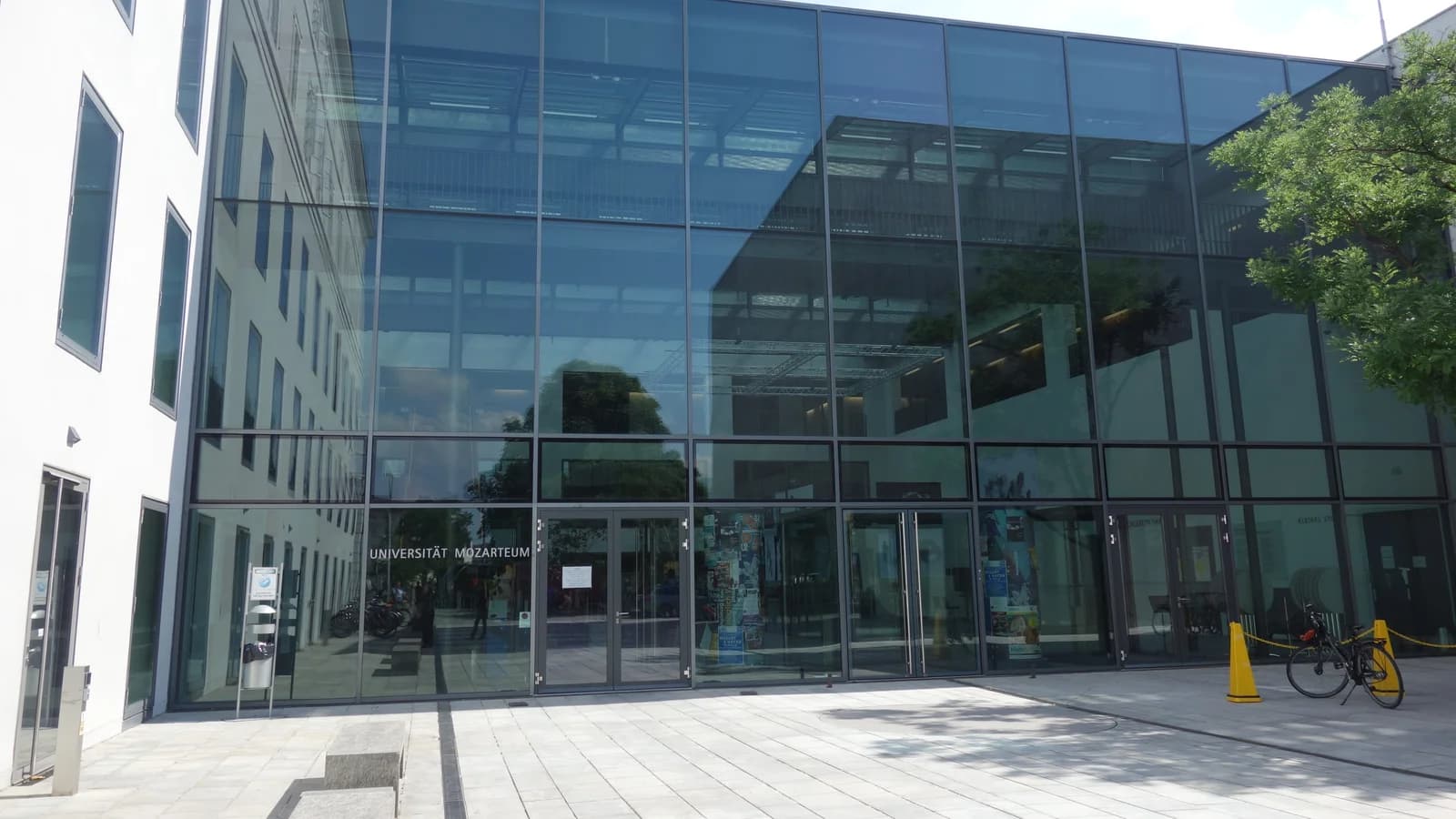
A piano masterclass at Mozarteum’s International Summer Academy can offer concentrated work with a teacher, a room full of different musical approaches, and time to hear your own playing afresh. The most useful preparation begins with a musical question: what would you like this week to change in the way you listen, practise or interpret a work?
That question helps you choose between applying for an active place and attending as an observer. It also helps you choose a teacher from the published programme. A famous name may catch your attention; the next step is to consider the music you want to study and the kind of artistic conversation you hope to have.
Before choosing a course, consider four things:
- Whether you want individual feedback on your playing or a week of focused observation.
- Which teacher and course period suit your musical interests.
- Which pieces are secure enough to explore in depth during a short course.
- How you will continue working on the ideas after returning home.
The Academy and the next edition
The International Summer Academy belongs to Mozarteum University Salzburg. It is aimed at advanced students and musicians preparing for auditions or competitions. A summer course is a short artistic experience; applicants for a university degree follow the separate admissions process described in the Mozarteum piano-study guide.
As of September 2026, the official Academy page says that registration and course dates for 2027 are still to be announced. The published 2026 programme and application guide provide a useful picture of the format, but future teachers, dates, fees and conditions should be checked when the next edition opens.
In the 2026 format, a course period ran from Monday to Saturday, with four teaching sessions of 45 minutes. Active piano participants also received three hours of practice time per day and could observe other masterclasses. The week therefore involved much more listening and independent work than the hours spent playing directly for a teacher.
That balance is worth thinking about before travelling. If your main interest is a particular teacher, the individual lessons may be central. If you are exploring the prospect of advanced study abroad, hearing how several pianists respond to feedback can be equally revealing. You begin to notice which kinds of explanation sharpen your own hearing, and which questions you want to pursue further.
Active participation or observation
An active place gives a teacher the chance to respond to your sound, your movement at the instrument and your interpretation. It suits a pianist who has repertoire ready for substantial musical work and wants to test ideas between lessons. The application video is part of the selection: the teacher decides admission, so a completed booking is not itself confirmation of an active place.
Observation has a different centre of attention. You can follow how a teacher hears a problem, what they ask the pianist to change, and whether the result is audible. The 2026 guide offered auditor passes at €50 per day or €150 per week, purchased at the Academy’s Service Point. Check the next edition’s arrangements before planning a visit around those terms.
I would encourage an observer to arrive with one or two listening interests. Perhaps you want to understand why a melody disappears inside a thick texture, or why some performances of a Classical movement feel buoyant without sounding rushed. A question gives shape to the day. Otherwise, a series of impressive performances can pass by without leaving much that you can use at the piano.
An active participant can listen in the same way during other classes. Sometimes another pianist’s lesson reveals an issue you have been struggling to hear in your own playing. From a chair in the room, you may hear immediately how a quieter accompaniment releases the melody, or how a firmer sense of pulse allows more freedom within a phrase.
Playing in the class
- Bring a focus
- A passage you can play securely, with a musical question still open.
- Listen for a change
- Hear the result of one change: a lighter accompaniment, a different release or a clearer bass direction.
- Continue at the piano
- Try the idea in context between lessons and bring back what you heard.
Observing the class
- Bring a focus
- A listening interest, such as how a melody stays clear in a full texture.
- Listen for a change
- Compare the pianist’s first attempt with the next one. Describe the audible change in your own words.
- Continue at the piano
- Find a related passage in your repertoire and test whether the idea serves that music.
An example of a useful observation
The teacher asked for lighter repeated chords. In the next attempt, the melody continued through the long note, but the bass lost direction. The following attempt kept the chords lighter while giving the bass a clearer arrival. At home, I would try those two balances separately in a similar texture and listen before combining them.
One-to-one classical piano
Beginner to advanced. Online, worldwide.
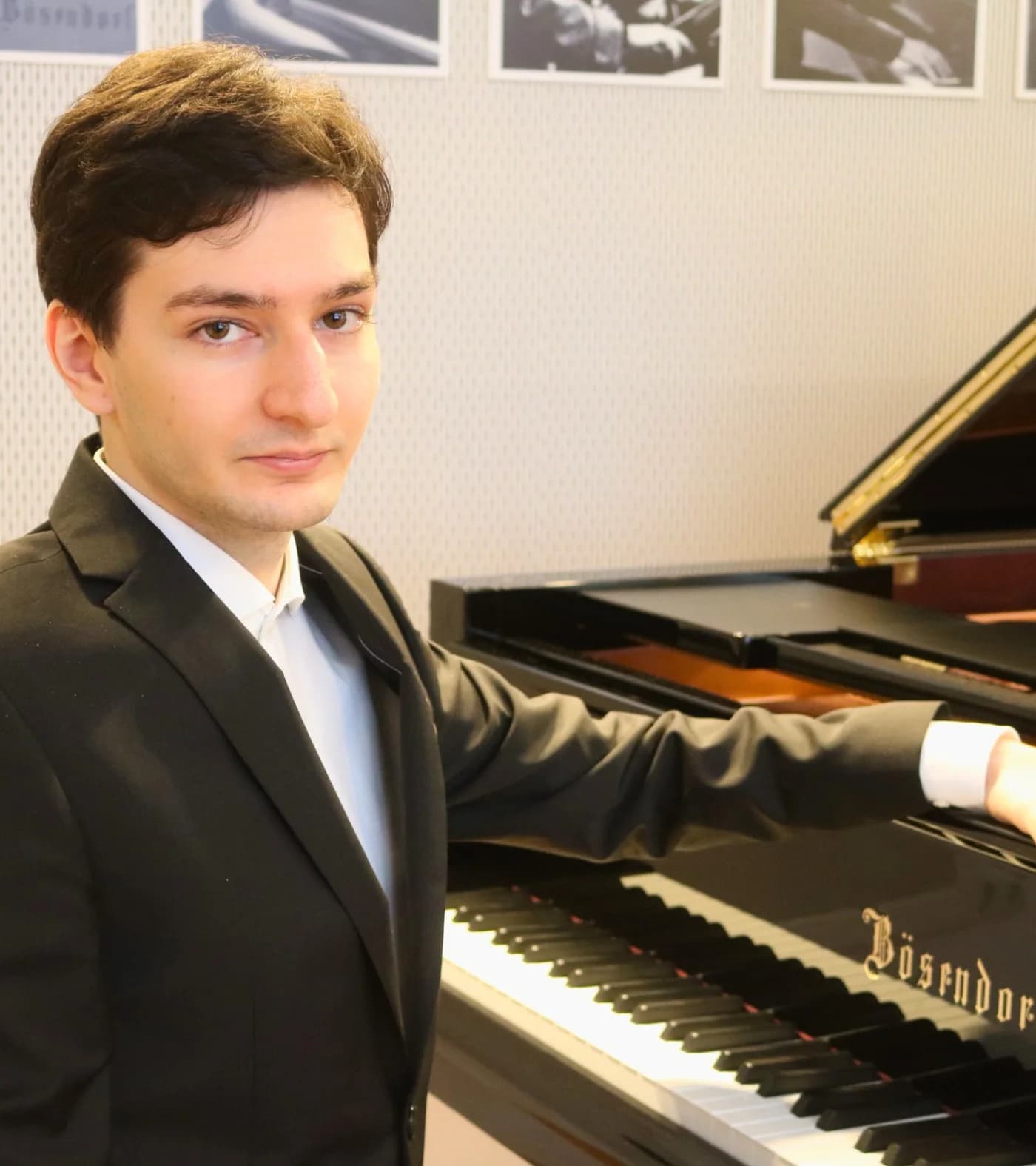
Enea
Concert pianist from Vienna
30 minutes · Ikebukuro & Shinjuku studios from October 2026
Choosing a teacher and course
Read the actual course listing for the edition you intend to attend. Then look at the teacher’s official profile, repertoire interests, performances and any publicly available teaching. A recording can suggest artistic interests; observing a lesson tells you more about how the teacher communicates. Neither gives a complete prediction of your own experience, but both are useful starting points.
The 2026 programme illustrates the variety: its second course period listed piano teachers including Connie Shih, Gülsin Onay, Andreas Weber, Robert Levin and Ya-Fei Chuang. Those are examples from a completed edition, not an announcement of the next faculty. Use the new programme to build your own shortlist when it appears.
Match the choice to something you can name. “I want to work on Mozart” is a beginning. “I want to find a more convincing relationship between articulation, pulse and the end of a phrase in this Mozart movement” tells you much more about the work you hope to do. If your interest is chamber music or song, look for a course that explicitly accommodates that work and check whether a partner is required.
Consider the language of the lesson as part of that choice. A pianist may understand written musical terms yet find a rapid spoken instruction difficult to catch while playing. Ask the Academy or the listed teacher about the working language if it is unclear. Prepare to describe a passage, locate a bar and ask for a demonstration in that language.
The week should also leave room to absorb a teacher’s ideas. Filling every available hour with another activity can make it difficult to return to the piano and test what you heard. Choose a programme with enough space for practice, observation and rest, and read any rules about taking overlapping courses before booking them.
Repertoire for a short course
The application video and the repertoire you want to study serve different purposes. The Academy’s 2026 guide allowed a freely chosen video piece and asked separately for the masterclass repertoire. The lesson pieces did not have to be the same as the video piece. For the next edition, follow the instructions in its own registration form and guide.
For the video, choose music that represents your present playing honestly and well. For lessons, choose music that can sustain a conversation. A piece with uncertain notes on every page can consume the available time in basic repairs. A familiar piece with unresolved questions about balance, structure or character offers more room for detailed work.
I would usually discuss a small selection with a student before they apply: one work they know deeply, and another that presents a worthwhile current challenge. The precise number and scope should fit the course and the teacher’s instructions. The point is to arrive with music you can respond through, rather than a long list that you hope will sound impressive.
Take a Classical sonata movement as an example. If the notes are secure, a teacher can work on the difference between an opening statement and its return, or on how a transition changes the direction of the movement. You can try a different bass weight, release or timing and hear its effect immediately. Those possibilities depend on having enough command of the score to move your attention beyond survival.
In a Romantic work, an unresolved inner voice can be just as productive. You may know that the phrase feels heavy without knowing why. A lesson can explore whether the weight comes from the bass, a repeated chord, an unnecessary accent or a pedal change. Bring the passage in its musical context, including the bars before and after it.
Prepare the whole movement or work you have listed, within the course’s stated scope. Even if the first lesson concentrates on one page, the teacher may need to hear where the phrase is going. Mark useful locations in your own score so that you can return to a passage quickly, and bring the printed music required by the Academy’s guidance.
Questions that lead back to sound
A useful question begins with something you can hear. “How can I improve this piece?” is difficult to answer within a short lesson. “The melody loses direction when the accompaniment becomes fuller here” gives the teacher a place to begin. Play the passage, then listen to what changes when you try the suggestion.
For a Mozart cadence, you might be unsure how much time to take without weakening the dance character. The teacher may ask you to play the bass alone, reduce an accent or keep the accompaniment moving while the melody relaxes. Listen for the musical result: does the phrase arrive more clearly, and does the next phrase still feel connected to the pulse?
For a Chopin texture, you might ask which voice should carry the line when both hands contain melodic material. Play the voices separately, then combine them with a deliberate balance. The issue may be less about making the upper notes louder than allowing the inner line to continue while the surrounding notes remain light.
These are examples of lesson questions, not prescribed Academy repertoire. Your own question should come from the score you are studying. A small, audible problem is often a better opening than a request for a complete interpretation, because it gives you something to test during the next practice session.
If an explanation passes too quickly, ask for the relevant part again: “Could you show me the left hand once?” or “Do you mean the beginning of this phrase?” A short request can keep the musical exchange moving. The guide to German for piano study explores that preparation alongside formal language requirements for longer study.
Listening to other pianists
Observation becomes valuable when you follow the change, not just the advice. First hear the original passage. Notice what the teacher asks for. Then listen to the pianist’s next attempt and describe what actually sounds different. A familiar instruction such as “less pedal” can produce a surprising range of results depending on the texture and the room.
Suppose a pianist is asked to lighten repeated accompaniment chords. Listen to whether the melody gains space, whether the rhythm becomes more flexible, and whether the bass still supports the harmony. Those are separate observations. The student may improve one while losing another, and the next exchange in the lesson may address precisely that balance.
Try to understand why the suggestion belongs to that passage. An instruction to play more directly might help a rhythmically unsettled section; the same instruction applied everywhere could flatten a lyrical one. Keep the score, musical character and individual pianist in view when taking an idea back to your own work.
Notes can be brief: the work and location, the musical problem, the change you heard, and a passage of your own where you might explore it. If you want a recording of a lesson, ask the teacher and the performer first and follow the Academy’s rules. Written observations often capture the central idea without interrupting your listening.
Concerts add another perspective. Hearing a teacher perform after watching a lesson can reveal how an apparently small point about timing or balance belongs to a larger interpretation. The 2026 programme included teaching, studio concerts and faculty performances within the same week. Select events that interest you and leave time to think about what you heard.
Practice time and travel plans
Build a realistic picture of the week’s cost. The Academy’s current FAQ lists a €120 registration fee and a €480 masterclass course fee, while accommodation is arranged separately. These are the figures displayed when this article was prepared, not confirmed prices for an unannounced future edition. Travel, meals and accommodation need their own allowance.
For piano, the published format includes three practice hours per day; further time depends on availability and additional arrangements. Plan those hours around the work coming out of your lessons. An hour spent comparing two ways of shaping a phrase may be more useful than another complete run-through of repertoire you already know.
If you are travelling from another country, consider when you will arrive, settle into your accommodation and first have access to an instrument. Keep the course’s opening and closing commitments in view before fixing travel. The Academy is not a supervised residential camp, which also matters when a younger musician attends with family.
The experience can help you think about future study abroad: how you respond to an unfamiliar teacher, how you practise independently between lessons, and how comfortable you feel discussing music in another language. Treat those observations as information about your learning. An enjoyable summer class does not settle the separate questions of degree eligibility, admission or a long-term place with a professor.
Bringing the work home
After the course, choose a few ideas that deserve sustained attention. Play the relevant passages again before the notes in your score become a list of instructions you no longer remember hearing. Record a short comparison if it helps: what you played before, what you changed during the week, and what remains uncertain.
Discuss those ideas with your regular teacher. A masterclass can offer a fresh approach that needs time to become dependable. For example, a lighter accompaniment may have worked in the class but disappear when you return to your usual tempo. Slowing the passage, isolating the balance and then rebuilding the phrase gives the idea a place in your technique.
I can help you prepare repertoire for a masterclass, identify useful musical questions and practise the German or English needed to discuss your playing. After the course, lessons can turn the most valuable feedback into continuing work on tone, phrasing, structure and independence.
Vienna Piano School offers online lessons now and in-person lessons at piano studios in Ikebukuro and Shinjuku, Tokyo, starting in October 2026. Learners of junior-high-school age and adults can request a free 30-minute trial. If you are considering Salzburg, tell me which course interests you and which pieces you would like to take.