Piano Study in Hannover: Bachelor’s, Master’s and Soloklasse
Hannover offers three distinct stages of piano study: the Klavier Bachelor of Music, the Tasteninstrumente Master of Music, and the Soloklasse, which leads to the Konzertexamen. The useful starting point is your previous qualification and the musical work you want to do next. A strong audition programme matters at every stage, but the courses differ in their breadth, entry requirements and expectations of independence.
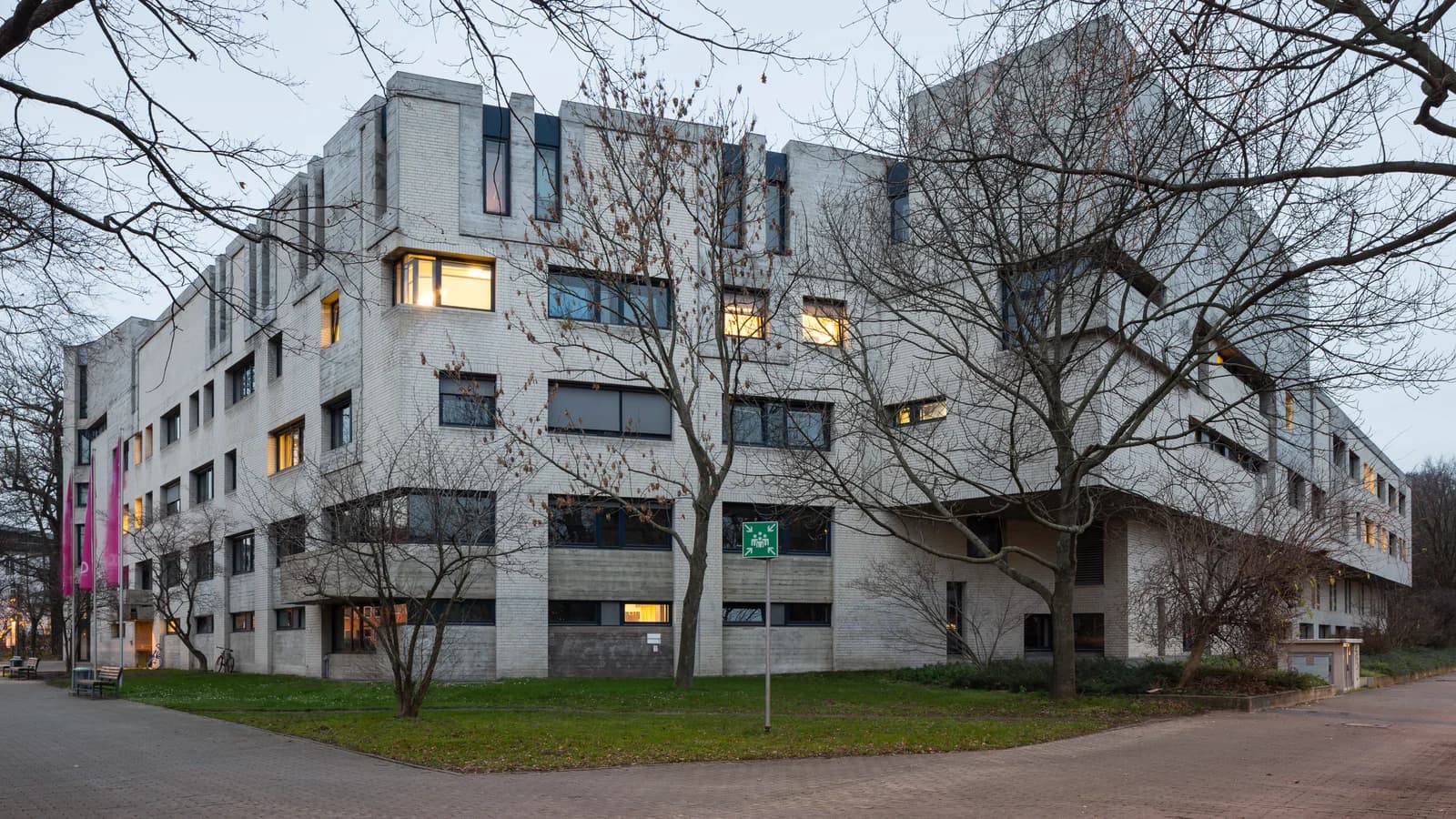
At the Hochschule für Musik, Theater und Medien Hannover, usually abbreviated HMTMH, “Tasteninstrumente” means keyboard instruments. Piano is one principal-study option within that master’s. Soloklasse is a separate advanced performance course with its own admission process and concert examinations.
Before comparing teachers or selecting recordings, identify four things:
- Your qualification: school-leaving certificate, relevant bachelor’s, or advanced artistic degree.
- Your intended principal study: piano, rather than another keyboard instrument sharing the course page.
- Your next musical objective: broad professional training, graduate specialisation, or sustained concert work.
- The application intake: the course regulations and the audition call need to match the year you intend to start.
The three study routes
The piano bachelor’s normally lasts eight semesters. The keyboard master’s and Soloklasse each normally last four. Similar duration at postgraduate level can obscure a substantial difference: the master’s has a structured curriculum of principal study, supporting subjects and projects; Soloklasse concentrates on advanced artistic work and the concert examination.
01 · First music degree
Klavier B.Mus.
8 semesters · 240 credits
Principal piano study with practical, academic and pedagogical foundations.
Entry point: School qualifications and artistic aptitude assessed through the bachelor’s admission process.
02 · Graduate keyboard study
Tasteninstrumente M.Mus.
4 semesters · 120 credits
Advanced principal study, supporting subjects and individual projects.
Entry point: Relevant bachelor’s or equivalent, plus the artistic assessment. Prior credits and competencies are reviewed.
03 · Advanced concert study
Soloklasse
4 semesters · Konzertexamen
Concentrated artistic work leading to recital, chamber-music and concerto performances.
Entry point: Appropriate master’s, diploma or comparable artistic qualification, excellent prior result and artistic assessment.
There is no automatic progression through these stages. Finishing a bachelor’s makes the master’s question relevant, while finishing an appropriate advanced artistic degree opens the question of Soloklasse eligibility. Each application is assessed separately. A pianist choosing a university should therefore look at the course they can enter now, including the subjects they will actually study, rather than treating a later qualification as a promised destination.
I find this distinction useful when discussing study abroad with a pianist. “I want to work on larger repertoire” can mean several things: learning to prepare a complete sonata, developing a convincing programme across styles, or sustaining an established repertoire in public performance. Those are different musical needs, even when the same composer appears on every applicant’s list.
The piano bachelor’s
The bachelor’s combines principal piano study with the wider training of a professional musician. Hannover’s programme includes music theory, music history, physiology and pedagogy, alongside practical experience such as chamber music, song accompaniment and piano duo. The teaching-method component offers room for a shorter introduction or more sustained study. Historical keyboards and contemporary music also form part of the course’s musical environment.
For a school-leaver, the question is how this range of work fits their present strengths. A pianist may have prepared several impressive solo pieces while having little experience of following a singer’s breath, reading an unfamiliar score with another player, or explaining a phrase to a learner. Those experiences can change the solo playing too. Accompanying a song, for example, makes the difference between a written rest and a singer’s breath immediately audible.
When I listen to a prospective music student, I want to hear how their musical attention works beyond the passage they have polished most. Can they hear a bass line when the right hand becomes busy? Can they recover the pulse after a difficult leap? If I ask for a different balance, can they try it and judge the result? I use these questions to hear how the pianist applies their musical understanding.
A broad course also demands regular work outside the principal lesson. Applicants who have concentrated almost entirely on repertoire should include reading, harmony and aural work in their preparation. Hannover publishes separate information about music theory and ear training. Use the requirements for the piano bachelor’s, since tasks listed for another instrumental or teaching degree can differ.
One-to-one classical piano
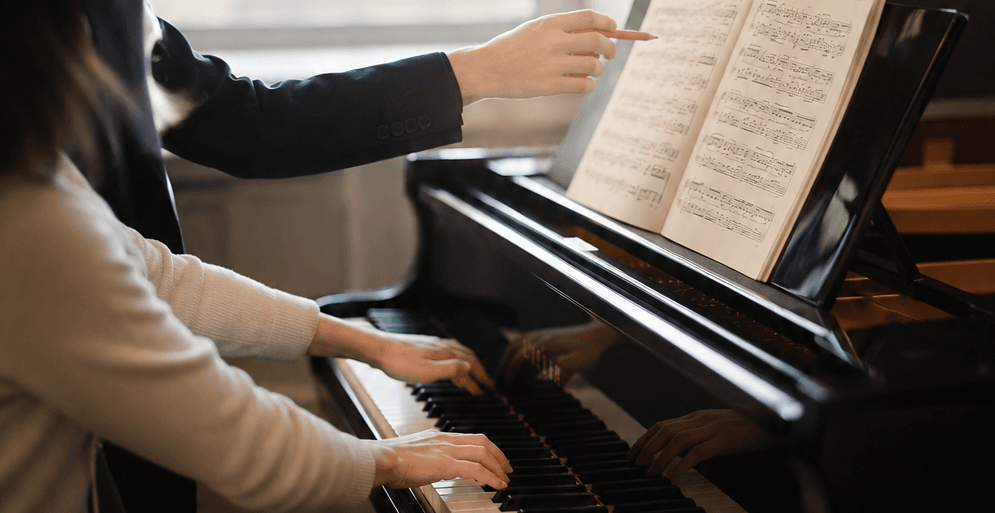
Beginner to advanced. Online, worldwide.
Enea
Concert pianist from Vienna
30 minutes · Ikebukuro & Shinjuku studios from October 2026
The keyboard master’s
The Tasteninstrumente master’s offers piano, organ, harpsichord and fortepiano as principal-study options. For a pianist, sharing a degree title with those instruments does not mean studying all four as equal specialisms. Your principal instrument remains central, with supporting subjects chosen within the programme’s structure.
The current study plan totals 120 credits. Principal study and the final examination account for 88; practical supporting subjects, theoretical subjects and projects account for the remaining 32. The visual below shows that balance. Credits describe the programme’s overall study workload, including independent work, rather than a count of weekly lesson hours.
The published 2025 study plan: principal study remains central, with space for other musical work.
- Principal study and final examination: 88 credits
- 73 credits of principal study plus the 15-credit final examination.
- Practical supporting subjects: 12 credits
- Options include chamber music, piano duo, song, historical keyboards, improvisation and new music.
- Theoretical supporting subjects: 8 credits
- Seminars chosen across at least two areas, such as analysis, performance practice or music history.
- Projects: 12 credits
- Independent project work forms a separate part of the study plan.
How the practical options are combined
The 12 practical credits must span at least three different submodules. The principal subject cannot be duplicated in this part of the plan. Choose options that develop a musical interest you can identify, such as working with singers or exploring historical keyboards.
The practical options make useful questions for a prospective student. If you are interested in song, what have you already learnt about text, breathing and the relationship between voice and piano? If historical instruments attract you, which questions about articulation, register or pedal would you like to investigate? A master’s application becomes more purposeful when the interest has a musical example behind it.
Consider a Beethoven movement you already perform. On a modern piano, a bass note can continue to colour several changes above it. Exploring an instrument with a different decay can prompt you to reconsider where that bass belongs in the phrase and how much pedal you need. The point of further study is to hear more possibilities and make better-founded decisions about the instrument in front of you.
Admission normally requires a relevant bachelor’s or equivalent, usually a four-year course with 240 credits. Hannover’s 2026 regulations also provide for assessing the necessary competencies when the previous degree has fewer credits; additional modules may be imposed. A three-year music degree therefore calls for an individual eligibility assessment. Send a transcript and an accurate description of your principal study, rather than trying to convert the qualification by its title alone.
Soloklasse and the Konzertexamen
Soloklasse is the advanced route for applicants whose previous artistic study and performance already support concentrated concert work. Hannover’s current regulations require an appropriate master’s, diploma or comparable artistic qualification, an excellent previous result, and success in the artistic assessment. The specified German grade range is 1.0–1.5, with other grading systems considered by equivalence. The regulations also limit applications in the same principal subject to two.
For pianists, successful completion leads to the university qualification Konzertsolistin or Konzertsolist through the Konzertexamen. The normal duration is four semesters. The course’s concentration on principal study is reflected in its final demands: the instrumental route includes two recitals and a concerto performance, with chamber music included in the first recital.
That scale of work changes what “ready” means. One successful audition programme is a snapshot. Sustaining several major performances requires the ability to return to repertoire, deepen it and keep it available while learning other music. Chamber music brings its own preparation: understanding the whole score, listening during rehearsal and adjusting an interpretation with colleagues.
A useful preparation exercise is to look at your recent programmes across a season. Which works have you performed more than once? Which have developed after the first performance? Can you bring an older piece back without rebuilding it from the beginning? This reveals something that a list of difficult titles cannot show: how securely the repertoire belongs to you.
For an advanced pianist, I would also listen to the transitions within a programme. The concentration needed for a quiet, exposed opening after a large Romantic work is different from starting that quiet piece fresh in a practice room. Programme preparation includes that change of listening, touch and character. These are substantial musical reasons to seek further study, and useful topics to discuss with a prospective teacher.
Audition repertoire and recordings
As of 21 September 2026, the linked Muvac calls still describe the October 2026 intake and are closed. The following is a reference to those published calls, useful for understanding the preparation involved. Check the next intake’s call before fixing a programme or submitting recordings.
For piano, both the bachelor’s and master’s calls ask for about 15 minutes of video repertoire including a Viennese Classical work or movement, from Haydn to Schubert, and music from other periods. Their live first round calls for a complete Viennese Classical work and an étude or comparably virtuoso work. A successful first round leads to a second round with Baroque repertoire and freely chosen music from the Romantic period onwards. The bachelor’s call also lists sight-reading.
The distinction between a movement in the video selection and a complete work in the live first round affects the preparation considerably. If you submit one sonata movement, assess the remaining movements early. A slow movement may expose weaknesses in voicing or continuity that the faster movement conceals. An apparently comfortable finale can become unreliable after the concentration spent on the rest of the sonata.
The 2026 Soloklasse call asks instrumental applicants for a 20–30-minute video across at least two stylistic areas. For the live piano assessment, it specifies roughly 60 minutes of prepared repertoire, with at least three works from three stylistic areas and no more than one concerto. The commission selects a shorter programme during the assessment; the candidate may choose the first piece. Preparing an hour of music therefore means keeping the whole selection available, including passages outside your preferred opening.
Across these calls, recordings are live and continuous within works, with cuts between works permitted. Their upload limits differ, so use the relevant instrument and course entry. The technical setup should let a listener follow the sound and the playing clearly. Our guide to making a piano audition recording at home covers that separate task.
In preparation, listen for differences of style as well as technical reliability. Does your Classical movement have a clear pulse and a varied sense of punctuation? Does the Baroque work retain its voices when the texture thickens? Does the Romantic selection have a direction that extends beyond individual expressive gestures? Choosing contrasting pieces is only the beginning; the contrast needs to be audible.
Choosing a teacher and musical focus
A prospective teacher’s work is most useful when you relate it to something you are trying to develop. Listen to performances, read the current faculty information and look at the musical activities around the class. An interest in someone’s playing is a good reason to investigate further; a productive working relationship also depends on how you listen, experiment and respond during a lesson.
Take one unresolved question from a piece you know. It might be the pace of a sonata’s second theme, the balance between a singing line and moving inner parts, or the character of an accompaniment figure. Explain what you hear and play the passage. A working discussion can reveal much more than a general request to improve interpretation.
I value a student’s ability to try an unfamiliar suggestion without abandoning their own listening. If we change a phrase’s direction, I want them to notice what happened: perhaps a cadence now arrives too early, or an inner voice has become audible for the first time. That exchange is part of advanced study. A teacher contributes a perspective; the pianist learns to evaluate it in sound.
Hannover’s course pages identify contacts for programme and admission questions, and its portal allows applicants to express a teacher preference. The formal application still goes through the published admission process. For the first approach to an individual professor, see emailing a piano professor in Germany or Austria, including a German example and its English translation.
German and academic documents
The Tasteninstrumente master’s is explicitly listed at German B2 for applicants who need to provide language evidence. The university accepts specified certificates and sets a submission deadline; its current regulations place B1/B2 proof by the beginning of the second semester, with a conditional extension provision. A pianist planning an examination should check the accepted certificate and the terms of any admission offer together.
Soloklasse is listed as an exception to the general German-certificate requirement. For the Klavier bachelor’s, the current language overview and its bachelor’s regulation table do not explicitly name the course. Ask the Immatrikulationsamt to confirm the certificate level and submission deadline for that exact programme before booking a language examination.
Daily musical work is another reason to prepare German. You may need to describe where a phrase loses direction, ask to repeat a demonstration, or agree a rehearsal time. I grew up studying piano in German in Vienna, and I find that musical situations give language practice a useful focus. A conversation about a passage you are playing supplies a reason to understand and answer, beyond memorising isolated vocabulary.
For academic eligibility, gather the actual qualification and transcript. The linked portal calls request school or degree documentation as appropriate, and official translations into German or English where required. A transcript can show principal-study content and completed credits that a short English degree title leaves unclear. Applicants finishing a degree should read the rules for provisional documentation and later completion, rather than assuming that the final certificate must already exist at the first enquiry.
Planning the next application
The university’s published regular application period for music courses is 15 February to 15 March, for study beginning in the following winter semester. The reviewed page still gives live-audition dates for 2026, so it does not establish the live dates for the next intake. Applications are made through Muvac. Begin with the official course page and follow its current portal link when the new call is available.
The most useful work before then is musical and academic: establish the correct course, clarify any qualification question and assess the repertoire as a whole. A pianist preparing a master’s should know which abilities they want to deepen. A Soloklasse applicant should be able to discuss a body of performance work. A bachelor’s applicant benefits from exploring the supporting subjects that will become part of everyday study.
Vienna Piano School offers individual piano preparation online for adults and students of junior-high-school age and above, with German support for musicians and help with professor communication where relevant. In-person lessons at piano studios in Ikebukuro and Shinjuku, Tokyo, begin in October 2026. For a free 30-minute trial lesson, bring your intended course, previous study and current repertoire. We can listen to the playing and identify the musical work that deserves attention before the next application.