
Which Piano Edition Should You Bring to a Lesson? Urtext and Edited Scores

Two scores of the same piano piece can give different fingerings, different slurs and even different notes. For an adult returning to lessons, that can be disconcerting: you have practised what is on the page, then your teacher opens a book that says something else.
For most classical repertoire, I would look for a clearly printed edition that identifies its editor, explains its sources and distinguishes editorial advice from the composer's text. An Urtext edition is often a good starting point. A useful teaching edition can also earn its place on the music desk, especially when you understand who supplied its markings.
Bring the score you currently use to your first lesson. Before buying a replacement, compare what the score contains with the difficulty you are trying to resolve. Sometimes the purchase matters; sometimes one explanation in the margin resolves the difficulty.
Urtext, teaching edition and arrangement
An Urtext edition aims to establish a reliable musical text from historical sources. The editor compares evidence such as manuscripts and early publications, makes decisions where they disagree and explains significant choices in a commentary. It is scholarly editing, rather than simply a modern photograph of a composer's handwriting.
A teaching or performing edition may add a pianist's fingering, phrasing, dynamics or other guidance. These additions can show an experienced musician's way through the piece. Their value depends partly on how clearly the edition identifies them.
An arrangement changes the musical setting itself, perhaps simplifying the accompaniment, changing the key or shortening a passage. That can be exactly the right score for a particular learner. It is also a different purchase from the original solo piano work.
Three labels on a piano score
- Urtext
A source-based musical text.
Look for: Sources, commentary and any credited fingering.
- Teaching edition
A pianist’s guidance on playing the piece.
Look for: Who added the fingering, phrasing and other instructions.
- Arrangement
A changed version for a particular purpose.
Look for: Arranger, key, musical texture and whether the work is complete.
Check the full title and catalogue number before comparing publishers. Bach's C major Prelude BWV846, a simplified version of it, and Gounod's Ave Maria based on the prelude are related music, but they are not interchangeable scores for the same lesson.
Bach's opening in his own handwriting
Here is the beginning of the C major Prelude from Book I of The Well-Tempered Clavier, in Bach's autograph manuscript held by the Staatsbibliothek zu Berlin. An autograph is a manuscript in the composer's own hand. This one is catalogued as Mus.ms. Bach P 415.
Scroll sideways to read the score.
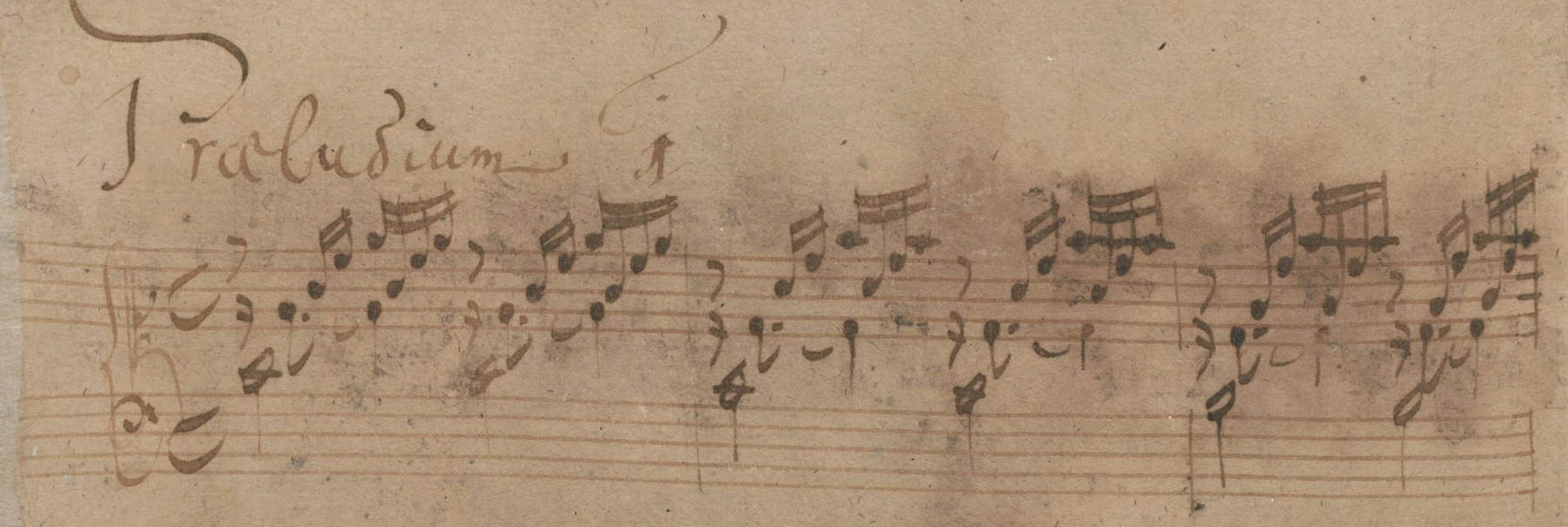
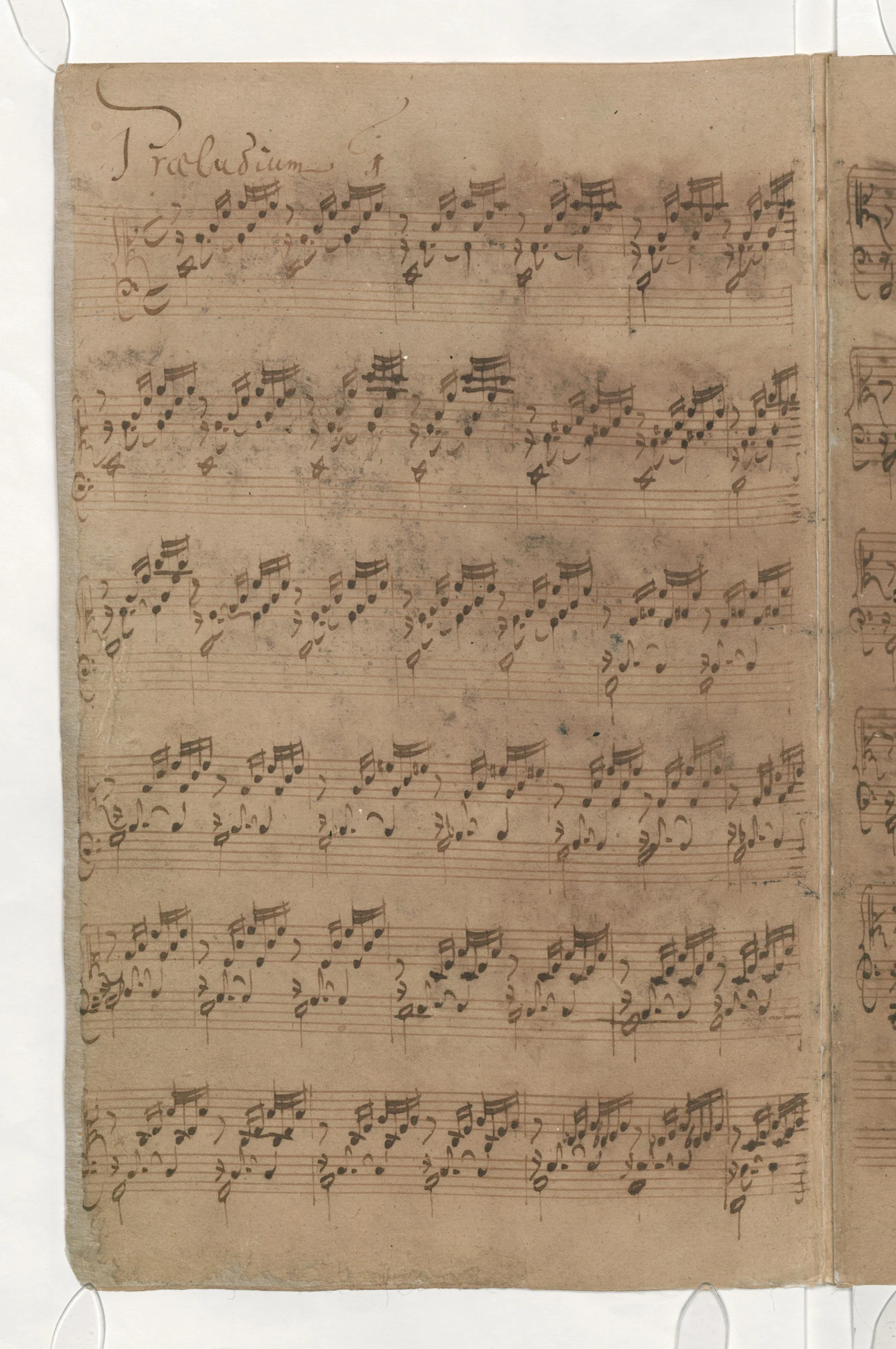
Look above and below the opening notes. There is no printed-style instruction to play Allegro, no metronome number, no opening p dynamic and no sequence of finger numbers. The musical pattern is present; many of the instructions a modern pianist might expect are absent.
That leaves interpretative work for the player. You still have to choose a pulse, hear the harmonic changes and decide how the notes speak on your instrument. An uncluttered page asks you to listen closely to the musical relationships.
The handwriting also shows why a facsimile and a practical edition serve different purposes. A facsimile preserves the appearance of a historical document. In daily practice, clear engraving gives your eye a much quicker route through the same music. Looking at the manuscript and then returning to a readable score lets you try the musical idea while keeping its source in view.
The same music in a teaching edition
Now compare the opening in a nineteenth-century G. Schirmer edition associated with Carl Czerny's editing. This scan is dated 1893 in the Internet Archive catalogue.
Scroll sideways to read the score.
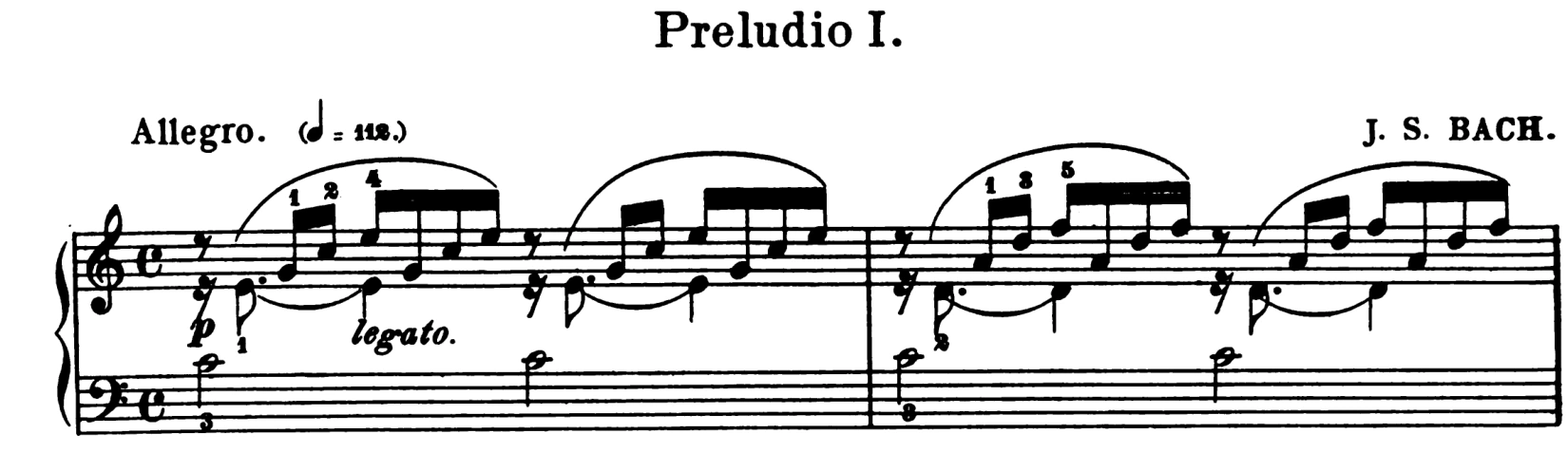
Here the page supplies Allegro, a metronome indication, p, legato, long curved slurs and finger numbers. Those instructions shape how a pianist approaches the opening before a single note sounds. They are part of this edition's guidance; their presence on a Bach page does not make them instructions written by Bach in the autograph above.
Try a small experiment at the piano. Play the first two bars at a pace where you can hear the held lower notes beneath the moving upper notes. Then try the opening with a lighter, more flowing character. Keep the written pitches and durations while changing the character. Which version lets you hear the change of harmony? Where does the pattern begin to sound hurried or heavy?
This is the useful conversation behind an editorial tempo marking. A metronome number can prompt an experiment, but it should not become a test you must pass before the piece counts as learned.
The fingering and slurs deserve separate attention. A finger number proposes a movement. A slur proposes a grouping or articulation. Accepting a fingering does not oblige you to adopt every other suggestion printed around it. For the prelude's held notes, harmony and ending, see the complete BWV846 practice guide.
Can an Urtext have fingerings?
Yes. Urtext editions can include a separately credited pianist's fingerings. The word on the cover describes an approach to the musical text; it does not mean every number on the page came from the composer.
For a current example, Henle's edition of Bach's Well-Tempered Clavier, Book I, HN14, credits András Schiff for the fingering. The publisher also offers a version without fingerings. Its product page and sample let you inspect the presentation before buying.
When a printed fingering feels awkward, I first ask what it is trying to achieve. Does it preserve a voice, prepare a change of position or suggest an articulation? Playing only the difficult note often hides the reason. Try it with the notes before and after, at a realistic practice tempo.
Then consider an alternative that serves the same musical purpose. A useful choice should survive the phrase, including its next movement and release. Write the selected fingering clearly and remove abandoned alternatives once you have decided. The separate guide to choosing piano fingerings develops that process in detail.
When the notes disagree
Different fingerings usually present different ways of playing the same text. A changed pitch, missing bar or altered rhythm requires another kind of investigation.
Bach's C major Prelude provides a striking example. Its autograph has 35 bars. Some later editions include an additional bar between what would otherwise be bars 22 and 23, producing a 36-bar version. This is commonly called the Schwencke measure. The name does not establish that Schwencke personally invented it: the surviving history includes lost intermediate copies.
If your score has that insertion and your teacher's does not, bar numbers after it will disagree. Counting more carefully will not solve the mismatch. Compare the bass and surrounding musical pattern, identify the version, then decide which text you are studying. Henle's account of the extra bar is linked in the sources below.
For a discrepancy in another piece, start with the edition's footnotes or commentary. Look for the bar number and the affected voice. A note may explain that an autograph and a first edition disagree, or that an editor has supplied something missing from a source. Composer-authorized revisions can also mean that the earliest surviving document is not the final version.
When bringing this to a lesson, point to the exact place: “My right hand has this note in bar 12, but the other edition has that one.” Compare the evidence and play the surrounding phrase. That gives the discussion a musical setting, rather than turning it into a contest between cover colours.
Slurs, dynamics and pedal
A slur printed with a broken line, or a dynamic in brackets, may identify an editorial addition. Read that edition's explanation of its typography. Publishers use different conventions, and a mark's appearance alone is not enough to identify its origin.
There is also a difference between establishing what a symbol says and deciding how to play it. The placement of a slur matters, but its execution depends on the music around it. Bärenreiter's explanation of Urtext discusses the role of historical performance practice in understanding familiar symbols. A reliable text gives us evidence to work with; musical judgment remains part of playing.
Pedal markings are especially worth discussing at the instrument. Ask who supplied the marking and listen to what happens when you follow it. On your piano, does the bass remain clear? Does the new harmony arrive cleanly? Can you hear the melody through the resonance?
I would rather explore one pedal change with those questions than write a complete pattern of foot movements before hearing the piano. The score and the sound should inform each other. Mark the musical intention as well as the place: for example, clearing an old bass while preserving the singing line.
Readability at the piano

A score is something you will look at from the piano bench, often while your hands are moving. Judge a sample at approximately the size you will actually use. Small accidentals, crowded inner voices or faint ledger lines can make a sound edition tiring to read.
Look at a busy passage as well as the spacious first page. Can you distinguish the voices? Is there room for one useful pencil note? Where does the page turn fall? A beautiful opening page tells you little about a cramped development section later in the book.
For digital reading, try a full page on the screen you intend to use. Enlarging the music may improve legibility while changing how often you turn a page. For print, check the physical format: a small study score may be excellent for following a recording but inconvenient on a piano desk.
These practical details matter when choosing between otherwise suitable editions. Tiny notation can make an otherwise respected edition a poor choice for daily practice.
Free downloads and older scores
A free score can be a useful working copy. The important questions are which edition it reproduces, whether the pages are complete and clear, and whether its use is permitted where you are. A composer's name and a download button tell you little about the editor or the condition of the scan.
Keep the title and credit pages with a downloaded score. They may identify the editor, arranger, publisher and edition that explain a puzzling marking later. An isolated first page is much harder to trace.
Older editions also preserve valuable evidence of how earlier pianists taught and interpreted the repertoire. I would read them with curiosity, while checking their additions against the musical sources. The two Bach images above show how rewarding that comparison can be.
If you are buying a new copy, ask your teacher for the exact work, editor and publisher or catalogue number. A search for “Bach piano book” can return collections with very different contents. A precise request saves an unnecessary purchase.