
A Sight-Reading Routine That Fits Into Ten Minutes a Day
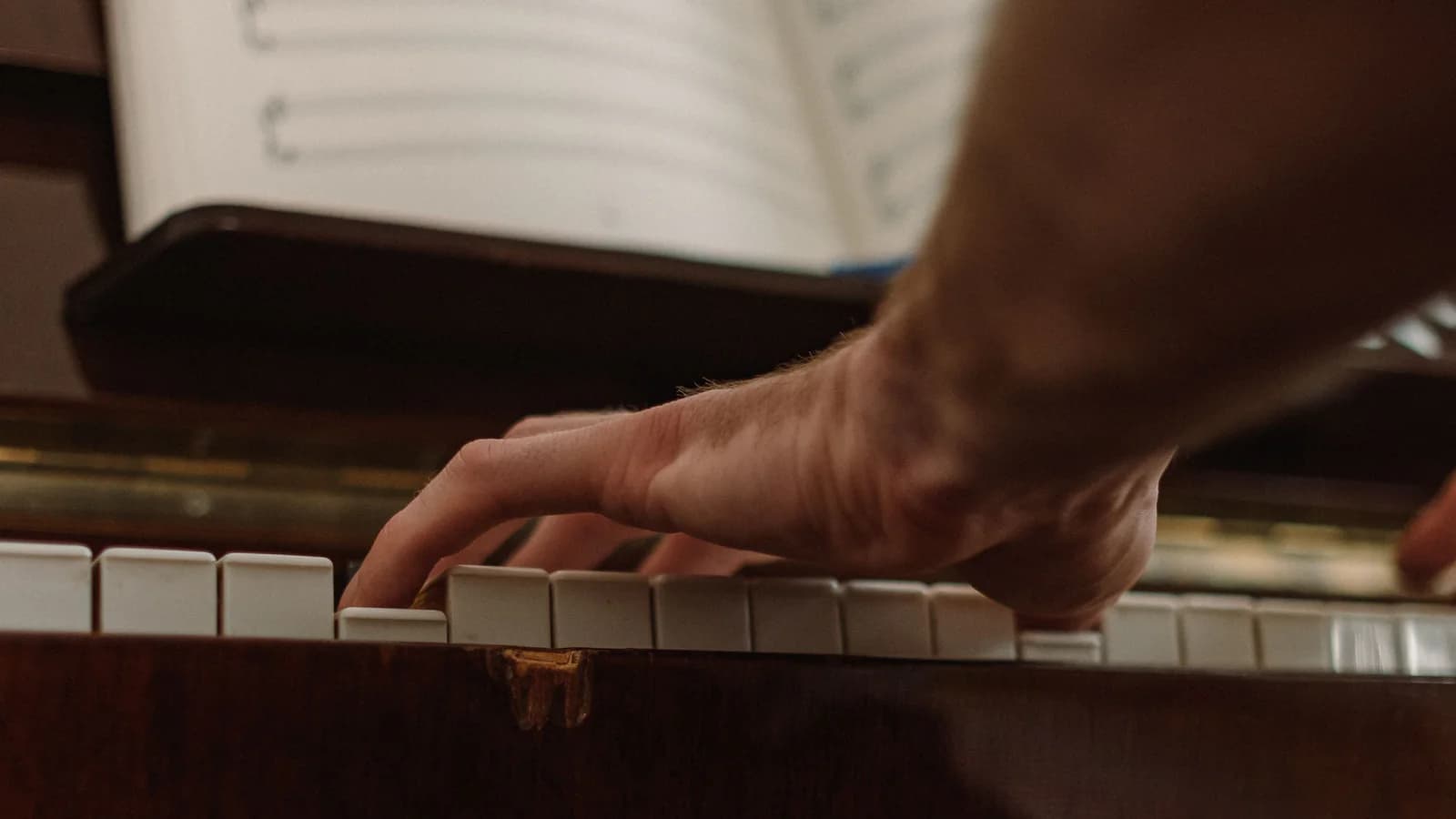
For a ten-minute piano sight-reading routine, choose a short piece below your comfortable performance level, scan it before playing, establish a pulse, and make a first attempt without restarting to repair mistakes. Use the last part of the session to understand one obstacle. Tomorrow, begin with unfamiliar music again.
The ten minutes give this work a place in your day. They do not guarantee a particular rate of progress. The useful question is whether you can take information from a new score and keep a recognisable musical line moving.
Choose music that leaves room to read
A piece you can perform after several weeks of practice may be far too demanding for a first reading. Sight-reading asks you to notice pitches, rhythms, hand positions, and musical directions while time continues. Choose material whose physical demands already feel manageable.
That difference also appears in formal assessment. Trinity College London's sight-reading guidance describes unseen extracts approximately two grades below the examination level. At home, the printed grade is only a starting point. An unfamiliar key or accompaniment can make a supposedly easy page difficult for a particular reader.
Look for a short melody, familiar note values, a limited range, and an uncomplicated left hand. Before starting, check whether you recognise the opening notes and understand the rhythm of the busiest bar. If either needs extended decoding, choose something simpler.
For an early beginner, a single line played by one hand is a valid reading task. Add a second staff when there is enough attention available for it. You do not need to make every part of the activity harder at once.
Give the ten minutes a clear shape
Keep a small supply of suitable unread music beside the piano so that searching does not consume the session. Use these time boundaries as a practical starting point:
- 0–1 minute: choose and settle. Select an unfamiliar short item. Place the score where both staves are clear and find the opening hand positions.
- 1–3 minutes: scan. Notice the key and metre, repeated shapes, rests, changes of position, and the ending. Identify the event most likely to interrupt you.
- 3–4 minutes: establish the pulse. Count a bar aloud and tap the most complicated rhythm. Choose a pace at which that rhythm makes sense.
- 4–8 minutes: read fresh music. Play the chosen item forward once. Note where the pulse or reading broke. If time remains, take another short unread item, scan it, and make another first attempt.
- 8–10 minutes: review and leave a clue. Clarify one troublesome event, replay it in its short context, and write one specific aim for tomorrow.
These are time budgets, not required playing durations or a quota of pieces. A two-bar example will take only a few seconds to play; use the remaining reading time for another suitable excerpt. If scanning takes longer, shorten the music rather than rushing the preparation.

One-to-one classical piano
Beginner to advanced. Online, worldwide.
Enea
Concert pianist from Vienna
30 minutes · Tokyo studio from October 2026
Scan for the change, not every note name
Before playing, answer a few questions about the whole extract: what is the starting position, how is the beat grouped, which shape returns, and where does something change? Trinity's teacher guidance encourages taking time to look at the music and prepare mentally before sight-reading. The purpose of the scan below is to turn that preparation into a concrete plan.
The following original two-bar example is in C major and 4/4. Try locating the repeated shape and the changed final beat before checking the description beneath the score. Play without pedal so that the right-hand rest stays clear.
Two bars: what changes?
C major · 4/4 · No pedal. Scan the two staves before playing.
Spot the difference: the first three right-hand notes repeat. Beat four changes from G to a rest. The bass changes at the barline.
Read the notes in words
Middle C is C4. Each right-hand note or rest lasts one quarter-note beat.
- Bar 1: right hand C4, D4, E4, G4. Left hand C3, a whole note held for all four beats.
- Bar 2: right hand C4, D4, E4, then a quarter rest. Left hand G2, a whole note held for all four beats.
Release the right-hand E as beat four begins; keep the bass sounding until that beat ends.
In bar 1, the right hand starts on middle C, steps up to D and E, then skips to G. Each note lasts one beat. In bar 2, C, D, and E return, but beat four is a rest. The left hand holds C below middle C for the whole first bar, then moves down to G for the whole second bar.
The useful discovery is both similarity and difference: the beginning repeats, the ending changes, and the bass moves at the barline. Reading “step, step, skip” helps organise the first melody, but it does not replace checking the starting pitch or the rest in the second bar.
If a score contains an accidental, a clef change, or an unexpected leap, include that event in the scan. A familiar-looking pattern still needs checking against what is actually written.
Set a pulse that survives the smallest notes
Choose the starting pace from the most demanding rhythm, not from an easy opening. If the piece begins with long notes but later introduces pairs of quavers, or eighth notes, quietly count those pairs before playing. The beat must leave enough space for both notes.
In the example, count four even beats per bar. Keep counting during the right-hand rest in bar 2 while the left-hand G continues to sound. A rest occupies time; it does not remove a beat from the bar. End the left-hand note when beat four finishes.
A metronome can provide an external reference once you understand how the written rhythm fits the beat. First count a bar with the click, then begin. If the click repeatedly runs away from you, reduce the pace or simplify the material. No single metronome marking suits every score or reader.
Avoid making the tempo so slow that each note becomes an isolated search with no audible grouping. If only that pace is possible, try fewer notes, one hand, or a more familiar key. The aim is enough room to read while still hearing how the beats belong together.
Read ahead to the next useful event
Looking ahead means preparing information before the hands need it. It does not require forcing your eyes a whole bar beyond the sound at every moment.
In an eye-tracking study of experienced university pianists, Lim and colleagues found that the relationship between eye-hand span and accuracy varied with the difficulty of the reading task. The study used controlled conditions and experienced players; it does not establish a beginner's ideal gaze distance or validate this ten-minute routine.
A practical application is to choose a nearby, useful target. In the example, once the first bar's final G is sounding, check the next right-hand C and the new bass G. During the second bar, notice the approaching rest before the hand reaches beat four. You are preparing an event, not trying to win a distance contest.
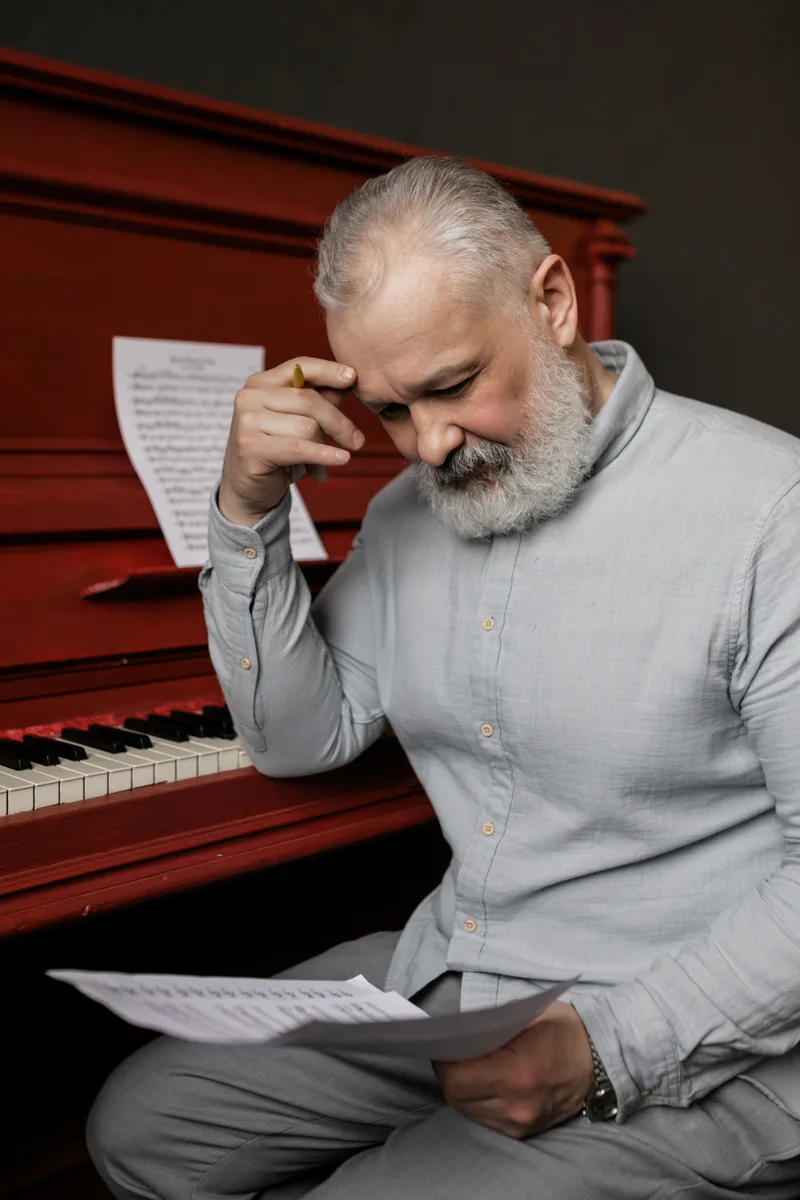
A moment to examine the score before playing. Photo: Alena Darmel / Pexels. Stock photograph.
An occasional glance at the keyboard can help locate a move. Choose where to look back into the score before glancing down. If you lose your place repeatedly, shorten the extract or reduce its positional changes. Keeping your eyes fixed on the page is not useful if you no longer know which note is sounding.
Keep the first pass moving, then review one thing
For the first attempt, commit to continuing past a wrong note instead of returning to the beginning. Listen for the pulse and follow the score towards the ending. This is a specific first-reading exercise, not a rule for all piano practice.
If you miss a note but know where the next beat falls, continue there. If you become completely lost, stop, locate your place, and record where that happened. There is no benefit in producing random notes simply to avoid stopping. The next item may need fewer simultaneous demands.
Afterwards, choose one observation: perhaps the left hand moved late at a barline, a rest disappeared, or a skipped interval was read as a step. Avoid the unhelpful verdict that the entire reading was bad.
Now correct that event. For the example's final rest, count and play the second bar alone, hearing the bass continue while the right hand releases. Then reconnect the preceding bar. This is useful practice of known material, but it is no longer a fresh sight-reading attempt. Keep that distinction clear when judging the result.
Keep tomorrow's music unfamiliar
Return to a corrected passage when it helps, but do not use an increasingly memorised page as the only measure of your reading. Keep worked items separate from unread ones. A short first pass through new material reveals something that a polished repeat cannot.
Leave a note such as “count through rests” or “check the bass before the barline.” At the next session, use that cue on a different passage of comparable difficulty. Over several sessions, notice whether the same interruption keeps returning. That observation can guide the next choice of music or a question for your teacher.
If sight-reading shares a session with repertoire, give it a defined place in your 30-minute piano practice plan. Protect some time for fresh reading and some for the slower work of shaping a piece.
If choosing suitable material is the obstacle, bring an example of what you currently play to a free 30-minute online trial lesson. We can help choose a manageable starting point and a useful focus for the next reading session.
Sources and further reading
- Trinity College London. Supporting tests for face-to-face exams. Current assessment guidance; accessed 8 September 2026.
- Trinity College London. The teacher's guide to: Musicianship & technical exercises. Practical teacher guidance; accessed 8 September 2026.
- Lim, Y., and colleagues. Eye-Hand Span is not an Indicator of but a Strategy for Proficient Sight-Reading in Piano Performance. Scientific Reports 9, 17906 (2019). Study of experienced pianists under controlled conditions.