
Starting Piano as a Teenager: Music, Foundations and Your First Lessons
Starting piano as a teenager can feel strangely public. A friend plays something impressive at school, someone posts a polished performance, and you are still finding C. You may have a very clear idea of the music you love, yet your hands have almost none of the skills needed to play it. That gap is a starting point for lessons, not a verdict on your musical potential.
Yes, you can begin piano in junior high or high school. The useful question is what you want to learn and what kind of teaching will help you begin. A teenager deserves music with character, explanations that respect their curiosity, and foundations that will support more than one memorised song.
- Bring a piece or recording you genuinely like, and identify the part that draws you in.
- Choose a manageable first piece alongside a longer-term musical ambition.
- Learn pulse, keyboard geography, reading and listening together.
- Judge progress against your own earlier playing, with practice that fits your school week.
Starting without the race
Your friend who started at six has had years of contact with the instrument. Their fluency is real, but it tells you little about what your own first term should contain. Comparing your first attempts with their current repertoire mixes two different stages of learning. It can also make a short, attractive beginner piece seem beneath you, even when playing it well would teach you something valuable.
In a first lesson, I am interested in how you listen. Can you hear that a phrase rises and settles? Which sound would you like to make? Do you notice when an accompaniment overwhelms the tune? These questions can produce thoughtful answers before a student reads a single line of music. The next job is to give those musical ideas a physical and written form at the keyboard.
Previous experience can help in particular ways. A singer may recognise phrase shapes, a drummer may be comfortable keeping a pulse, and a guitarist may know how chords support a song. Piano still asks for its own coordination and touch. Tell the teacher about what you already do with music, including listening, making beats or singing privately. There is more to a musical starting point than a list of exams.
Music worth beginning with
An ambitious piece can be a good reason to start. It is usually a poor choice as the only thing you practise. If every bar introduces an unfamiliar rhythm, a wide jump and several notes in each hand, most of your attention goes into surviving the next event. You get few opportunities to hear a phrase or control the sound.
Choose a first piece that has one or two main demands. That might be a melody moving mainly between neighbouring notes, accompanied by a few longer bass notes. It could be a short duet in which the teacher supplies the fuller harmony. Simple music can sound reflective, energetic, funny or solemn. Beginner material does not have to imitate the musical tastes of a much younger child.
Bring the exact version of a favourite piece to the lesson. A solo piano arrangement, a melody-only edition and a video transcription of the same song can make completely different demands. The label “easy” does not tell the whole story. Your teacher should look at the rhythm, hand positions, texture and length, then explain which version suits the next stage of your playing.
Keep one longer-term piece in view while learning other music. For example, if you love the sound of a flowing accompaniment, an early goal might be to play three-note broken chords evenly while listening for their direction. The full piece can wait while you acquire a skill that belongs to its musical world. Our guide to choosing piano repertoire at the right level explores this choice in more detail.
I love a singing melody
- Bring to the lesson
- Name the phrase you keep returning to, and hum its shape.
- A first musical task
- Play a short melody with a steady pulse and a deliberate ending.
- Where it can lead next
- Add a quiet, held bass note without losing the tune.
I want to play a familiar song
- Bring to the lesson
- Choose the exact recording or arrangement you mean.
- A first musical task
- Find a manageable version and learn one complete musical phrase.
- Where it can lead next
- Read its rhythm and recognise the repeated patterns, beyond copying keys.
I want to play with a friend
- Bring to the lesson
- Decide who will play or sing each part.
- A first musical task
- Keep a simple part going while listening to another person.
- Where it can lead next
- Practise a shared start and keep the same pulse through the ending.
Make your own first-goals note
Music I want to play: ____. What I like about it: ____. Something I can already do with music: ____. My available instrument and practice times: ____. After the trial lesson, add the first passage to work on and one sound to listen for.

One-to-one classical piano
Beginner to advanced. Online, worldwide.
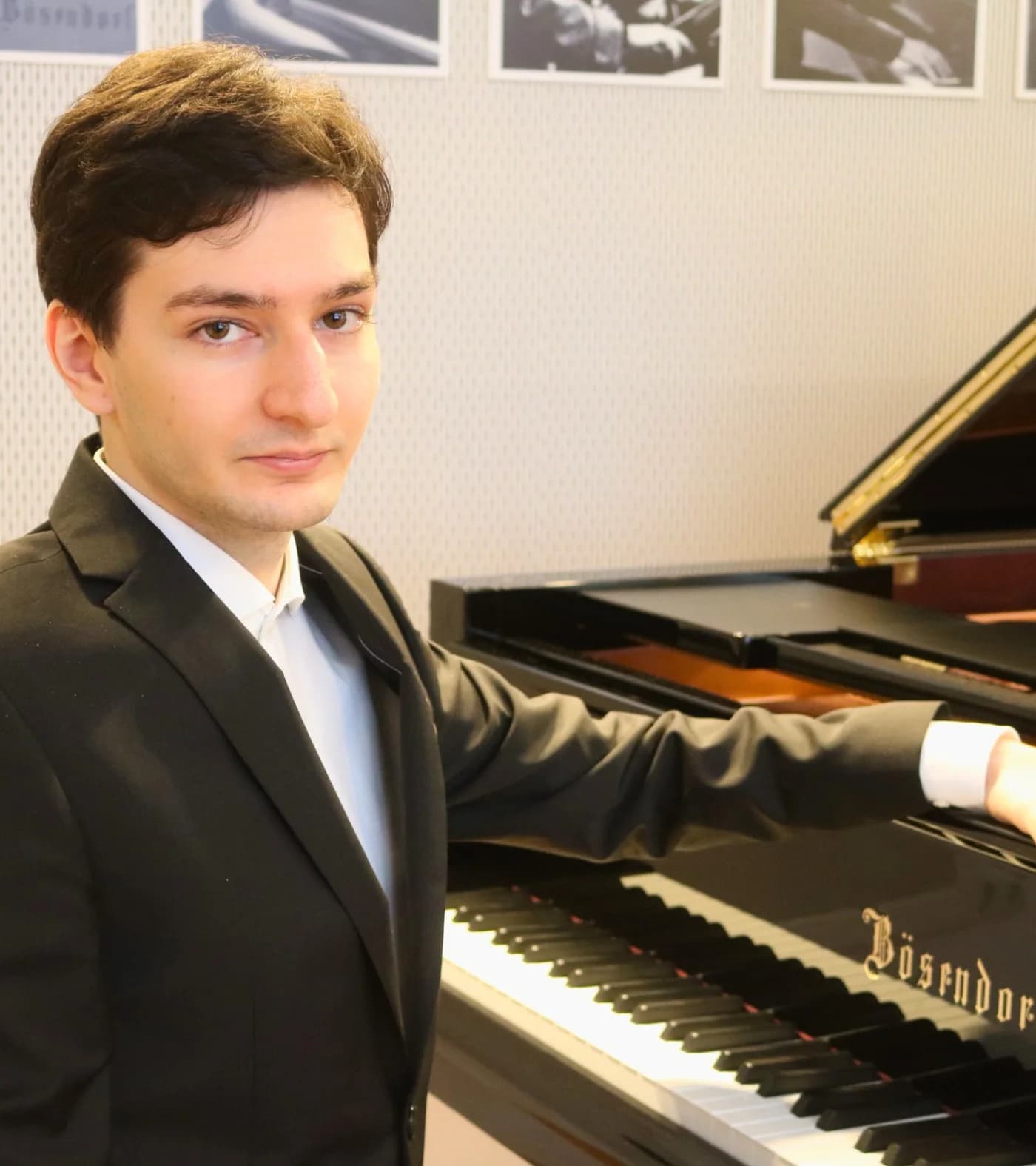
Enea
Concert pianist from Vienna
30 minutes · Ikebukuro & Shinjuku studios from October 2026
The first musical foundations
Start with a pulse you can keep. Tap along to a short phrase, sing or speak its rhythm, then play it on one key. This separates the timing from the search for pitches. When the rhythm is steady, add a small group of notes. A beginner who stops before every difficult note may learn the sequence of keys without learning how the music moves.
Keyboard geography should become familiar through patterns. Find the groups of two and three black keys, then locate the neighbouring white keys. Move between the same note in different registers and listen to the change in sound. This gives you a way to recover your place, rather than depending on a sticker for every key or counting from one end of the keyboard.
Reading grows alongside that physical map. Learn a few secure reference notes on the staff, then notice whether a melody repeats, steps or skips. Rhythm and rests belong to reading from the beginning. Naming every pitch correctly while ignoring its duration is only part of the task. Try reading a short phrase before playing it: where does it move, where does it pause, and does the ending look like the opening?
Touch is also musical from the first lesson. Play a small phrase at two contrasting volumes and listen to whether the quieter version still has a clear beginning. Experiment with the ending of a note as well as its attack. A teacher can help you find a comfortable movement and an appropriate sitting position while you concentrate on the sound. Speed comes later than a reliable relationship between movement, timing and listening.
Two hands, one musical idea
Putting the hands together often feels like the first serious obstacle. Each hand may work separately, then everything stops when they meet. The combined task includes new information: which events happen together, which hand continues while the other waits, and where your attention should go.
Take a small example. The right hand plays four equal beats, while the left hand holds one bass note for the whole bar. First tap the right-hand pulse while holding the left hand still. At the piano, start both hands together and listen to the bass continue beneath the melody. The left hand's job is to remain quiet and sustained, not to copy every right-hand movement.
Once that is secure, change the bass at the beginning of the next bar. You have added one event, with an exact place in the music. This is more useful than repeatedly attempting a whole page at a speed where the hands separate. The aim is to understand the relationship between the parts, then keep that relationship as the passage grows.
A few accurately coordinated bars are a meaningful achievement. Hear whether the melody remains prominent and whether the bass change interrupts the pulse. These are musical questions you can answer at an early stage. For a fuller explanation, see rebuilding coordination between the hands.
Practice around school
A useful practice plan begins with the week you actually have. School, travel, homework, sport and exams all compete for time. Identify a few reliable opportunities to use the instrument, then agree with your teacher what should happen in them. A plan that depends on being free every evening will collapse as soon as the school timetable changes.
On an ordinary day, choose one small musical task before playing through your piece. You might work on the join between two phrases, find a left-hand change without looking down, or keep four bars moving without a pause. Play, listen, make one adjustment and try again. End by putting the passage back into a larger stretch, so that the exercise remains connected to the music.
During an exam week, a shorter task can preserve contact with the piece. Sing the melody while following the score, play the troublesome transition slowly, or revisit a familiar short piece with attention to its sound. When you have a longer session, explore new material or play a complete performance. The content of practice matters as much as the number of minutes recorded.
Keep instructions specific enough to use alone. “Practise more” gives you no musical direction. “Keep the second phrase at the same pulse as the first, and listen to the held left-hand note” tells you what to attempt and how to judge it. At the end of a lesson, play the assigned passage once and explain what you will work on. That is a useful check of whether the teaching has reached you.
A lesson that respects your age
A good beginner lesson combines direct explanation with playing. You should hear a demonstration, try something yourself, receive a clear response, and understand why a particular task has been set. The teacher may choose material you would never have found alone, but your own musical interests should also have a place in the conversation.
Ask how repertoire is chosen and how the teacher adapts work during busy school periods. If you want to learn a favourite soundtrack as well as classical pieces, bring that interest into the first conversation. Listen for an explanation of what can be taught through each choice. A promise to teach any difficult piece immediately is less useful than a thoughtful account of the skills involved.
For a teenager, independence should grow inside the lesson. Try describing the problem yourself before a parent answers: “I can find the notes, but I lose the beat when my left hand changes.” This gives the teacher something precise to hear. Parents can help with the practical arrangements and access to an instrument while the musical exchange increasingly belongs to the student.
The instrument available between lessons matters too. Tell the teacher what you have, whether you can vary the sound by changing your touch, and when you can use it. If you are still arranging access to a piano or keyboard, discuss that before committing to a practice plan. The first decision is how you will have regular contact with the instrument; a detailed equipment shopping list can follow your actual needs.
Progress you can hear
Choose evidence that belongs to your own playing. Perhaps last month's melody stopped at every hand change, and now it continues. Perhaps you used to watch your hands throughout, and now you can follow part of the score. Perhaps a quiet phrase has acquired a shape, with a clear destination and a less abrupt ending.
A short recording can make these changes audible. Record a passage early in your work, then revisit it after you have addressed one particular issue. Listen for that issue rather than judging your whole ability from the recording. When the pulse improves but the left hand is still too loud, you have learned something about both your progress and the next task.
Exams and performances can become useful goals, but they should serve the kind of learning you want. A school performance may call for a short, reliable piece. Playing with a friend adds the pleasure and responsibility of sharing time with another musician. An exam introduces a defined set of requirements. Discuss the choice once you have some experience of lessons and practice, rather than treating a grade number as the only evidence that starting was worthwhile.
Your first conversation
Bring a recording or the name of a piece you like, a brief account of any previous music learning, and an honest picture of instrument access and school commitments. If you have already taught yourself something, play it. The teacher can hear what you have discovered and choose the next work from there.
I teach learners from junior-high-school age through adulthood. In beginner lessons, I want a student to leave with music they understand a little better and a task they can recognise when they sit down alone. Over time, the foundations should give you more choice: reading unfamiliar music, shaping a melody, accompanying someone, or studying a larger classical piece.
Vienna Piano School offers lessons in English online, with in-person lessons at piano studios in Ikebukuro and Shinjuku, Tokyo, from October 2026. You can request a free 30-minute trial lesson and tell me what has made you want to begin. That musical curiosity is something we can work with from the first meeting.