
London Conservatoire Piano Auditions: Repertoire, Interview and English
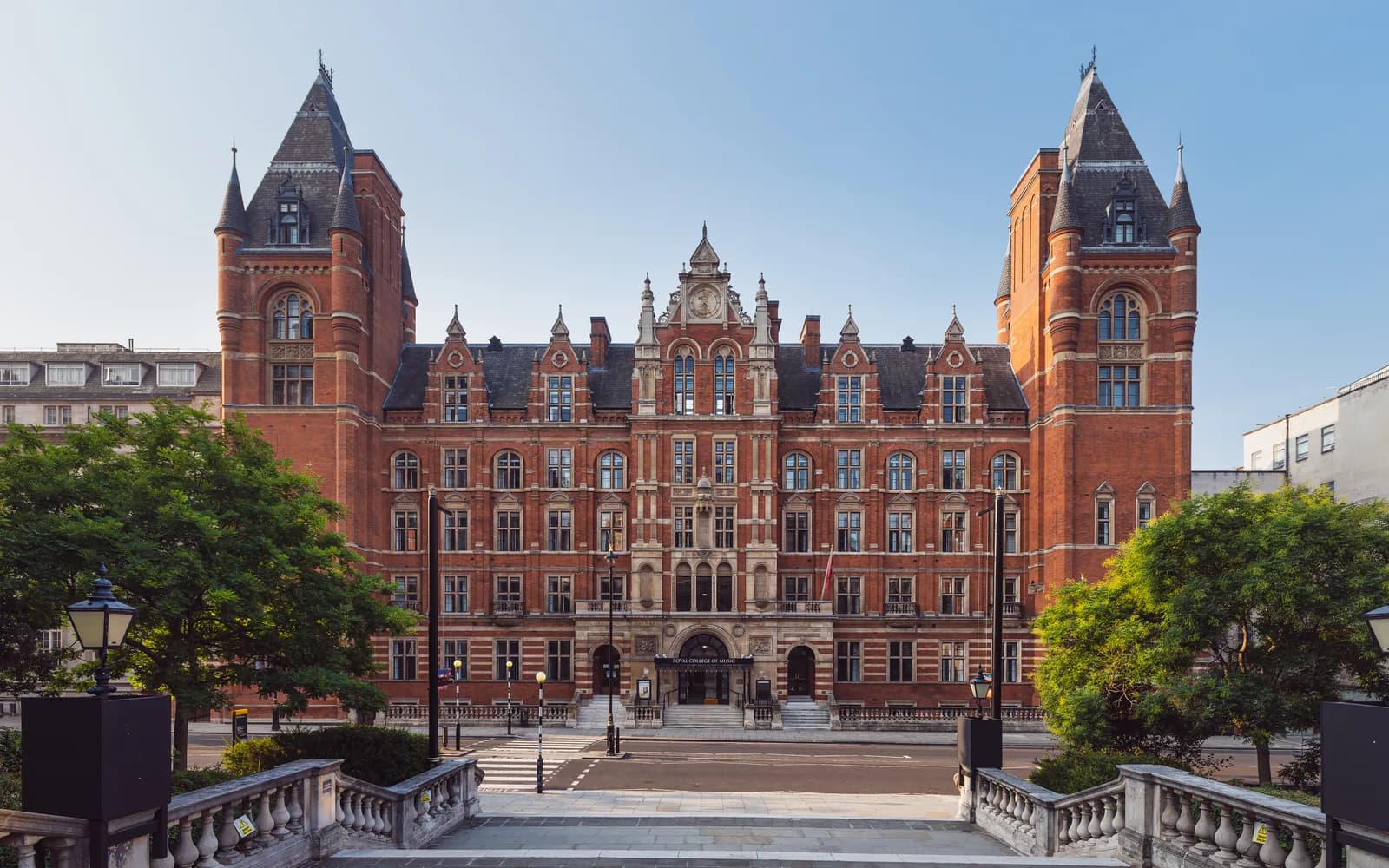
A London conservatoire piano application asks for more than a polished performance. The repertoire must fit the particular course; an interview may explore how you listen and think; and an international applicant may need formal evidence of English. These belong in the same preparation period, because the music you practise gives you something worth saying when the panel starts a conversation.
This guide uses the Royal College of Music (RCM), Royal Academy of Music and Guildhall School of Music & Drama as concrete examples, principally for undergraduate BMus entry. Their names, application systems and audition requirements are distinct. A master's application needs its own course specification.
- Choose the degree and audition route before fixing your programme.
- Check the school's application deadline and any separate recording deadline.
- Prepare contrasting musical characters, sight-reading and discussion alongside the pieces.
- Plan formal English evidence separately from practising musical conversation.
Choosing a London piano course
Start with the kind of musician you want to become during the degree. Perhaps your solo repertoire is substantial but you have rarely rehearsed with singers. Perhaps you play confidently in competitions yet want more sustained work on analysis, historical context or contemporary music. Those differences should shape the questions you ask about a course and its teaching.
I would listen to a candidate's current programme before recommending an ambitious new audition piece. A fast, impressive work can conceal a limited range of sound. A slower movement may reveal much more: whether the bass supports the phrase, whether a dissonance has weight, and whether the ending follows from everything before it. The application should grow from an honest picture of the playing.
Look beyond the professor's name to the work you would actually do each week. Read the curriculum, hear current students when possible, and ask about the relationship between principal study, ensemble playing and academic work. A useful question is what opportunities a pianist has to develop an interest they already pursue. “I have started accompanying songs and want to study text and breathing more seriously” gives that enquiry a direction.
Keep undergraduate and postgraduate preparation separate. For example, RCM's piano postgraduate requirement is a varied 50-minute memorised programme including an advanced étude, while Guildhall's MMus/MPerf piano requirement is a varied 60-minute memorised programme. These are substantially different projects from preparing three undergraduate pieces. The amount of music you can perform convincingly matters as much as its hardest passage.
Applications for 2027 entry
For the main London application cycle, 1 October 2026 is a date to act on now. RCM and the Royal Academy use UCAS Conservatoires; Guildhall takes music applications through its own system. Submitting one application does not apply to all three schools.
For RCM BMus applicants choosing London or video audition, the application deadline is 1 October. The Royal Academy requires both the UCAS application and its Acceptd profile by 18:00 UK time on 1 October for equal consideration in the main cycle. Guildhall's deadline is earlier that afternoon, at 16:30 UK time. Applicants outside Britain should convert the actual deadline time into their local time zone.
The video dates also differ. RCM's BMus video submission deadline is 26 October 2026; Guildhall's recorded music auditions are due 23 October 2026. For the Academy's main-cycle video route, follow the 1 October Acceptd deadline. These dates concern the routes described here; an overseas audition venue or another degree can have a different schedule. Use the current links at the end when making the application.
UCAS personal statements now use three questions: motivation for the subject, preparation through qualifications and studies, and preparation outside formal education. An account of what you learnt from rehearsing a trio is more informative than a list of prizes without explanation. Describe the musical work accurately enough that you could discuss it afterwards. For Guildhall, follow the questions in its direct application rather than assuming the UCAS form applies.
Academic entry qualifications are another part of the application. Check how the chosen school assesses your school-leaving qualification or existing degree, including pending results. An excellent audition and an incomplete academic condition can coexist; the offer letter tells you what remains to be supplied.


One-to-one classical piano
Beginner to advanced. Online, worldwide.
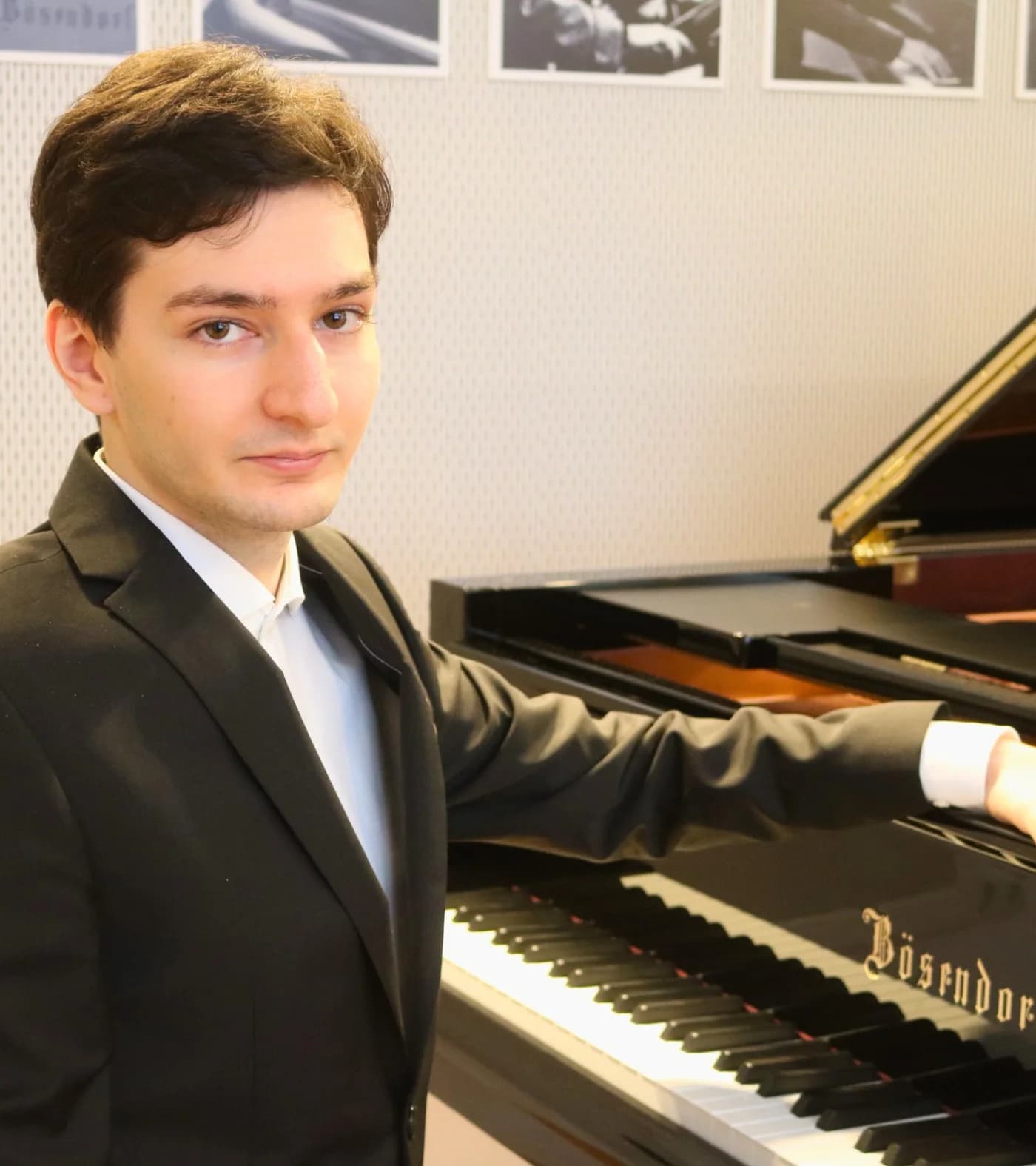
Enea
Concert pianist from Vienna
30 minutes · Ikebukuro & Shinjuku studios from October 2026
BMus audition repertoire
The comparison below concerns principal-study piano BMus applicants. It summarises the published repertoire requirements, not a proposed programme to copy.
01
Royal College of Music
3 works · at least 15 minutes
Free choice with contrasting styles, periods and characters. Play from memory. Bring or upload evidence of recent public performances.
A live panel may select only two works.
02
Royal Academy of Music
At least 2 works · at least 30 minutes
Solo piano repertoire; individual movements are accepted. Memory is required except for complex contemporary works.
Classical or Baroque, Romantic and 20th-century or contemporary repertoire is recommended.
03
Guildhall School
3 contrasting pieces
Free choice, played from memory, for both live and recorded BMus piano auditions.
The published BMus piano paragraph does not set an overall minimum duration.
Principal-study piano, undergraduate entry. Check the current course and audition-route instructions linked at the end.
Treat the required duration as music to prepare. It is not a promise that a live panel will hear every minute. At the Academy, for example, you choose your opening work and the panel chooses further material. Practise beginning other works with their own tempo and character, without relying on the emotional momentum of the preceding piece.
A programme can meet a rule and still feel narrow. Three works in different centuries may all show your loud, fast playing while leaving your soft sound and long phrasing untested. Conversely, contrast can exist within related repertoire: a sharply articulated dance, a sustained singing line and a texture built around isolated sounds ask for different listening.
Choose works you can defend musically. If a piece depends on speed that only appears in the last successful attempt of the day, the audition preparation is still unfinished. I would usually retain a secure work with room for deeper interpretation while developing the riskier piece for a later purpose. Readiness includes recovering the pulse after a slip and keeping the phrase alive in an unfamiliar acoustic.
Building a convincing programme
Work on the relationship between the pieces as well as each piece separately. After a resonant Romantic ending, a Classical opening may require a much cleaner release of the pedal and a lighter bass. Play the last page of one work, pause, and begin the next. Listen for whether the second work has immediately acquired its own sound.
In contrapuntal writing, follow the subject when it moves away from the upper voice. A fugue can be fluent under the fingers while its entries remain indistinct. Sing the entering voice, then play it against the others at their intended dynamic. The goal is a texture in which the listener can recognise a new entry without every appearance becoming an accent.
For a lyrical work, choose a place where the melody repeats over a changed harmony. Record both statements. Does the second one sound different because you heard the bass move, or simply because you decided that repeats should be louder? Try a quieter accompaniment first. That may reveal the harmonic change without requiring a large change in tempo or volume.
A contemporary work deserves the same attention to character. A rest may leave a resonance hanging; an isolated low note may change the meaning of the next high sound. Count accurately, then listen to what survives between attacks. This gives a passage with few notes as much musical purpose as one with dense figuration.
Alongside detailed work, perform the programme for someone who will listen without stopping you. Afterwards, ask where their attention changed. Compare that response with your own listening to the recording. A wrong note is easy to locate; a loss of direction through a transition often needs a second listener.
Interviews and sight-reading
At RCM, the audition includes discussion, and its general guidance identifies sight-reading for instrumentalists, with possible technical exercises. Questions can concern your musical interests, reasons for choosing the course and areas you want to develop. Practise answering from your experience of studying music, rather than memorising an advertisement for the institution.
The Royal Academy also describes academic interviews for BMus candidates. These may involve discussing a short extract and aural tasks such as singing a melody, reading rhythms or identifying a note within a chord. Its guidance says that questions can draw on your personal statement and musical interests. This is a broader preparation task than playing the audition pieces repeatedly.
When looking at an unfamiliar extract, begin with observations you can support. Establish the metre, recognise an opening gesture, notice a change of texture, or identify where a cadence seems to close a phrase. Then explain what makes you hear it that way. A claim about style gains substance when you point to the accompaniment, articulation or harmonic movement that prompted it.
For sight-reading practice, choose music simple enough to keep moving at a deliberate tempo. Before playing, inspect the key signature, pulse, rests and one likely difficulty. While playing, read towards the next beat rather than returning to repair the previous one. Afterwards, isolate the error and understand it. Those are two different kinds of practice: sustaining a first reading and improving the reading that follows.
Include the ear away from the page. Sing a short phrase before playing it, or ask a teacher to play a three-note chord and sing its middle note. If you can identify a chord on paper but cannot hear its inner part, that is useful information for your next lesson. Spread this work across the preparation period so that it develops alongside the repertoire.
Talking about music in English
The most useful English often names a small, audible decision: which voice should lead, where the phrase arrives, how much pedal a harmony needs, or why an articulation changes. I prefer to begin with a passage the student knows well. They play it, explain one choice in English, and play it again with that choice in mind.
For example, consider a melody that reaches an accented dissonance before settling into a cadence. “I want it to be expressive” leaves almost everything unspecified. Saying that you want to delay the release of the dissonance, while keeping the bass pulse steady, identifies both the expressive intention and the control it requires. The next performance can test whether that intention is audible.
An English practice exchange about a phrase approaching its cadence.
- The question
- “Why do you take more time on that note?”
- A musical answer
- “The melody is still dissonant there. I want to hear that tension before it resolves, while the bass keeps its pulse.”
- The demonstration
- Play from before the dissonance through the cadence. Listen for a sustained melodic tension and a bass line that still moves.
If the teacher asks for less delay
“I’ll try keeping the tempo steadier and give the dissonance more weight through the sound.”
Try both versions. Compare the phrase’s direction and the balance between melody and bass. The exchange has led to another musical possibility.
Learning the vocabulary inside the piece gives it a sound. Voicing concerns the relative prominence of notes or parts; articulation concerns their connection and separation; a cadence is a point of harmonic arrival. Use each word while demonstrating the relevant passage. A memorised definition alone rarely produces a natural conversation at the keyboard.
Understanding a request is just as valuable as explaining an idea. “From the upbeat” asks for the lead-in before the main beat. “Bring out the inner voice” asks you to change the balance within the texture. “Keep it moving” may concern the continuity of the phrase rather than a request to play the whole movement faster. Listen, try the change and respond to what you hear.
When a question is unclear, ask about the particular point: “Do you mean the return of the theme?” or “Would you like the whole movement?” This keeps the conversation attached to the score. Practise these exchanges during lessons, including moments when the teacher asks you to reconsider an interpretation. Musical discussion involves listening to another idea as well as presenting your own.
English certificates and course conditions
Musical conversation and formal English evidence serve different purposes. A lesson can prepare you to explain a phrase; the conservatoire decides which test or qualification satisfies its entry condition.
For BMus entry, RCM currently specifies B2 in all four skills and gives IELTS 5.5 in each component as its IELTS requirement. The Royal Academy's first-year BMus requirement is IELTS Academic 5.5 overall with at least 5.5 in each component. Guildhall's BMus requirement likewise states 5.5 overall and at least 5.5 in each component. Each institution lists accepted alternatives and conditions; use the exact course's entry page before booking a test.
The deadline for evidence is generally later than the application. RCM and the Academy normally ask for it by 1 May before the course begins. Guildhall normally sets a late-April deadline, with a later deadline for some later offers. Your own offer and admissions correspondence determine the date you must meet.
A similar undergraduate score does not establish a universal London requirement. Degree level, course and sometimes year of entry can change the threshold. Check those details when moving from a BMus shortlist to postgraduate applications. Also leave time for the result to arrive and, if necessary, for another attempt rather than booking the first available test immediately before the evidence deadline.
In daily preparation, combine English with genuine musical interests. Read a short programme note, listen to the work and explain one point you agreed or disagreed with. Describe the problem you are working on in a lesson. Over time, the language becomes part of how you study, rehearse and ask questions.
Recorded auditions and lesson preparation
An overseas applicant may choose a recorded route, but the recording requirements remain school-specific. The Academy's BMus piano instructions call for the complete 30-minute programme in one unedited continuous take, plus a separate short spoken introduction in English. They also allow for an online interview. RCM's postgraduate piano recording must contain its full prepared programme, even though a live panel hears a selection.
Keep a distinction between diagnosing your playing and making a submission. During practice, a short recording of a transition may tell you what to change. For the application, follow the institution's current rules for continuity, repertoire, sound and upload. A beautiful clip of your strongest page cannot replace the specified programme.
A useful mock audition includes the less familiar parts of the encounter: beginning a different piece when asked, reading something new, then answering a musical question. Let the teacher choose the question after listening. If the left hand covered an important voice, talk about the balance and demonstrate a different version. That exchange reveals what needs attention before the next complete run.
At Vienna Piano School, I can work with you on piano audition repertoire and music-focused English, including discussing interpretation and understanding lesson-room instructions. Bring the exact course requirements, your current pieces and an account of the work still to be done. We can begin with the playing and decide where musical and language preparation should meet.
Online lessons are available now for learners from junior-high-school age through adulthood. In-person lessons at piano studios in Ikebukuro and Shinjuku, Tokyo, begin in October 2026. You can apply for a free 30-minute trial and include your intended conservatoire and degree in the application.